Sophia Warsh

9319299924_deeb83d47b_o.jpg

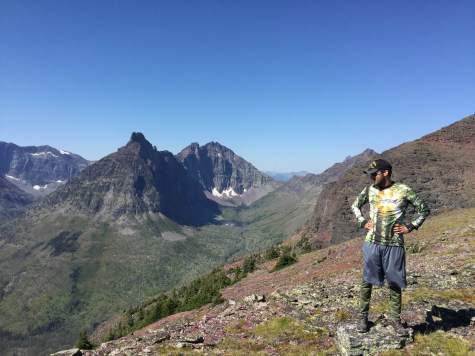
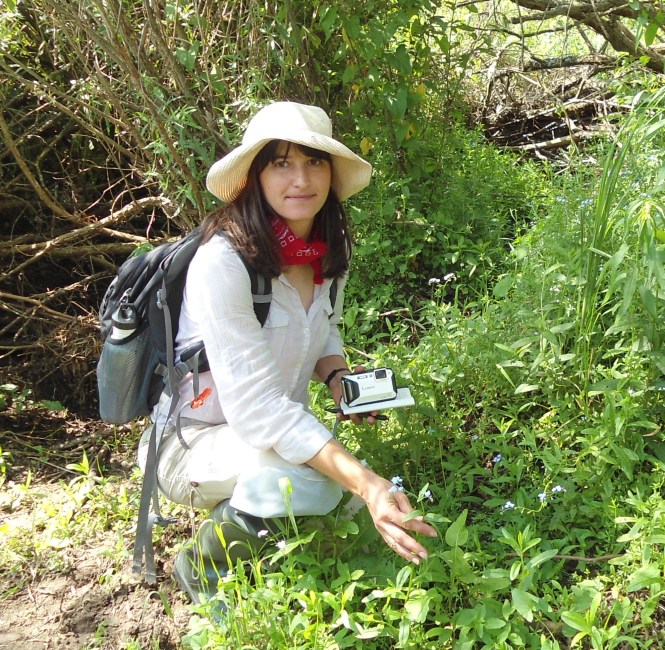
Sophia Warsh is an artist, gardener and field botanist. Her interests include prairies, and plant taxonomy and systematics. She has worked at the Queens Botanical Garden, the Central Park Conservancy and the Missouri Botanical Garden. She moved to Boulder in 2015 and studied grass taxonomy with Jennifer Ackerfield at CSU. Sophia is a new student in the Museum and Field Studies Graduate program. She is also a student of aerial dance at Frequent Flyers Productions.

For her thesis, Sophia will conduct a floristic inventory of Heil Valley Ranch and Hall Ranch in the North foothills of Boulder County. The survey will provide Boulder County Parks and Open Space and The CU Boulder Herbarium with a repository of data of an ecologically complex foothills ecotone

Ruellia spectabilis

Peru was tough. Really tough. Don’t ask me to recall it. As I’ve written before, somewhere strewn across these species pages, I mean it in earnest: I’m not sure how Nico and I survived.  But we did, and part of the story I get to tell these years later is having found Ruellia spectabilis in the wild. Somewhere 7 degrees south of the Equator, around 1200m elevation, growing on the ‘outskirts’ of the ‘community’ of Hornopampa, we found the most beautiful population of this species. The approach had been from Leymebamba on one of the most trecherous roads I’ve ever traversed. At the time, I wanted so badly for it to be over, and if I ever have to see that road again, it will be: too soon. West of Río Marañon was okay, but east of it…. I wouldn’t wish it on anyone. Don’t get me wrong: the scenery was great. And, to be sure, it is to this day still enjoying one of the best views in Peru.

We collected the plant with small children running around the dirt road, and elderly grandmothers looking strangely at us, wondering why two young adults were so interested in their local flowers. We spent a good hour studying the population, then headed out of the community… towards Celedín…one of the longest day trips of my life.

This species has the most spectacular, large, poofy, purple flowers. If I didn’t know better, I would have guessed it was a Barleria! Ruellia spectabilis is, alas, instead closely related to cerrado-type Ruellias including R. hookeriana, R. geminiflora, R. donnell-smithii, R. geminiflora, R. bulbifera, and R. bahiensis.


Wild collected, Peru, E. Tripp #6804 & 6805 w/ Nico Medina (COLO); Photos by Erin Tripp

Ruellia floribunda

This species, and my means of coming to know it, has a terrific story…. Just like all the others. 

Phase I: It first came to me in the form of seeds inside of fruits, and fruits inside of a #2 brown coin envelope, on one fine winter day in cold Colorado. The packet came courtesy of Stacey Smith, who left it on my office desk in Boulder. Picked ‘em up during a recent trip in Peru.

At this point in life, I’m pretty good at identifying Ruellias, sometimes even based only on miniscule fragments such as seeds. But it was the writing on the cover that sealed it. On the packet, Stacey wrote: “Santa Rosa de Quiva”.

I knew immediately that she had found one of the last remaining members of the Ruellia inundata clade that I had not yet seen or collected: Ruellia floribunda, it was. Remarkable! I had remembered the type locality (as described in the protologue of the species, written by Hooker in 1831 [!!]) from some much earlier day, perhaps grad school, because this was a species I have long wanted to see in the wild. There it lay in my hands, alive but in waiting, finally… after all these years. I sowed those seeds the same evening, and within a few months, first laid eyes on a mature, flowering plant of R. floribunda.

Phase II: Nico and I finally did fieldwork in Peru. 18 January 2017. We landed in Lima (he traveling from California, me traveling from fieldwork in Ecuador), and drove north towards Santa Rosa de Quiva. Found Ruellia floribunda flowering abundantly (as the name implies) in this very same location. We found it again later in the trip, near Maojdalema. Tolerates some of the most remarkably dry, western slopes of the Andes….hanging out there seemingly so happily in the rainshadow of that giant uplift. That trip, Peru 2017, would become one of the most insane, nightmarish, and barely outlived fieldtrips of my life. But, we did it. Whether I can muster the strength to tell the whole story of how we survived it, I don’t know. I’m glad Nico was with me…

In closing, and as if I haven’t said it already, the Ruellia inundata clade is arguably my most favorite clade within Ruellia (well, after sect. Chiropterophila, and after the eastern North American clade, and after the three remarkable cerrado clades, and after all the others…). In it are the following species (and growing….):

  1. galeottii (purple, Mexico) R. inundata (pink, widespread)
  2. paniculata (purple, widespread)
  3. floribunda (pink, Peru)
  4. asperula (red, Brazil) R. ochroleuca (yellow, Brazil & Central America)
  5. cearensis (pink, Brazil) R. sp. nov. ET #5908 (purple, Brazil)


Wild collected, Peru, E. Tripp #5918 & 6806 w/ Nico Medina (COLO); Photos by Erin Tripp

Ruellia pedunculosa

“We live in an old chaos of the sun, Or old dependency of day and night, Or island solitude, unsponsored, free, Of that wide water, inescapable. Deer walk upon our mountains, and the quail Whistle about us their spontaneous cries; Sweet berries ripen in the wilderness; And, in the isolation of the sky, At evening, casual flocks of pigeons make Ambiguous undulations as they sink, Downward to darkness, on extended wings.”


The wild world has so many happenings that we will never see. From the commonest casual flock of pigeon, descending to darkness on extended wings, to another berry, ripening in the wilderness, we should be so lucky to see. In another life, Wallace Stevens might have included Ruellia pedunculosa in his poem. As I write this entry from my mountain house in wintery Colorado, I still can’t fathom we managed to find… and to study, this species in the wild.

I have been reading about Ruellia pedunculosa for nearly 15 years now, among various (historical) publications. On rare occasion, I have seen voucher specimens of it, collected from wild populations. As far as I can tell, it is a species known only to a few, very lucky people, only a couple of whom are still alive.

Ruellia pedunculosa is an endemic or near-endemic species to Peru, represented by fewer than 10 confirmed collections. We spent days planning and executing our strategy to be the next two lucky individuals. The 25th of January 2017 arrived. Nuevo Jerusalen. Centro Turistico Tioyacir. We were tired, had traveled hundreds of miles on terrible, dangerous roads, but under a dark, wet canopy of primary rainforest, our efforts ended in success. I laid eyes on the long, thin wispy peduncles of Ruellia pedunculosa in the wild.

Our recent RADseq data place this species in the Physiruellia clade, with strong support. In fact, we have pretty good evidence that it is sister to the clade of species containing Ruellia grisea, R. ischnopoda, and R. potamophila. This entire group is characterized by its wet-loving habitat preferences and its peduncles….beautiful, inescapable, unsponsored, and free.


Wild collected, Peru, E. Tripp #6802 w/ Nico Medina (COLO); Photos by Erin Tripp
Ruellia cuyabensis

This is such a long, long story and I’m not sure whether I can convey it with the emotion it deserves. Let me just try a few key phrases:

Ecuador

15th of January 2017

300m altitude

Linear leaves

Waorani

Extreme restricted endemic

Parque Nacional Yasuní

Orellana: Taracoa

Matt Schreiber & Erin Tripp @ their finest

Lowland Amazonian Rainforest

Waorani

Manuel’s everpresent good conscience

Sheer remarkableness

I have no idea where this species ‘goes’ phylogenetically. Maybe near Ruellia menthoides? There is a high chance I am wrong about that… BUT it ought to get resolved into a clade of ‘everwet’ rainforest species (vs. those with seasonal dry seasons…. ). I promise to report back!

I love this species so much, and the field memories it brings…

Wild collected, Ecuador, E. Tripp #6997 w/ M. Luján & M. Schreiber; Photos by E. Tripp

Matt Schreiber

IMG_0605.JPG

Matt Schreiber (better known around these parts as T2) is a recent graduate of CU with a B.A. in Chemistry. After taking Plant Systematics with Dr. Tripp and Mat Sharples, T2 was convinced that applying his knowledge of the chemical arts to flora would be an excellent idea. He currently works as a lab manager and research assistant for Dr. Tripp studying the evolution of flower color in various acanths using chromatography and spectroscopy via HPLC. Other interests include outdoor survival, crockin’, and fixing things especially his new motorcycle!

Ruellia speciosa


This slideshow requires JavaScript.


RUELLIA SPECIOSA

Ruellia speciosa is, true to its epithet, a beautiful species. And one of my favorites. I could probably write a short story about this one if commissioned (one can dream)… about watching for hours the hummingbirds fawn over it in a deep fissure on top of a mountain overlooking Ciudad Oaxaca…. about its wonderfully pungent odor…about the population mutants that produce the strangest internal floral accessory structures. Well, best just to read all about it in the (non-commissioned) taxonomic revision of Ruellia section Chiropterophila (Tripp 2010, Systematic Botany). I first (and only) saw this species alive, in the field, in the year 2005.

I owe a great deal of gratitude to Salvador Acosta for leading me to this population, which represents the only I’ve seen of this species alive in the field. I have searched and searched for many other populations, based on localities from historical herbarium records, but all such attempts were unsuccessful. It’s true and sad: Ruellia speciosa is a species that is far less common than it used to be….

Update as of January 2016: I returned to the above locality some 10 years after I first visited it. The population has now been extirpated from housing development. Not all stories have a happy ending.

Wild collected, Mexico, Tripp & Acosta 175 (DUKE); Photo by Erin Tripp.

Yongbin Zhuang

Yongbin Zhuang

Yongbin is a postdoc and started working with Erin in the fall of 2015. He is from Shan Dong, China and got his PhD in Molecular Biology from the South Dakota State University in 2014. His graduate study focused mainly on the utilization of Next Generation Sequencing to uncover genes involved in plant-microbe interactions. He moved to Denver, Colorado in 2015 to escape the harsh weather in South Dakota. Over the years he has further developed his interests in bioinformatics, data mining, and programming. As a postdoc, he is working on evolution of the anthocyanin pathway in Ruellia, in attempt to unveil constraints on floral color evolution. In his free time, he enjoys traveling and cooking.

His CV is available here.