Ruellia marlothii

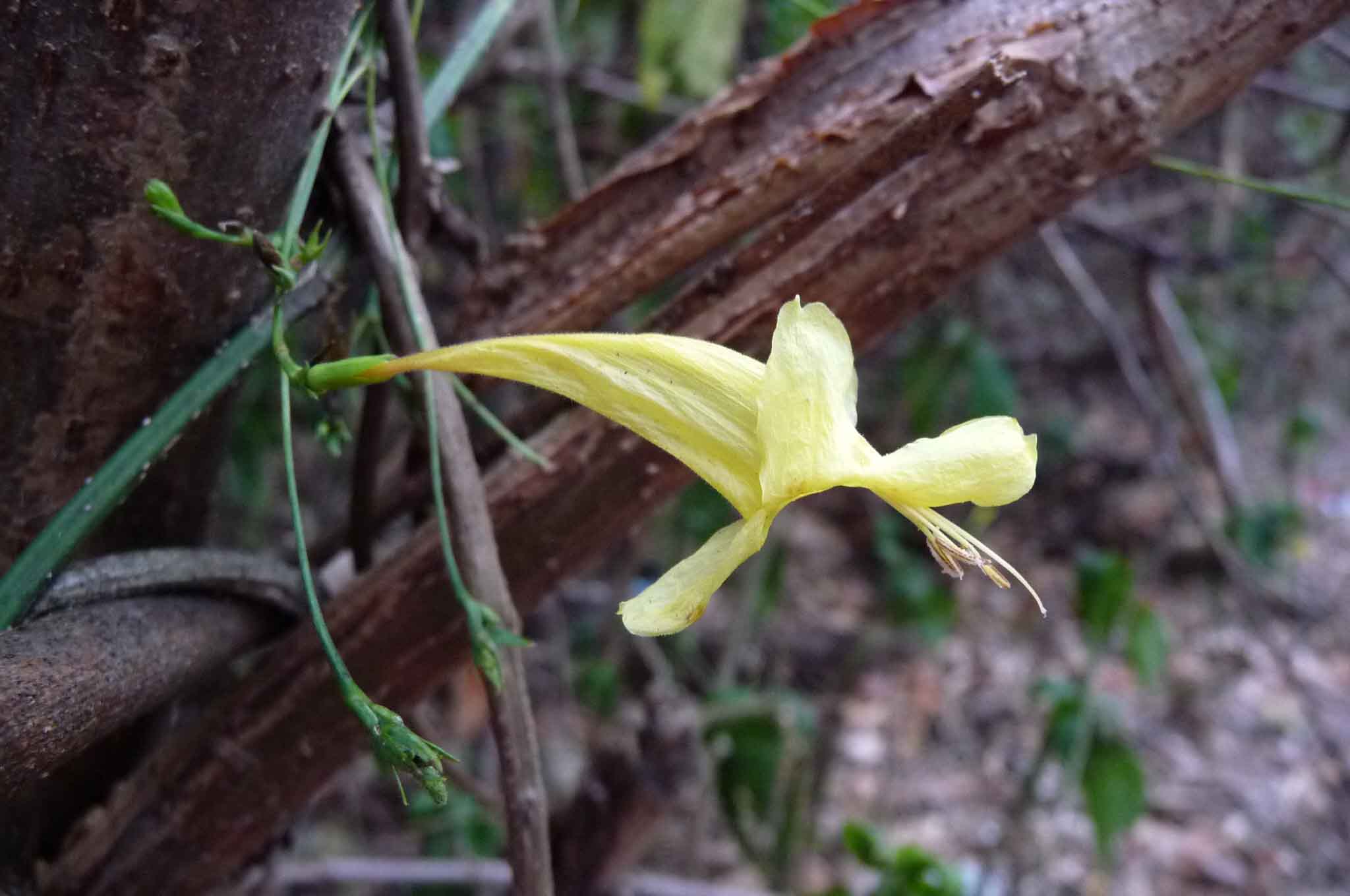
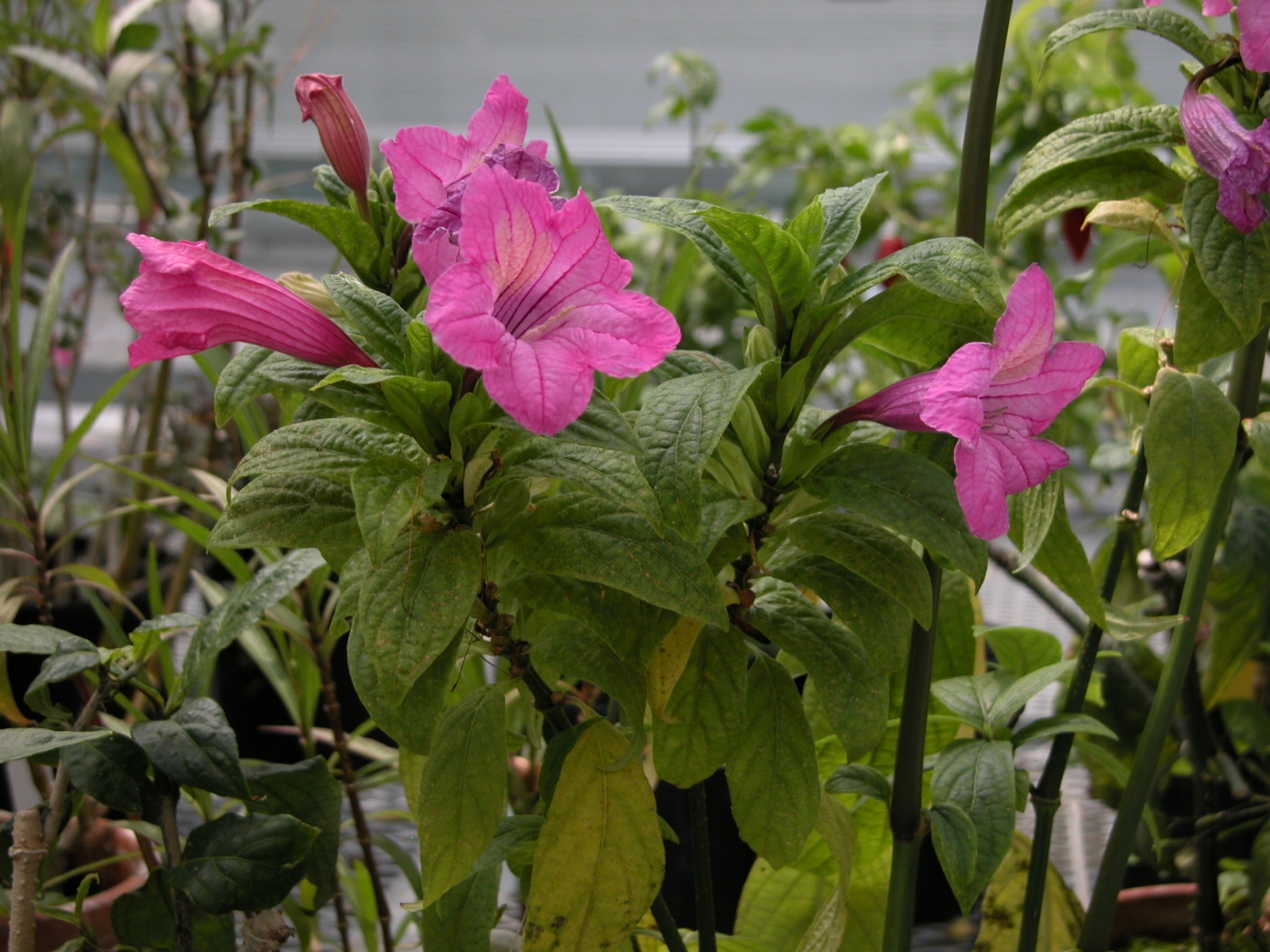
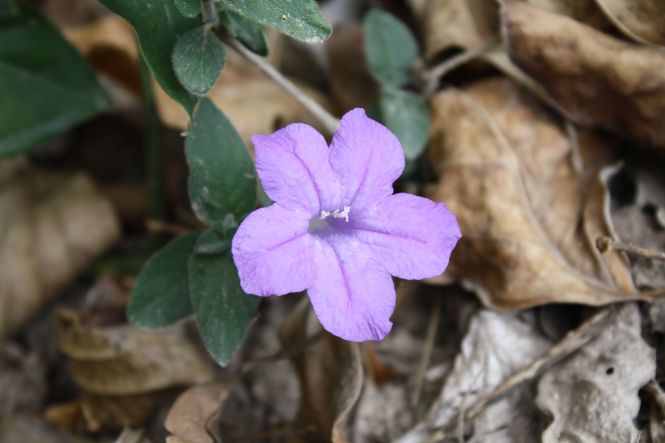
One bird, two bird, red bird, blue bird….pink, yellow, red.. what is it? The veritable, variable Ruellia marlothii. Yep – all those colors are pretty much the norm in Kunene Province. Note the Dusky Sunbird happily pollinating the local dominant. Definitely something worthy of study happening with these color morphs / anthocyanin variants…

Wild collected, Namibia, Tripp & Dexter #870 (RSA-POM), Tripp & Dexter et al. #1980 (RSA-POM), Tripp & Dexter et al. #2016 (RSA-POM), and so many other collections; Photos by Erin Tripp

Ruellia malaca

Seeing bat-pollinated Acanths in the field is like a welcoming to paradise (better than the ladies with grape leaves, I’m convinced). I could sit night after night in full relaxation mode, watching for these elusive pollinators.

Ruellia malaca is endemic to northern South America. Flowers open (and anthers dehisce) just after nightfall, and corollas fall in the morning. Note the starkness of the calyces and bracts (lighted photo), making these plants presumably more “visible” to nocturnal visitors. Manuel and I measured several flowers at night, not long after anthesis, and found that they contained over 200 milliliters of nectar. REMARKABLE – you could spread this stuff on your toast!

This species definitely merits further study – be the one!

Wild collected, Venezuela, Tripp & Luján #464 (RSA-POM); Photo by Erin Tripp

Ruellia macrophylla var. lutea

Ruellia_macrophylla_var_lutea

Manuel and I wrote extensively about this species in our recent treatment (Venezuelan Ruellia: A Monograph; Memoirs of the New York Botanical Garden). I will paraphrase here: what you need to know is that Ruellia lutea has a miniscule geographic range – one of the smallest ranges of any Acanth known. Ruellia lutea, which masquerades under its former name Ruellia macrophylla var. lutea, is endemic to a small portion of Parque Nacional Henri Pittier (can’t blame anyone for choosing a home in mountains named after a botanist). Here, it occurs in side-by-side sympatry and flowers concurrently with its red flowered sister species, Ruellia macrophylla, which is in contrast an extremely wide-ranging species of northern South America.

Ruellia lutea and Ruellia macrophylla are not known to form hybrids… why not? How do they maintain reproductive isolation? Is reinforcement that strong afterall?

In any case, the lack of hybrids is precisely why Manuel and I raised Leonard’s variety (one of many I have in mind such treatment for) to the species rank.

Curiously, almost none of the collections of Ruellia lutea bear fruit. The reproductive biology of this species remains enigmatic and needs investigation. As always: “be the one”.

Wild Collected, Venezuela, Erin Tripp #491, w/ Manuel Luján (RSA); Photos by Erin Tripp

Ruellia macrantha

Ruellia_macrantha

Not totally evident from this photo, but Ruellia macrantha and the very closely related Ruellia neesiana are the only two species thus far known in the genus to have resupinate flowers (look closely and you can see the reproductive parts of the flower oriented 180 degrees from their normal position). These are some extremely showy flowers that I’d quite like to see pollinated (must be a REALLY BIG bee).

Ruellia macrantha is wide ranging in the mtns of Minas Gerais and São Paulo. The related Ruellia neesiana (no photo, unfortunately) is allopatric and occurs in the mountains of Goiás. Tremendous thanks to Brazilian colleague Cintia Kameyama for additional information on these species.

You can buy seeds from Logee’s, which is swell.

Not vouchered, cultivated (RSABG + COLO Greenhouses); Photo by Erin Tripp

Ruellia longipedunculata

One of the many beautiful, red-flowered and hummingbird pollinated species of Ruellia in western South America (specifically, in the Physiruellia clade). I was fortunate enough to grow this by the good will of a good colleague, Alexander, who sent me seeds to cultivate. Originally collected by him in Bolivia…

Cultivated (RSABG Greenhouses), originally from Bolivia, Tripp & Ly #945 (RSA-POM)

Update (Sep 2016): Saw this species on steep, sandy slopes in transitional forest (from dry deciduous to wet) within the Santa Cruz region of Bolivia. This species like others encountered on this trip is endemic to Tucuman Bolivian forest belt which extends from this part of Bolivia to northern Argentina. Just as beautiful in the wild as it is in the greenhouse!

Wild collected, Bolivia, Tripp et al. #6025 (COLO); Photos by Manuel Luján; Blog post by Dina Clark

Ruellia longepetiolata

This is the plant that sometimes gets called Ruellia squarrosa in the horticulture trade, but that name [specifically, Ruellia squarrosa (Fenzl) Cufodontis ex E. Walker] represents a later synonym for Ruellia longepetiolata (Oerst.) Hemsl., which has priority (published in 1855! ….can you believe there were people wandering around Mexico admiring Wild Petunias back then??) So many protologues, so many available names (>1,000 in Ruellia alone), so little time…but fortunately Tom Daniel clarified this one in his 2003 Flora del Bajío treatment.

I have never seen this species in the wild, but I have seen photos of it growing in its natural habitat. The photos above derive from plants in cultivation, which is probably why they look just a little bit less like a true wild type….

Cultivated (COLO Greenhouses), Tripp #397 (DUKE); Photos by Erin Tripp
Ruellia laslobasensis

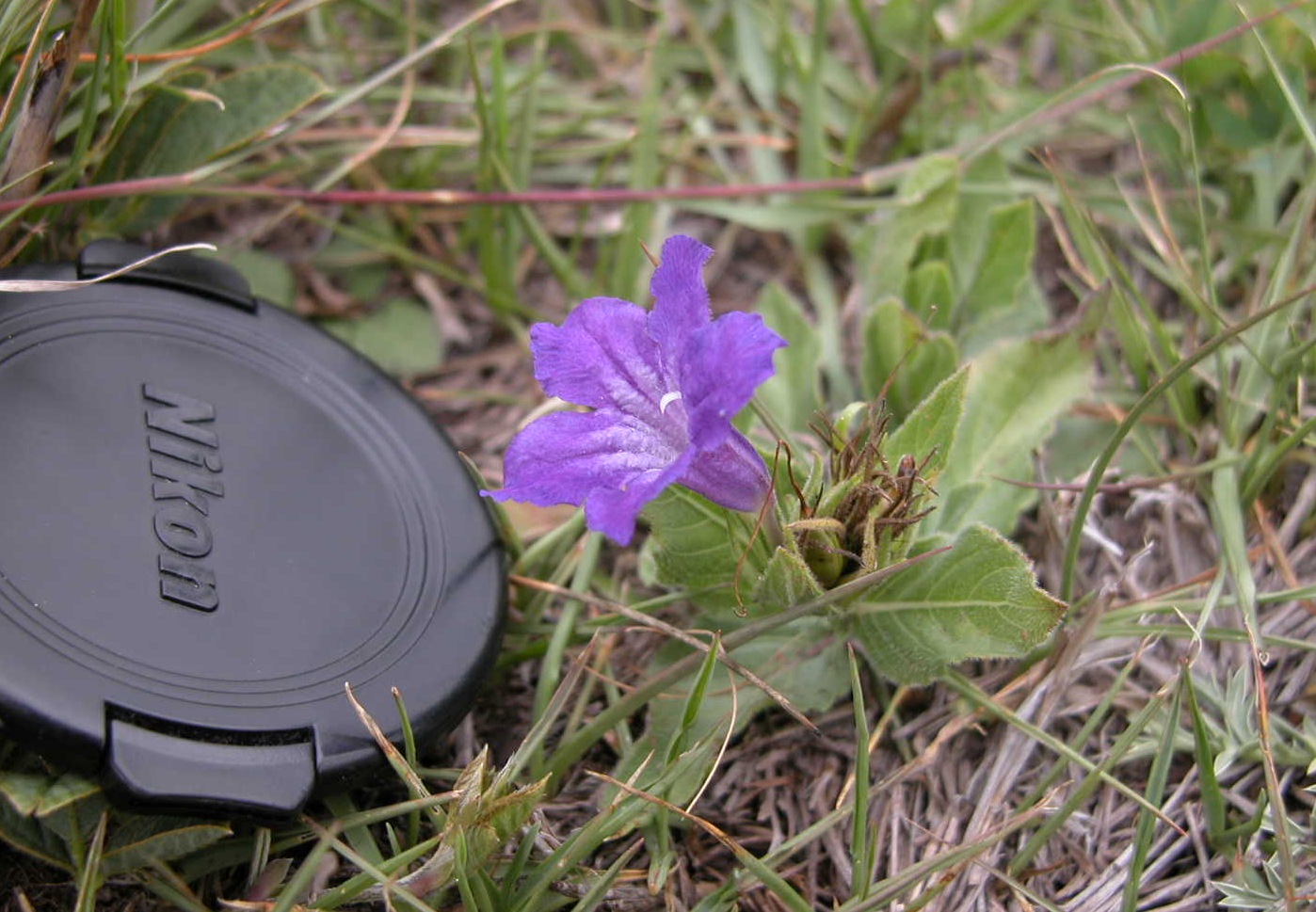
This species was one of the most memorable discoveries of my life. My sister Gretchen, Kate, and I were riding in the back of a Jeep up a very steep route in Oaxaca when I spotted this species out of the corner of my eye. I immediately knew it was undescribed, and before I could find the Spanish word to say STOPPPPPPP I lunged out of the moving vehicle towards it. We sat up a couple of nights with it, but only saw sphinx moths visiting the flowers. See Ruellia conzattii: I think this species is also intermediate between bat and hummingbird pollination…

My tremendous thanks to Álvaro and Efrén Scherenberg, owners of Finca Monte Carlo in Oaxaca, for facilitating this discovery. What a cool plantation and family history you have.

The specific epithet honors the women who historically inhabited the area and ran a coffee farm there long long ago, plus the local mountain (Los Lobos). Hence, “the she-wolves”…

Wild collected, Mexico, Tripp, Deregibus, & Lowman #317 (DUKE); Photo by Erin Tripp

Ruellia lasiostachya

Ruellia_lasiostachya

Trichomes gone wild. What do you want me to say? Regulatory network broken. Transcription factor co-opted for some other, less hairy function. I don’t know. I can’t even tell you what clade this crazy species belongs in because its trichomes keep clogging up the DNA sequencer.

Yep: a bona fide TERRIBLE photo. But you take what you can get when you’re in the depths of southern Colombia.

Wild collected, Colombia, Tripp et al. #5230 [COLO]; Photo by E. Tripp

Ruellia lactea

Ruellia_lactea

A darling little basal-rosette forming species, seen with colleague Salvador Acosta. Trouble is: this species also forms an erect herb. Yep – email me for additional photos. Never a dull in Mexico…

No: it doesn’t produce any bitter and thick white latex as you might be conjuring up, based on the specific epithet. Certainly nothing like lettuce.

Wild collected, Mexico, Tripp & Acosta #166 (DUKE); Photo by Erin Tripp