Ruellia ciliosa

Ruellia_ciliosa

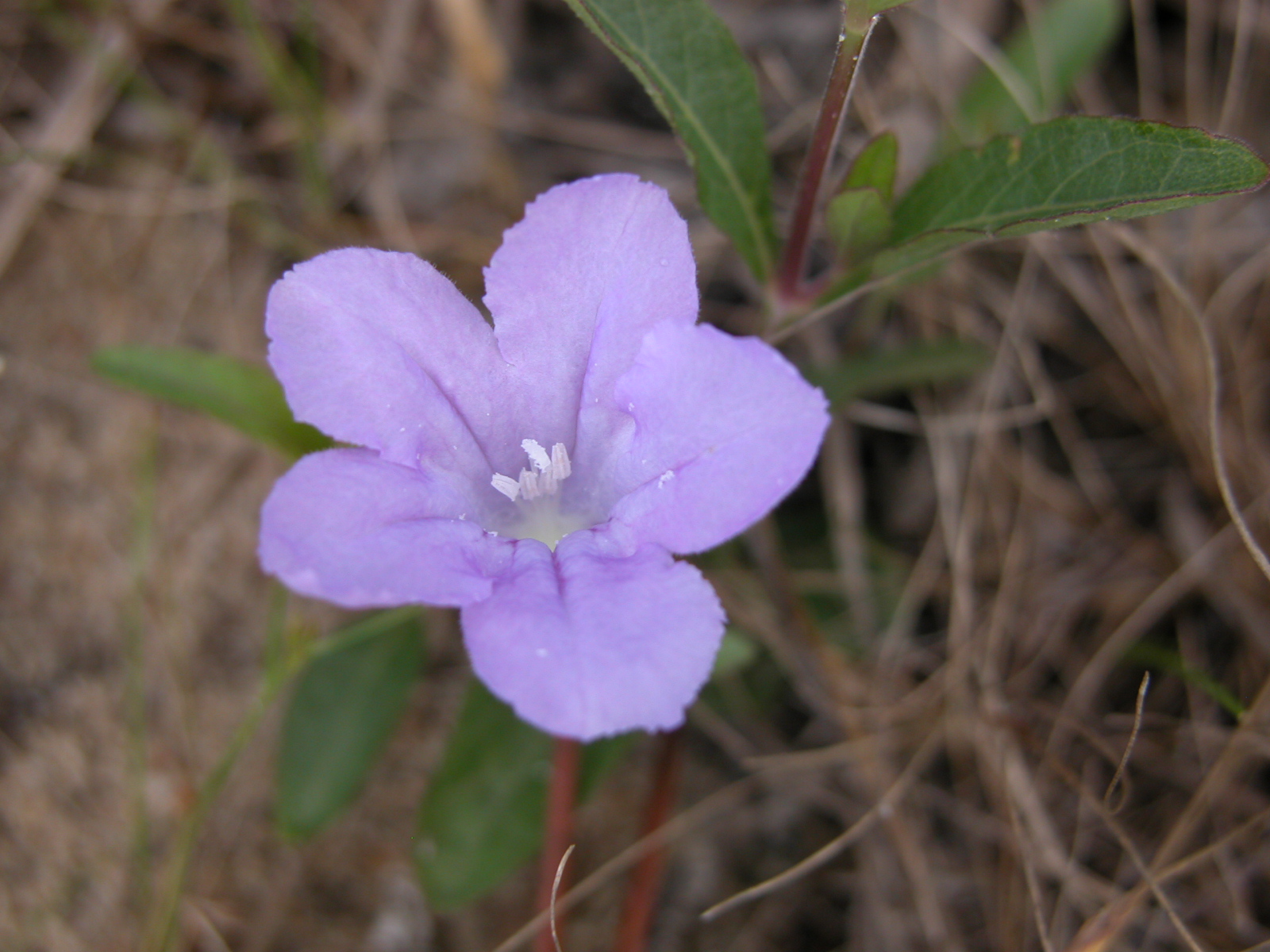
Is this plant uhmazin’ or WHAT? A basal-rosette forming southeastern US coastal plain endemic! It doesn’t get any better than that!

…And one of two of our native (USA) species that I haven’t yet seen in the cellulose. HUGE thanks to Bruce Sorrie and the NC Natural Heritage Program for passing along this photo. A very distinctive plant that deserves your undivided attention.

Ruellia ciliatiflora

Ruellia_ciliatiflora

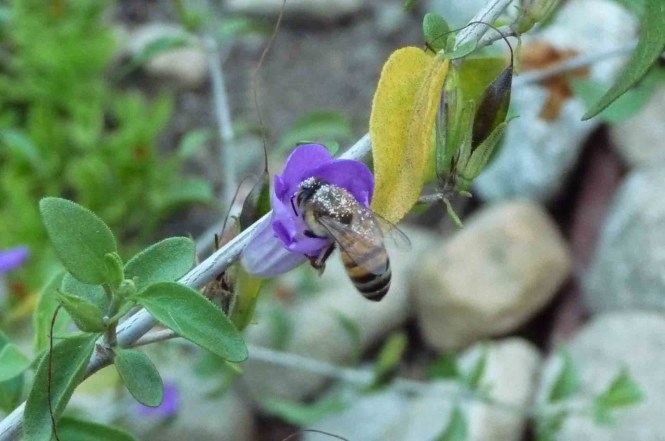
This is one of those species that, in the past, some have struggled with in terms of identification. It is purple-flowered, long pedunculate, and produces elliptical/cylindrical capsules. Sounds a lot like Ruellia tuberosa and Ruellia simplex, right? You wouldn’t be crazy if you said so.

Yet: they are different. Not by tremendous leaps and bounds, but… different.

Ruellia ciliatiflora used to be known by its synonym, Ruellia lorentziana, in the southeastern USA, where it has become weedy in parts. If you grow this in your greenhouses, CAREFUL. It might take over! Its native range is entirely South American.

Wild collected (which is cool! I’ve only ever seen it in greenhouse cultivation), Bolivia, Darwin Initiative Project #162/11/010; Photo by John Wood

Ruellia chartacea

Ruellia_chartacea

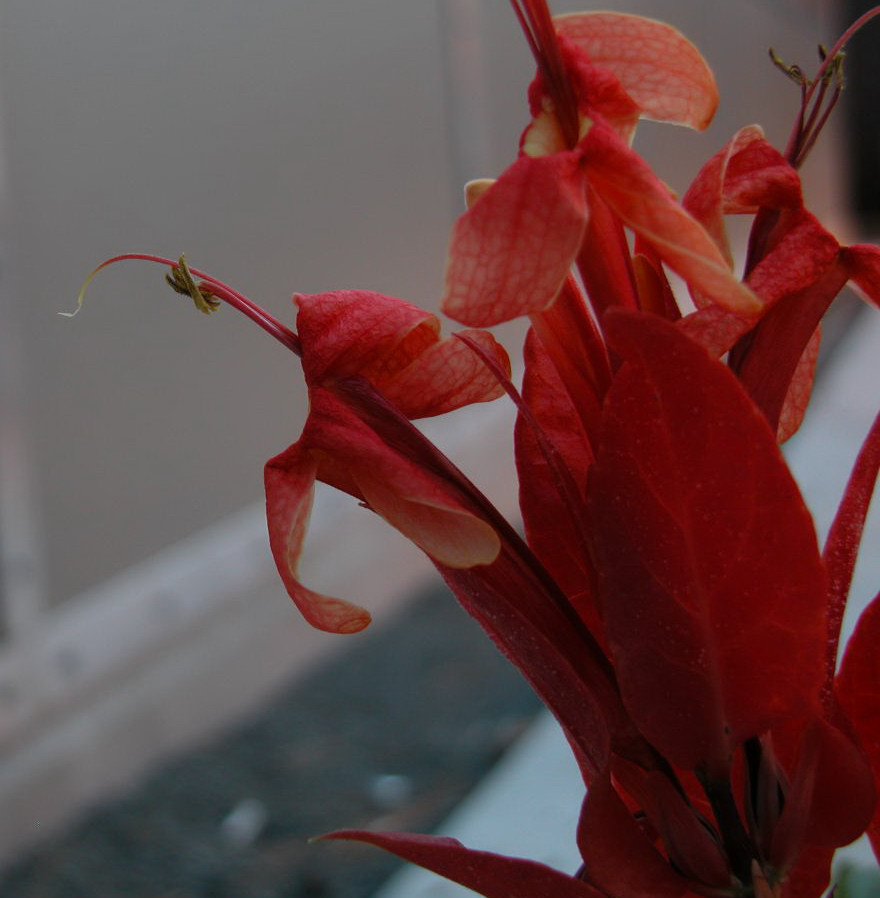
A striking red-flowered species from western South America, Ruellia chartacea stands out in the genus for having arguably the showiest and most brightly colored bracts. While this feature is widespread in other lineages of Acanthaceae (e.g., Justicia, Sanchezia), it is rather uncommon in Ruellia. Check out the loooooong red floral tubes. I sure would like to see this thing get pollinated (the hummingbird must be equally impressive).

Based on inflorescence structure, Ruellia chartacea is a sure candidate for membership in the R. tubiflora / R. humboldtiana lineage. Clades are cool, especially when they make sense morphologically!

Not vouchered, cultivated DUKE greenhouses (originally from Bolivia); Photo by Erin Tripp

Ruellia cearensis

I was totally ecstatic when Alexander Popovkin sent me a photo of some indet Ruellia from Bahia, Brazil. I had only ever seen dried up, squished specimens of this thing in herbaria, yet even in that state the species is so very distinctive. I knew it right away – the photos were a solid match for Ruellia cearensis! This species belongs to an intriguing clade that contains purple, red, and magenta-flowered species and one I have long wanted to target for anthocyanin research. Species in this group also have a noteworthy geographic distribution…either Brazilian or Central American/Mexican, bypassing much of the rest of the Neotropics.

Thanks to AP for enlightening me with photos of this most amazing plant.

Update (Aug 2016): We finally made it to Brazil for a field trip, and part of the fun was traveling up to Entre Rios in northern Bahia and meeting Alexander in person–wild man, after my own heart. Great botanist. He agreed to take us on a fieldtrip in attempt to find Ruellia cearensis. Found it!! But sterile. Nonetheless – finally got to see this species in its native habitat (a special place on Earth) and soon I hope to see it thriving and flowering in the greenhouse. Super nice to meet Alexander, too…

Wild collected, Brazil, Popovkin #374 (HUEFS); Photo by Alexander Popovkin

Wild collected, Brazil, Erin Tripp #5902, w/ Nico Medina, Cíntia Kameyama, Alexander Popovkin (COLO)

Ruellia carnea

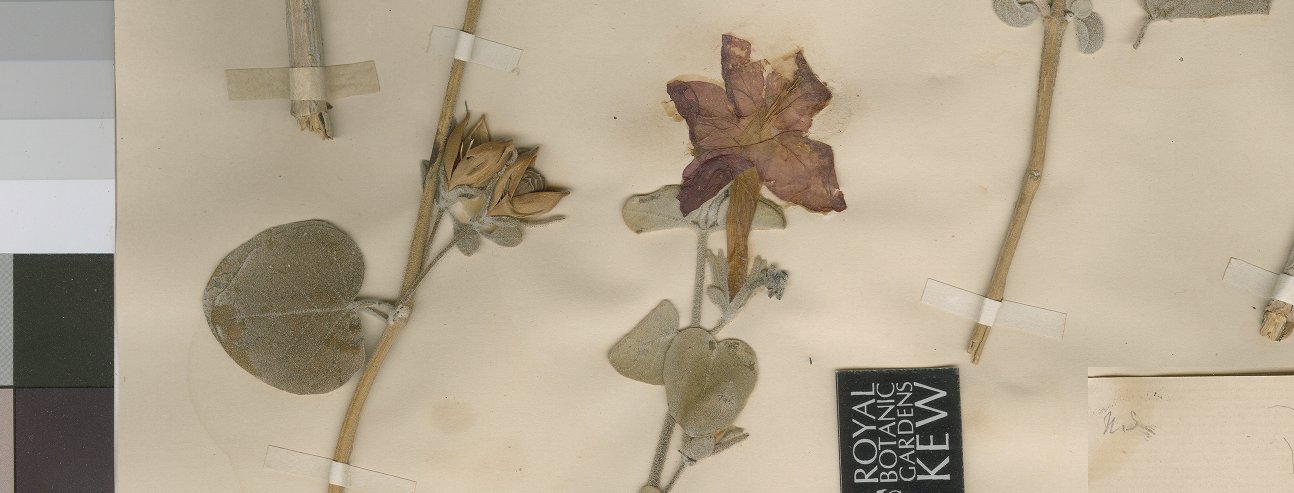
Ruellia_carnea_portion of holotype at Kew

What you get is what you get… in this case, not even an image of the species, but merely an image of the holotype of the species, which will have to do (and not even the ENTIRE holotype at that! …. not my fault… I have asked JSTOR Plants to make it easier for paying users such as myself to download high rez images of complete specimens…but so far I am told “it is not possible”).

In any case, consider yourself lucky to have even come this far. Ruellia carnea is a magnificent species that is one of many Acanthaceae that are endemic to the small Yemenese island of Socotra. Based on its stellate trichomes that paint the young leaves white, Ruellia carnea seems clearly allied to Ruellia nocturna and Ruellia discifolia, both of which are white-flowered, and night blooming compared to this red-flowered and day-blooming species. Other species in this phylogenetic neighborhood have similarly shaped and vestitured leaves, such as Ruellia bignoniiflora.

If you have plans to travel to Socotra anytime in the next 50 years, please: TAKE ME WITH YOU.

Photograph of the holotype, G. Schweinfurth 714, Kew.

Ruellia californica

Ruellia_californica

Despite the epithet, this plant doesn’t actually occur natively in California. Well, at least not the US version of California. This is a Mexican endemic, a Baja specialty, and a phylogenetic nightmare (unstable… perhaps of hybrid origin). Difficult on the inside, beautiful on the outside. Sink it in your yard for sure.

Not vouchered, cultivated in Lucinda’s back yard, originally from Mexico; Photo by Erin Tripp

Ruellia bulbifera

So very cool that John shared photos of this species with me…. prior to his having done so, I had only known this plant from herbarium specimens. But: an interesting species it is! Ruellia bulbifera is part of the “Ebracteolati Clade” sensu Tripp (2007, Systematic Botany). In that clade, it is member to a strongly supported clade of other species that inhabit savannas, cerrados, or other areas subject to fire; these species often produce thickened lignotubers, from which plants re-grow following fire episodes.

Interestingly, this clade is geographically rich: some species are southern South American (such as R. bulbifera, R. beyrichiana, R. eriocalyx, R. hapalotricha, and R. magniflora), and others are Mexican / Central American (R. donnell-smithii). One, R. geminiflora, is widespread.

Wild collected, Bolivia, Darwin Initiative Project 16-004; Photo by John Wood

Ruellia breedlovei

Ruellia breedlovei was named in honor of Dennis Breedlove (by our colleague Tom Daniel) for his many thousands of contributions to understanding the Mexican flora. Dennis was one of the great collectors of the botany of Mexico and worked long hours to understand, in particular, the flora of the highlands of Chiapas.

After years (now decades–I’m getting old) of international fieldwork to remote corners on various continents, Mexico remains one of my favorite places on this great planet: to be sure, among the most fascinating biologically, geologically, and culturally. Friendly people, foods, salsas, and native plants: life rarely improves and minimally achieves a more sophisticated state.

If you are an American and haven’t been to Mexico: DON’T WASTE ANOTHER MOMENT–RUN, DON’T WALK. (And, while in Chiapas, be sure to check out the market in San Cristóbal (probably the coolest culinary experience of my life) followed by Cascadas de Agua Azul (don’t miss Ruellia maya and Ruellia jussieuoides at the latter, both of which grow along the margins of these spectacular cascades).

Update (Jan 2016): Manuel, Amanda, and I were so fortunate to find Ruellia breedlovei in the field, in its native habitat. It is hot, in more ways than one. I am really fond of this species.

Wild collected, Mexico, Erin Tripp #5753 w/ Manuel Luján, Amanda Fisher (COLO); Photos by Manuel Luján
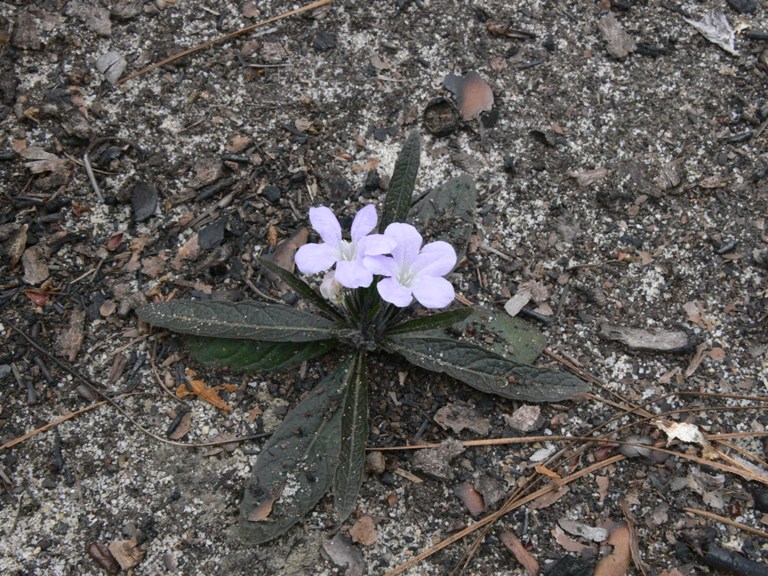
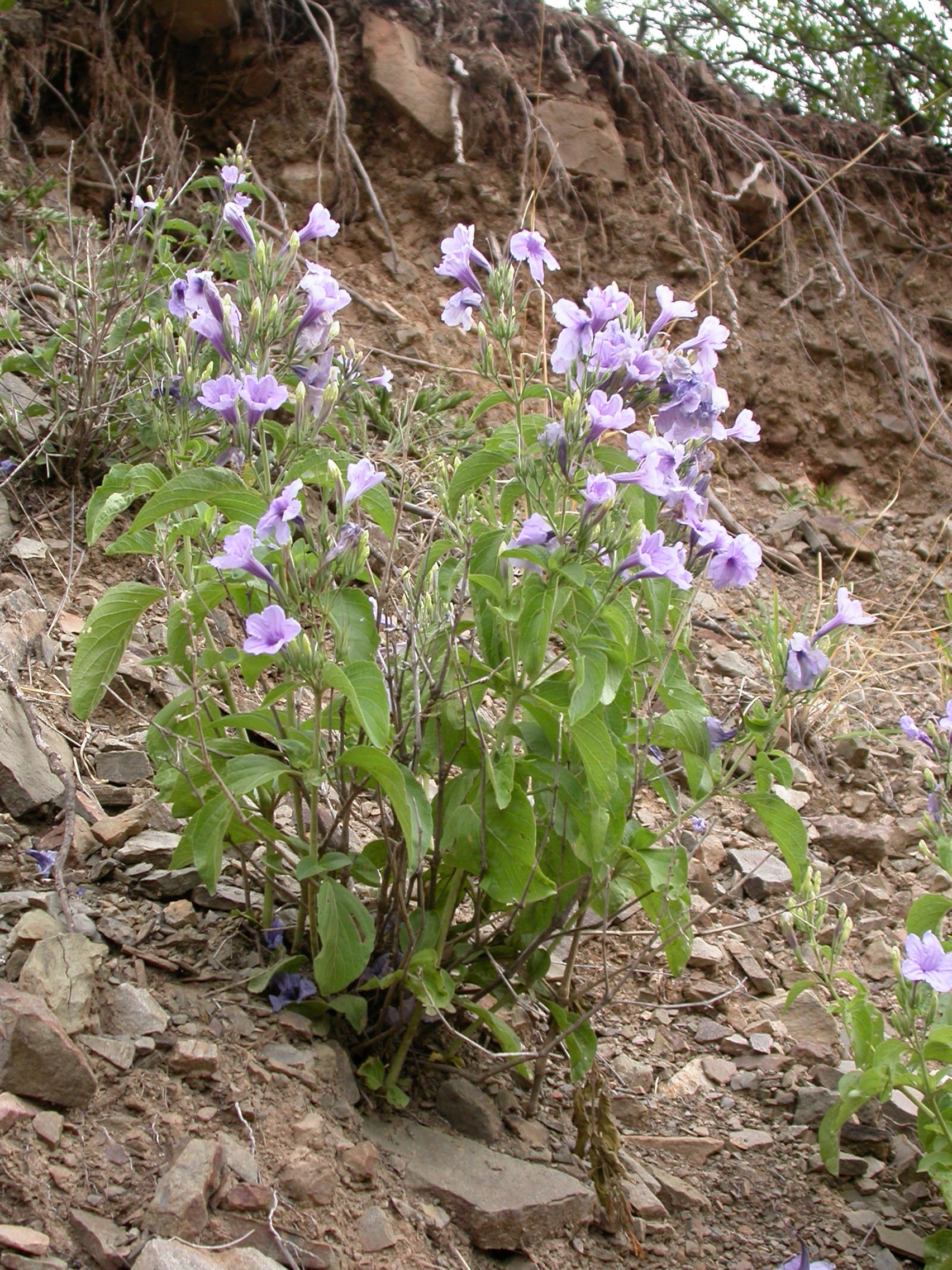
Ruellia brandbergensis

You ready for this?

Who said single-mountain endemics can only be found in the hyperdiverse wet tropics or in those wickedly endemic floras of New Caledonia, Madagascar, or the Tepui Highlands (yes, I’m talking about you, Maguireanthus ayangannae…)?

Here is an excellent example of such from Brandberg Mountain – the highest point in Namibia and a massive massif (if you will) of survival of the fittest in full swing. That place is scorching hot and gnarly dry. And Ruellia brandbergensis grows nowhere else on Earth except for in a couple of localities along its slopes. I have searched for it – twice now actually – with no luck. So you’ll have to deliberate its evolution using only a photograph of the type specimen…..

Not my photograph, not my collection, will I ever see it in the field? Sigh….