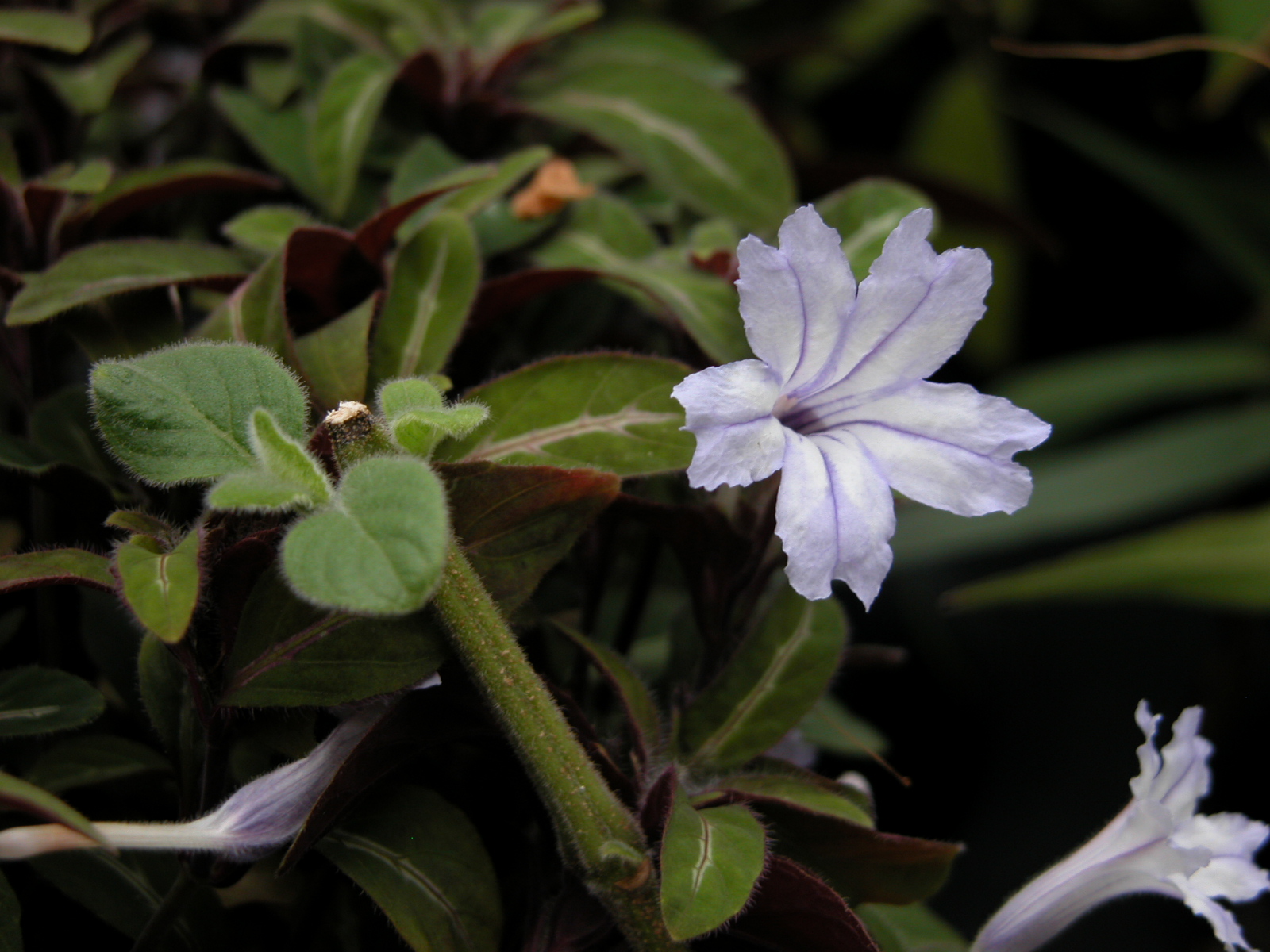
Ruellia foetida

Ruellia_foetida

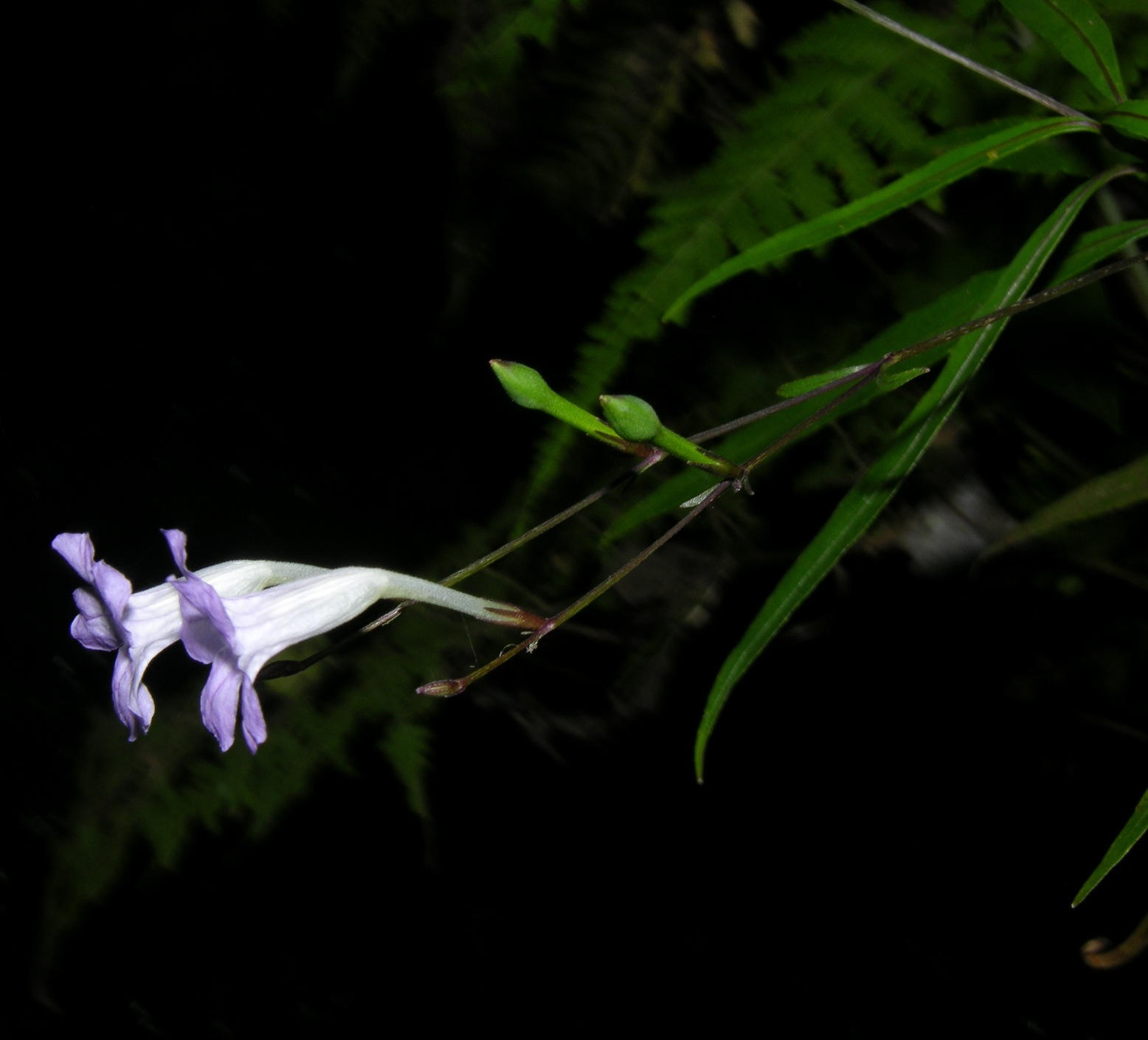
I am quite fond of this plant. I love the stark white flowers against its lime green vegetation. I love the tropical sub-deciduous forests it grows in. And I love the fritillary butterflies that pollinate it. If I were a painter, I’d paint it. And maybe that painting would turn out better than this old school photograph, which was taken in early grad school days… 2004 ish… with FILM! I first saw it in the cellulose while doing fieldwork with Linda, the mom…

Ruellia foetida is (not that odiferous, despite the name, but) closely related to R. amonea (see that page) and begging for further field study…

Wild collected, Mexico, Tripp, Kiel, & Hasenstab-Lehman #1213 (RSA-POM); Photo by Erin Tripp. Also seen and collected on an earlier trip with L. Tripp, the mom.

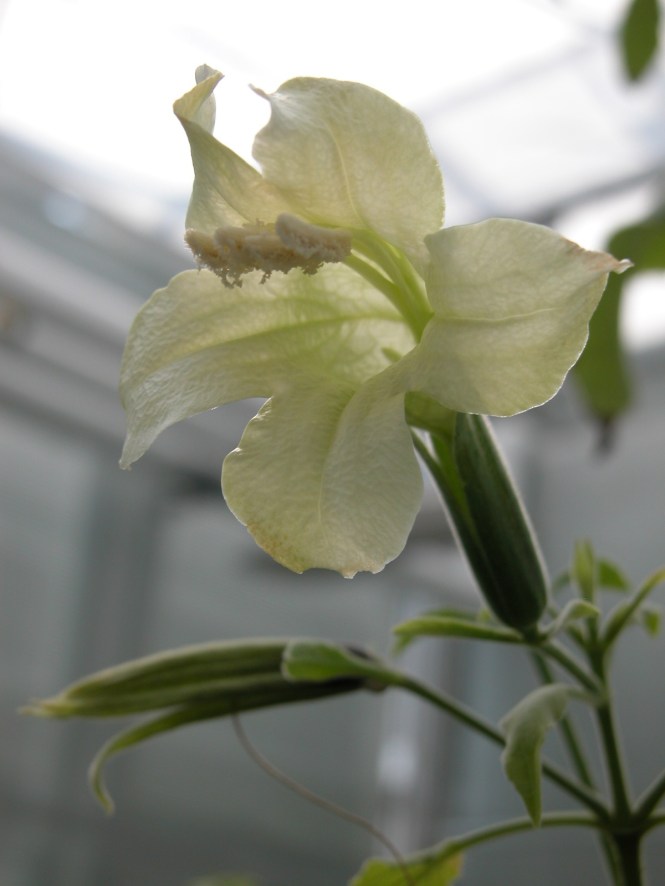
Ruellia exilis

Ruellia_exilis

This is a species that Lucinda and I described a few years ago. Seems almost certainly related to other pedunculate Costa Rica species (e.g., R. pittieri, R. stemonacanthoides), but different by its seriously lanky leaves. Currently known only from the Osa area of Costa Rica. I was delighted when Ricardo sent us a photo of this – my first viewing of it in the cellulose, for we described it based on herbarium specimens only.

Wild collected, Costa Rica, voucher unknown; Photo by Ricardo Kriebel

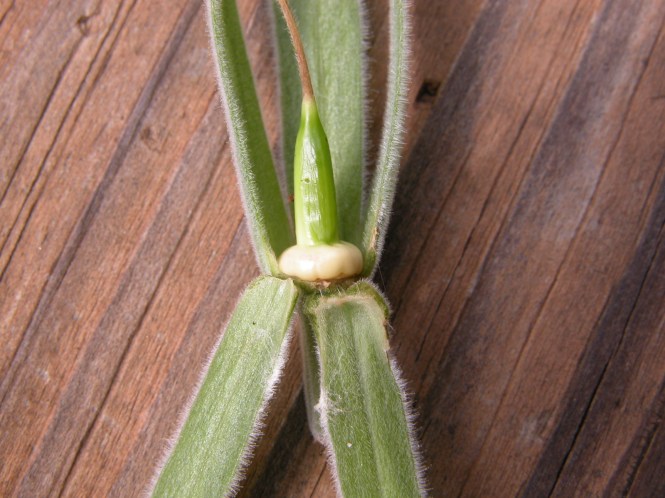
Ruellia eumorphantha

Ruellia_eumorphantha

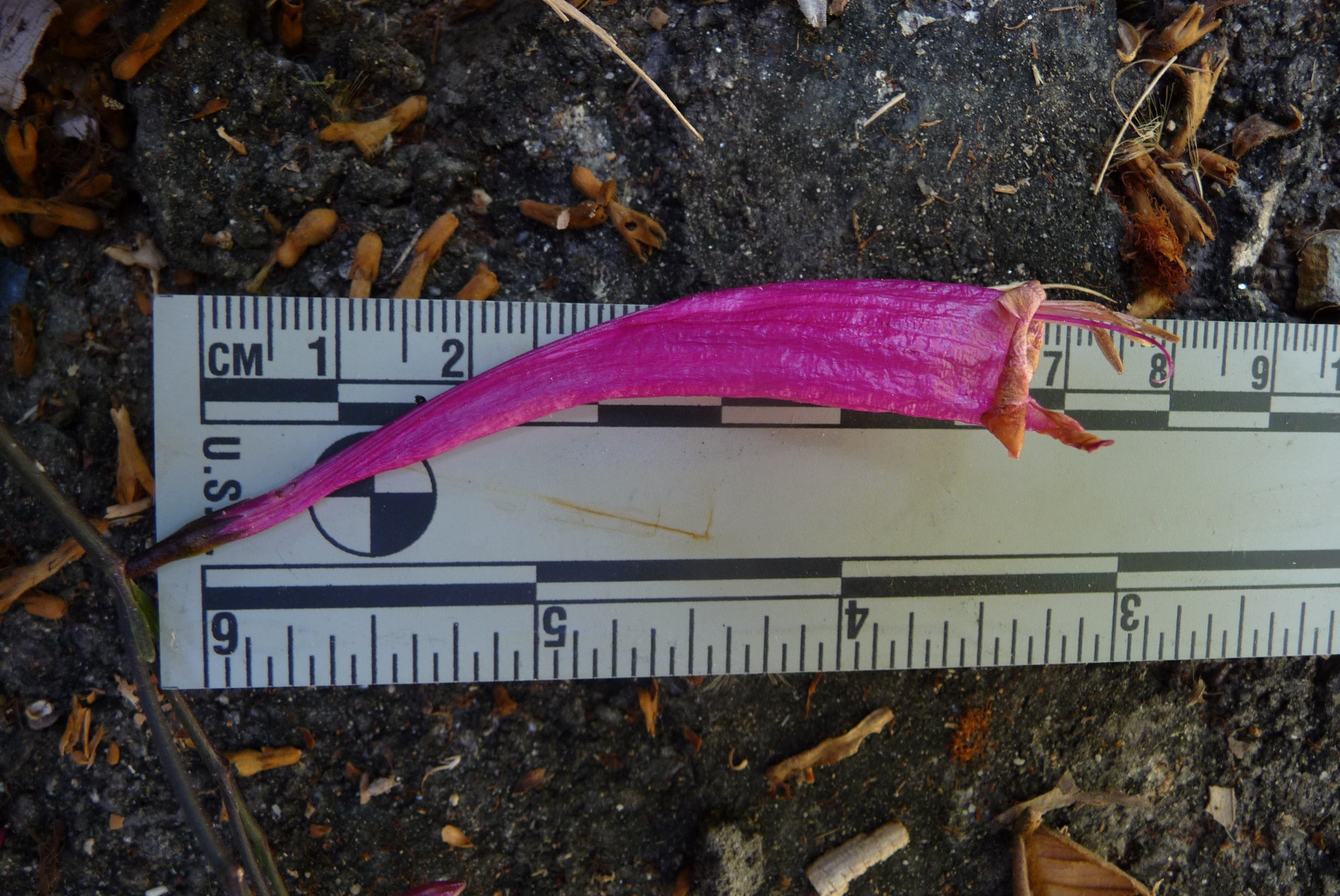
This plant is among the more exciting of my recent finds (well, not that recent). I don’t have any real reason why, other than that I find its flowers to be absolutely enchanting. A corolla tube nearly 7 cm in length? Must be a helluva hummingbird. And: I want to know all about those anthocyanins…

First (and the only time I have) found this species was on a highly successful collecting trip with friends and colleagues Carrie Kiel and Kristen Hasenstab-Lehman. We love Mexico.

Wild collected, Mexico, Tripp, Kiel & Hasenstab-Lehman #1221 (RSA-POM); Photo by Erin Tripp

Ruellia elegans

A Brazilian species known primarily not from its occurrence in the field but by its commonality in the horticultural trade. The photo on the left shows what I think to be an example of enantiostyly in Ruellia…. some flowers open with the upper style and stigma pointed to the right, and some to the left. A cool evolutionary story centered around reproductive outcrossing, if so.

The photo on the right shows a very interesting structure that our colleague Mariette Manktelow named “the filament curtain” in 2000. It is what it sounds like… each pair of filaments fuses to the corolla wall near the mouth, and forms a protrusion which continues all the way to the base of the corolla. All Ruellia have a filament curtain — in fact, almost all Ruellieae do (thus, it is synapomorphic for the tribe – see Tripp et al. 2013, International Journal of Plant Sciences). Currently, its function, if it has a function, is unknown. Hypotheses include floral stabilization, prevention of nectar evaporation, or some other function during plant pollination. See another example of the filament curtain under Ruellia bourgaei.

Not vouchered, cultivated (RSABG and DUKE Greenhouses); Photo by Erin Tripp

Ruellia discifolia

Ruellia_discifolia

To take this photograph, Ensermu and I drove 550 km down a wretched gravel road in Ethiopia (ok – I actually quite liked the trip – every bump of it, in the back of our Toyota Land Cruiser) to the Somalia border. We arrived by ~4pm, which was the same time we were to turn around, for safety reasons. Unfortunately, I didn’t get to view the flower in its open / anthetic state. That’s because it flowers at night, likely an adaptation to nocturnal moth pollination.

Oh well. Another population I must revisit. Cool stellate trichomes on the leaves.

Wild collected, Ethiopia, Tripp & Ensermu #905 (RSA-POM); Photo by Erin Tripp

Ruellia devosiana

Ruellia_devosiana

I really don’t know where to start with this species. It is wickedly attractive and beguiling – both its leaves and flowers – that part is easy to conclude. I long suspected it was some horticultural monstrosity that wasn’t validly published, but recently learned I was wrong. At least about the latter bit. There is much still to learn about evolutionary and possibly anthropological history of this species.

Not vouchered, cultivated RSABG greenhouses; Photo by Erin Tripp

Ruellia currorii

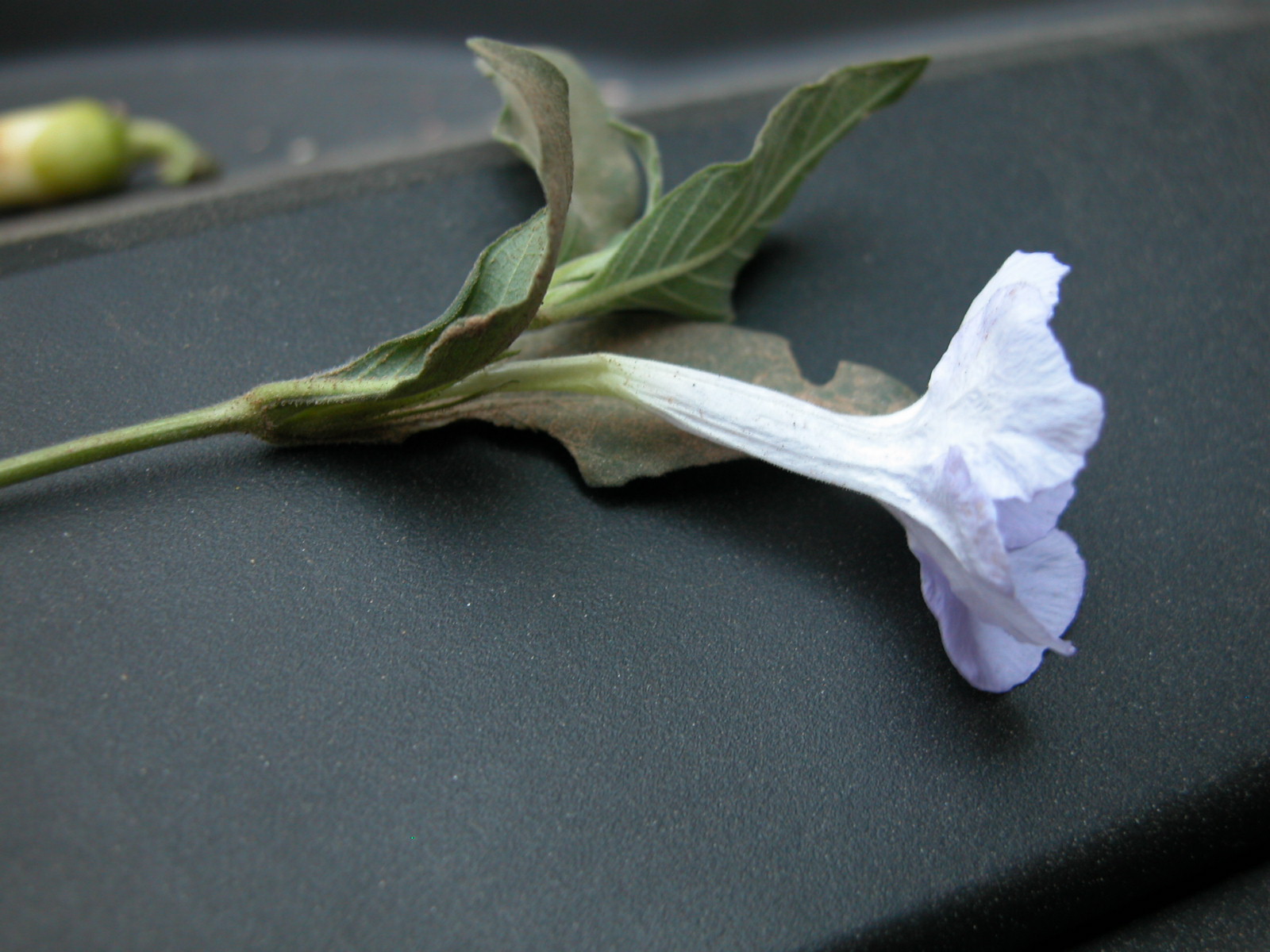
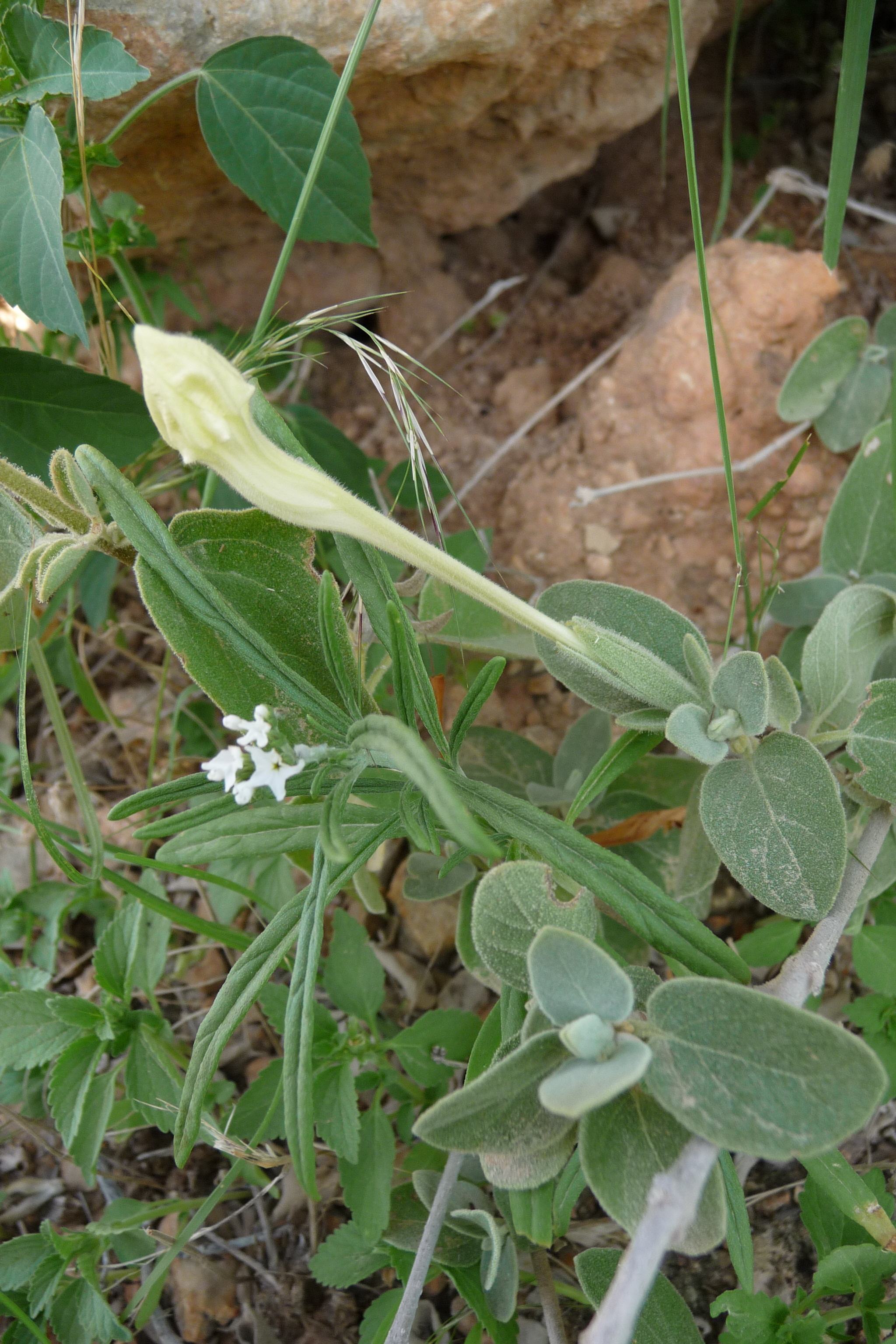
The so very cool things that we learn from one another… here are two photos that Frances Crawford at Kew shared with me, taken of the elusive Ruellia currorii, which is known from less than 7 collections and is endemic to southern Angola and northern Namibia. The reality is that this name might turn out to ultimately be representative of two different species… one with purple flowers like the plants pictured, and one with white to cream flowers. Time and more collections will tell. For now, we can only gaze at the distinctiveness of this plant by its terete, almost Justicia-like stems.

Wild Collected, Angola, Crawford #406 (K); Photos by Frances Crawford, used with permission.

Ruellia cuatrecasasii

The maestro of the day, and quite possibly of the entire trip for the story you are about to read, was Tom Lemieux. Tom is the long-term Greenhouse Manager of the most remarkable “30th Street Greenhouses”, which are owned and operated by the Department of Ecology and Evolutionary Biology at the University of Colorado, Boulder. Tom has been in his position for over 2 decades and his craftsmanship as a plant propagator, procurer, and advocate makes him one of the most valuable members of our department. He came along on our research trip to lend a hand and also to learn a few new things about Acanthaceae / tropical botany. And on this particular day in early January 2015, were we so grateful for his participation and contributions.

Ruellia cuatrecasasii (named in honor of the great Spanish botanist Jose Cuatrecasas) was, prior to our trip, one of those incredibly rare species that you generally know only from a museum. In fact, it was known only from the type collection, which was made by Cuatrecasas back in the 1960s. Given that the species was said to occur in mature forests of lowland Colombia, our a priori expectations were to find no suitable habitat left for this remarkable species. Nonetheless, we tried. The type locality took us near the tiny community (really just two houses) of Villa Arteaga, south of Chigorodó and north of Mutatá in NE Colombia. Much of the landscape was cutover but to our surprise there were scattered patches of intact, primary forests remaining within eyeshot of the highway. We eyed it like rabid dogs, and, very near to Arteaga, headed east on a short dirt road towards an oil palm refinery. Manuel and I went inside to inquire whether there was any chance that they might allow us access to the primary forest on their property, to search for this rare species. These sorts of conversations usually take at least 3 hours, and in the end, we thought for sure that they would say no.

Our conversation with the foreman in a big, heavy construction site lasted about 9.5 seconds. He told us to go for it, and sent us on our way.

Stepping into that forest felt so incredibly special not only because we were likely some of the first botanists to lay eyes on it, but also probably the last. It was a small patch no doubt, but one full of magic and life. In another 10 or 20 years, it will likely be as desolate as the rest of the cultivated landscape that surrounds it is. But not to ruin a great moment: we weren’t underneath that dark canopy 3 minutes before Tom looked at us, pointed towards a small tree, and said: “What’s that?”. It’s as if he knew what he was looking for, yet it was only I who had a good sense of what a sterile Acanth tree might be masquerading as….

We spent another 2 hours in lowland bliss and only saw a handful of other individual plants of Ruellia cuatrecasasii. Still, we found it in seed, which means that the species might forever be preserved in someone’s greenhouse, should we be lucky enough to grow it. To advance this goal, we immediately sent seeds to colleague Rosanna Freyre, who has one of the greenest thumbs of all….

Wild collected, Colombia, Tripp et al. 5186 (COLO), photos by Manuel Luján
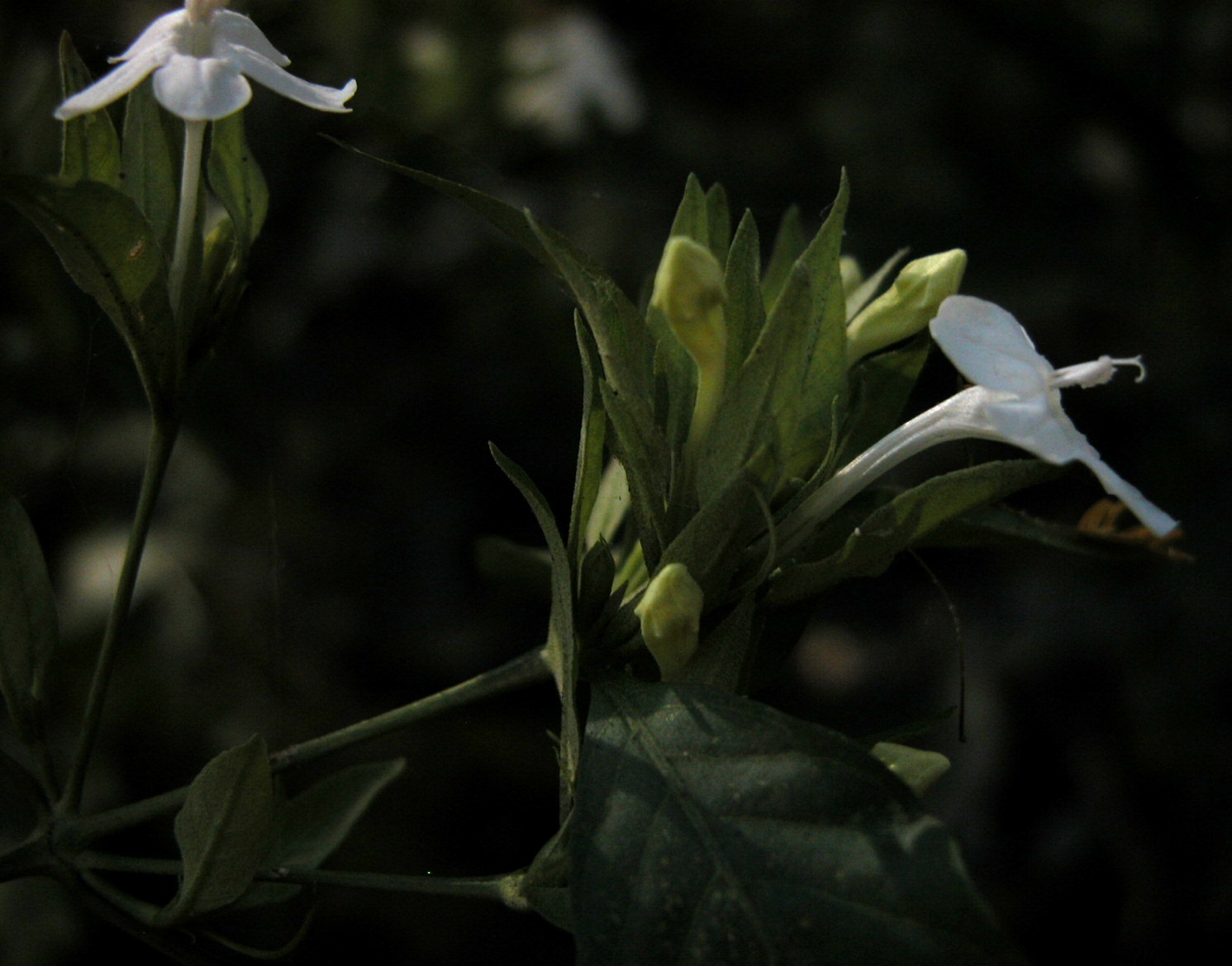
Ruellia conzattii

Ruellia_conzattiiRuellia_conzattii_bignectary

An attractive species that is endemic to southern Mexico…and a stinky one. I can more or less determine its presence in a forest when I first walk into said forest, based on odor in the atmosphere (this also applies to the the other 10 or so taxa in the “bat-loving” Chiropterophila clade). I suspect this species represents an evolutionary “intermediate” in pollination systems (yeah Stebbins…just like you predicted….), i.e., that it is currently adapted to hummingbird pollination but is on its way to full blown bat pollination. Check out that nectary. Some serious fluids flowing from she.

Wild Collected (and later cultivated, DUKE and RSABG Greenhouses and Kate’s back yard), Tripp 188 (DUKE); Photo by Erin Tripp