Ruellia hirsuto-glandulosa

Ruellia_hirsutoglandulosa

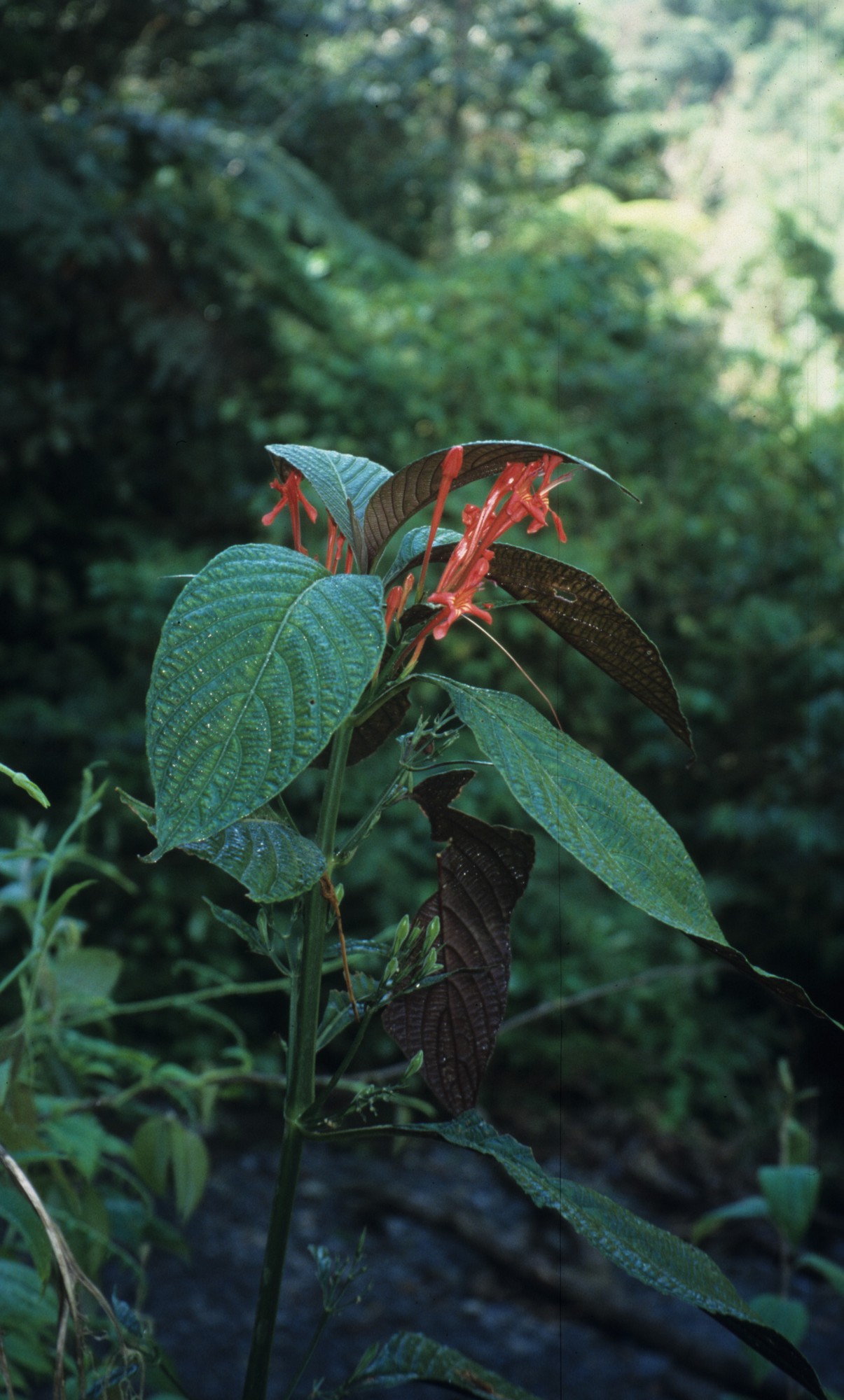
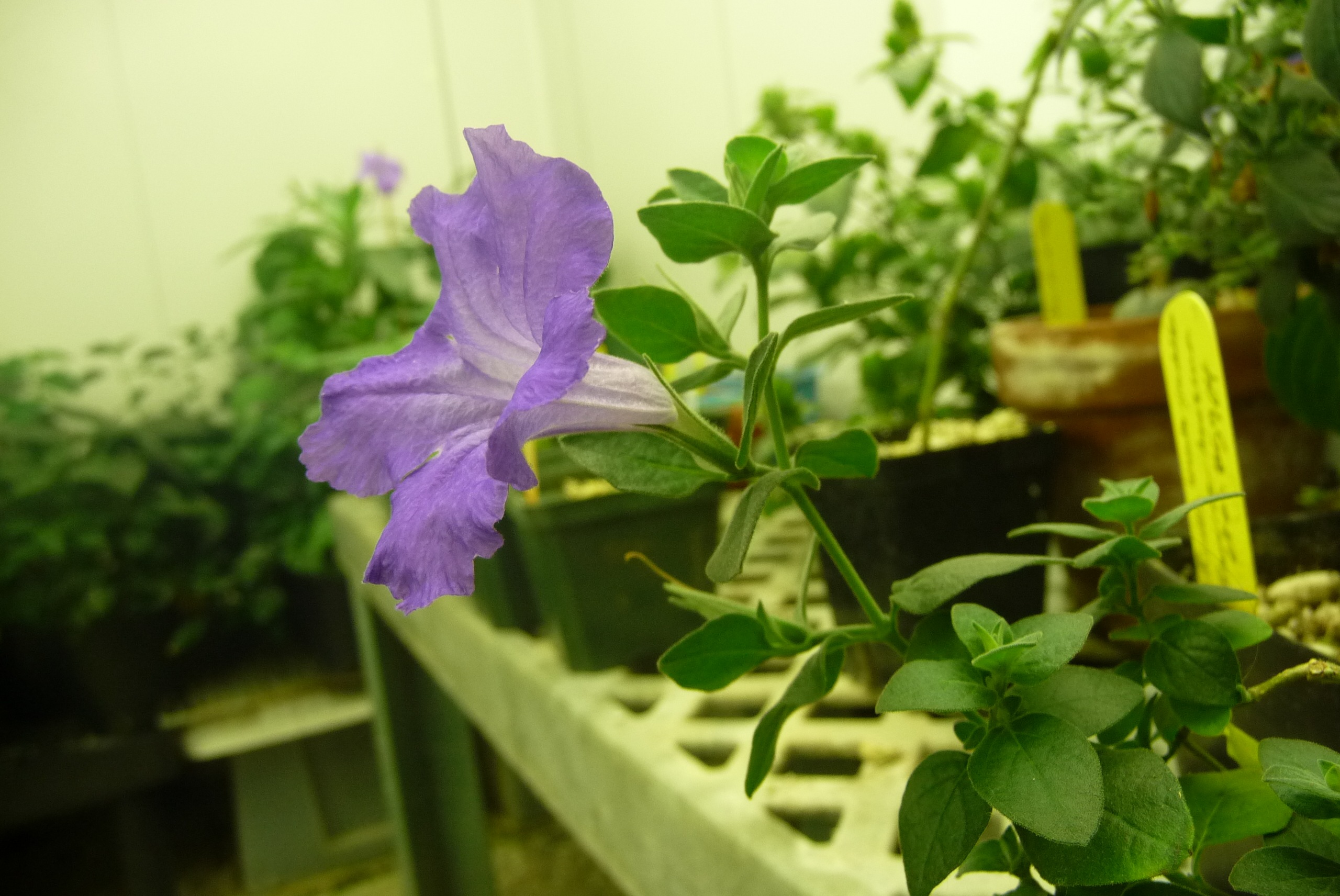
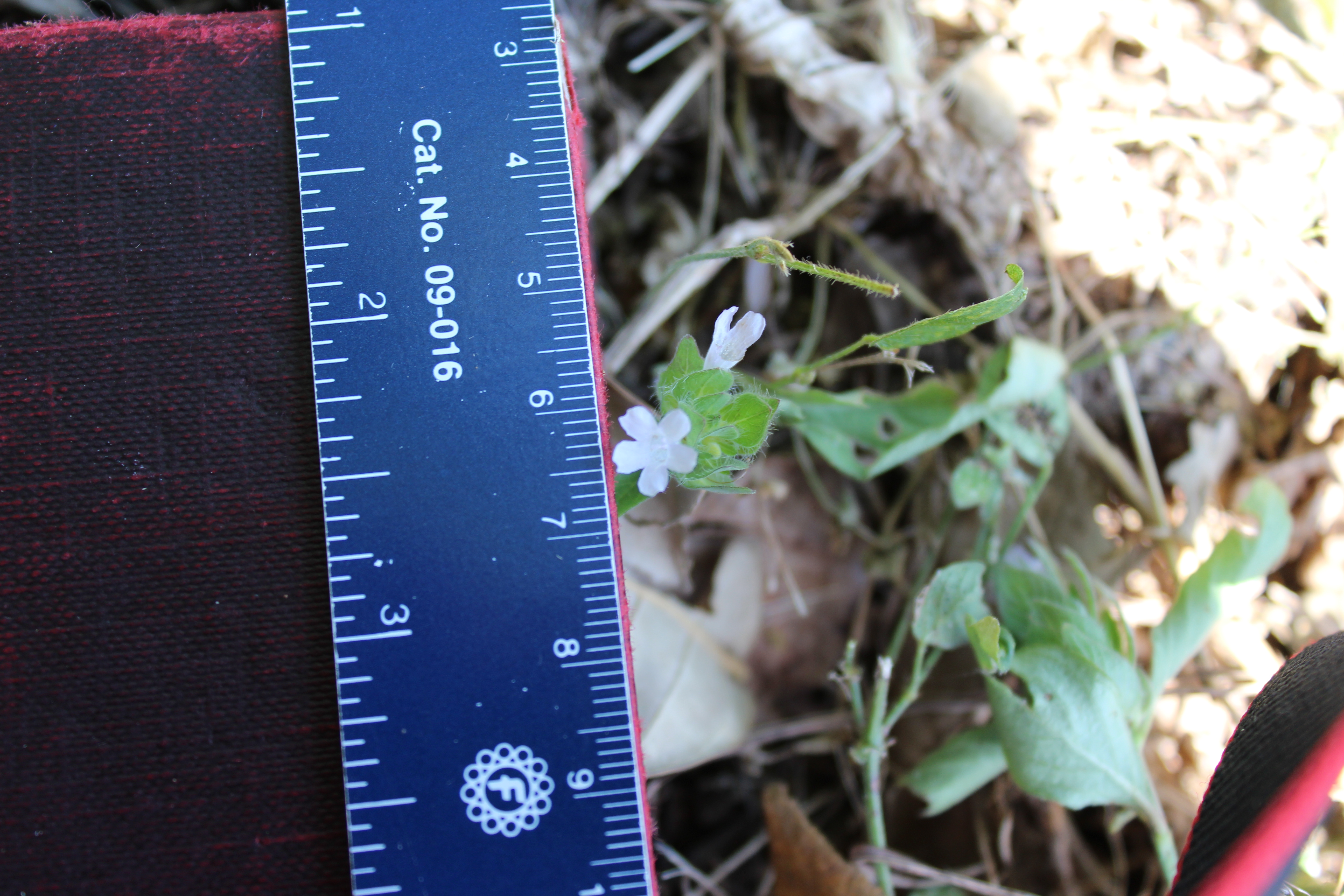
Another species I have been denied the fortune of seeing in the celluose, BUT: I grew some seeds that our colleague Victor Steinmann sent, and voila! Crapshoots pay on occasion.

I have some preliminary data that suggests Ruellia hirsuto-glanulosa may be sister to the yellow-flowered Chiropterophila clade. Now that would be something… and…. it would allow me to pinpoint with some accuracy, the evolutionary loss of floral pigmentation in this lineage of plants.

Tremendous thanks to Tom for clarifying aspects of the biology of this species in his extensive work on Mexican Acanthaceae.

Cultivated, RSABG Greenhouses, Tripp & Ly #938 (RSA-POM); Photo by Erin Tripp
Ruellia haughtii

Ruellia_haughtii

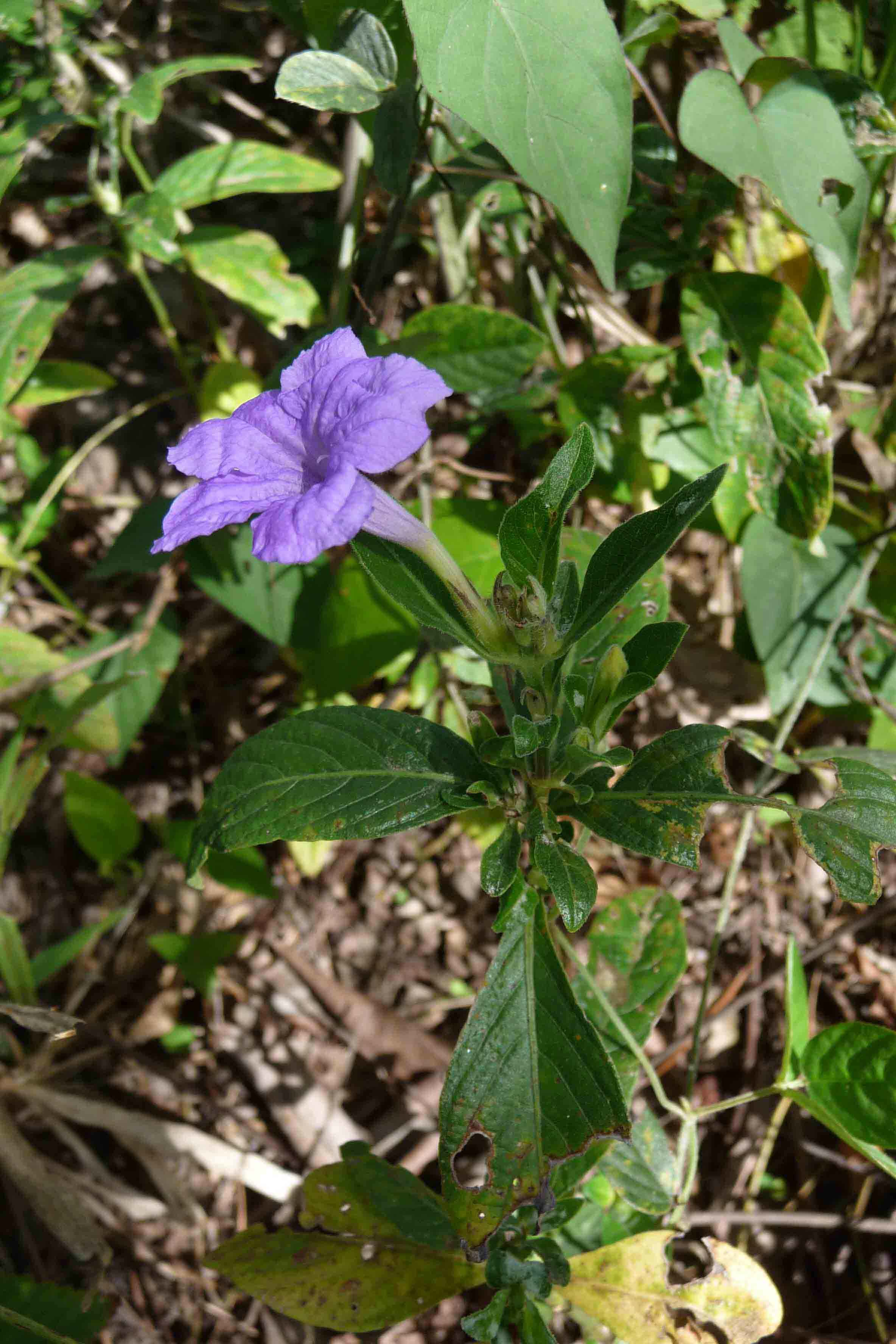
We all know that haughtyi would have been the much better spelling for this epithet that is presumptuous enough to mimic Ruellia blechum, but… we weren’t so lucky.

We have not seen your pollen, nor your DNA, but in Tripp et al. 2009 (TAXON), we combined you into Ruellia anyway. SORRY! Or not. It might turn out to be a more comfortable house, anyway.

Ruellia haughtii is a species very similar to R. costaricense but the leaves of the former are more distinctly serrate and the bracts are apically acuminate. Nonetheless, neither species is known from much herbarium material and as such, more field studies with new collections are needed.

The type collection of R. haughtii is from the Turbo area in Antioquia, Colombia. In January 2015, we found and collected it along the beautiful coastal highway between Arboletes (sigh) and Zapata, along both sides of a mowed road. Shortly before the best piña colada of my life.

Wild collected, Colombia, Tripp et al. #5182 (COLO); photo by Grant Godden

Ruellia haenkeana

Ruellia_haenkeana

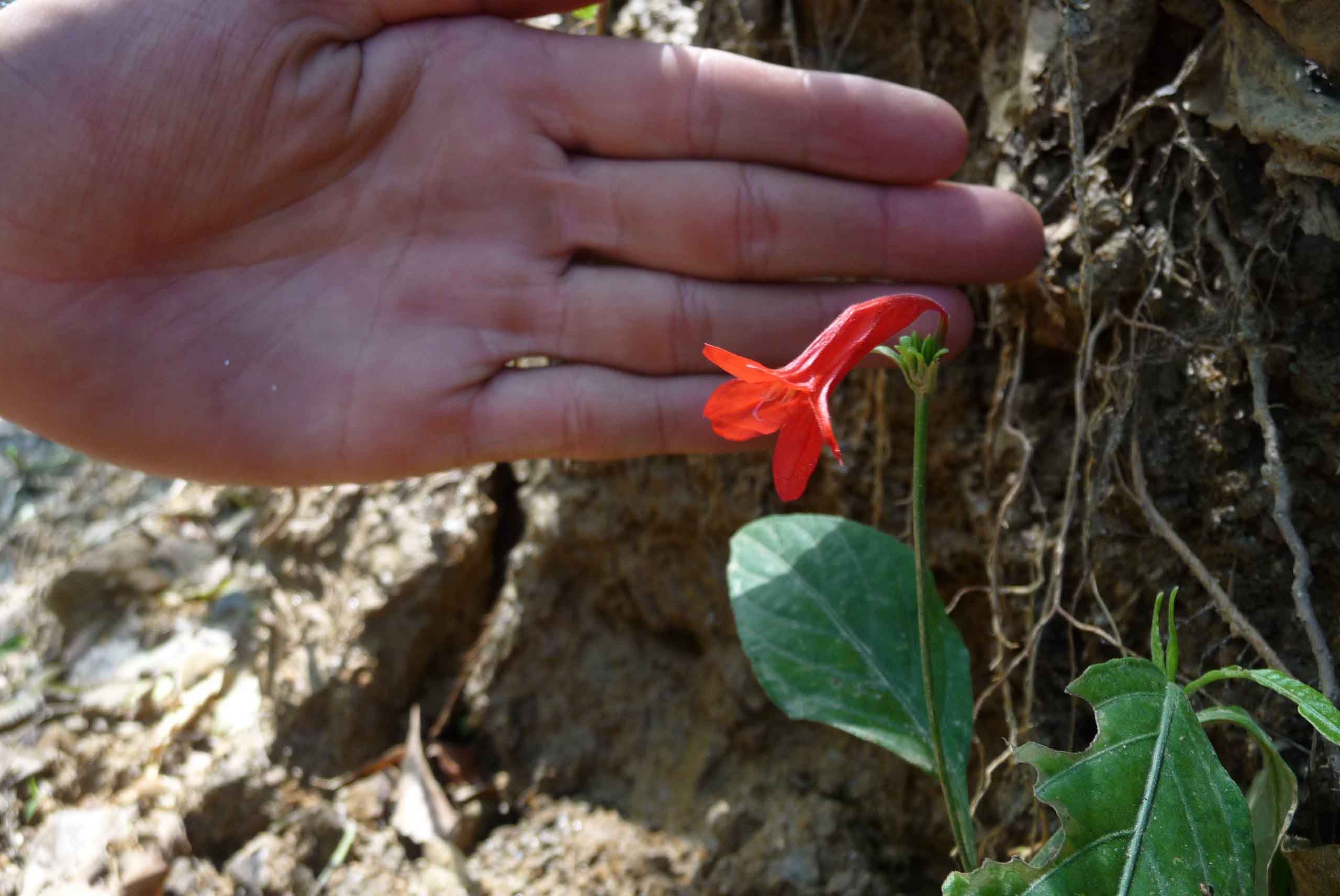
A fine South American species I haven’t had the pleasure of seeing myself (yet — my lifelong goal is to see every species of Ruellia in the field. Something like a birding life list, only better). Nice anthocyanin accumulation on the undersides of the leaves. WHAT is the adaptive value of that? Many have debated… None have an answer…

Wild collected, Bolivia, Schmidt-Lebuhn #82 (GOET); Photo by Alexander Schmidt-Lebuhn

Ruellia grisea

Leonard described Ruellia grisea as a distinctive species based on a combination of features, but failing to compare it to the obvious close relative Ruellia fulgida. In general, I’m not inclined to trust Leonard in most cases. But he might have been right on this one. Grant, Nico, and Manuel scored a population of plants ascribable to R. grisea immediately after I left Colombia to return to Colorado (damnit, but yay). Check out the photos. Go ahead and study this plant (just as Manuel and Arecio are doing in this action shot that I love so much… actually, they are sampling leaves for RNA tissue, but let’s pretend they are studying the morphological complexity of this species while contemplating the meaning of the world). Obviously it is densely and evenly pubescent (hence the specific epithet). I have never seen Ruellia fulgida with anything more than a pre-school attempt at trichomes. Maybe Emery Leonard was correct after all.

For now, I am going with R. grisea. Ask me again in another 5 years.

Wild collected, Colombia,  Tripp #5241 w/ Manuel Luján, and Grant Godden  [COLO]; Photos by G. Godden

Ruellia golfodulcensis

Not a species I have yet had privilege of seeing in the cellulose, but a BIG thanks to Ricardo for passing these photos my way. A Costa Rican endemic, Ruellia golfodulcensis is highly distinctive by its calyx alone. There is only one other species that, IMO, approaches a similar morphology, and it is Brazilian. I always thought Ruellia golfodulcensis had pure white flowers (based on herbarium labels), but so clearly you can see traces of anthocyanins in one of these photos. Learn something new every day!

Wild collected, Kriebel (voucher unknown); Photo by Ricardo Kriebel

Ruellia geminiflora

Ruellia_geminiflora_Tripp437f

Jesus, do you want me to write something about this terrible species? Are you going to pay me? If not, then at least send donations to:

The Ruellia Resolution Fund

c/o Erin Tripp

C105 Ramaley Hall

University of Colorado, Boulder 80309

Ruellia geminiflora is an extremely widespread species, ranging from Mexico south to Corrientes, Argentina. It is one of the (TOP THREE) most variable species in the genus, but for whatever reason, I can always pick it out.

Don’t ask me how to identify it. You don’t. You feel it. And on that note, there isn’t much more to say. Learn to respect what you don’t understand….

Wild collected, Venezuela, Tripp & Lújan #437 (RSABG); Photo by Erin Tripp

Wild collected, Bolivia, Tripp #5974, #6007, #6015 w/ Manuel Luján, and Dina Clark (COLO)

Ruellia galeottii

Long before I owned the molecular data to support the hypothesis, I strongly suspected that this funky little plant was clearly related to Ruellia inundata and Ruellia paniculata…. it has the flowers of one and the fruits of the other. I don’t have any chromosome data for Ruellia galeottii, but I’m sure curious to know if it is diploid. Someday, I’d really like to study this clade.

Wild collected, Mexico, Tripp & Dexter #159 (DUKE), photo by Erin Tripp

Ruellia fulgida

Ruellia_fulgida

This is a fine species from northern South America. Not uncommon, but not terribly common either. Certainly you know it if you are from that part of the world. I was happy to lay eyes on her. Manuel and I found this late in the day after a very wild ride on a road that absolutely hugs the Atlantic coast in the steepest and most intimate of manners. Got stuck for many hours in a river crossing, actually right where the river dumps into the ocean. Tide rising, getting worried. Sat stranded until we flagged in a dinghy full of local fishers. Convinced them to come onshore. After another two hours, we finally unstuck the vehicle. Cruised on towards this population of Ruellia fulgida as if nothing had ever happened…

Wild collected, Venezuela, Tripp & Lujan #488 (RSA-POM); Photo by Erin Tripp

Ruellia fulgens

Ruellia_fulgens_Carol Gracie_French Guiana

If I could turn back time… then I might understand how it came to be that Ruellia fulgens evolved as the sister taxon to a massive South American radiation of Ruellia: the Physiruellia clade. A minimum of 50 and as much as 100 species.

Ruellia fulgens was previously treated in the genus Polylychnis, which was separated from Ruellia by plants having shorter calyx lobes, weakly opened corollas, and dentate nectary discs. The former two features are unreasonable distinctions given the tremendous morphological diversity in Ruellia, and the latter has not been systematically surveyed in Ruellia such that nectary shape is more or less unknown throughout the genus. See Tripp (2007, Systematic Botany) for the taxonomic combination into Ruellia. Out you go, Polylychnis.

There is more appeal the sister group relationship of Ruellia fulgens to the rest of the Physiruellia clade than doing away with a terrible name such as Polylychnis. Ruellia fulgens is one of very few Acanthaceae (period!) that occurs in the Guiana Shield…. an area conspicuously lacking in Acanth diversity. I pay a lot of attention to Neotropical phylogenies, and numerous are the instances in which the sister taxon to some massive Andean or Amazonian radiation occurs in the Guianas. The Guiana Shield has long been hypothesized to represent a biological refuge during Pleistocene glaciations and other climatologically dynamic events.

There is at least some phylogenetic evidence to support the above hypothesis, including our beloved red-flowered Ruellia baby.

Wild collected, French Guiana, voucher unknown, photo by Carol Gracie (thank you Carol!)

Ruellia fruticosa

Another species in my favorite clade, Ruellia section Chiropterophila. This one is pretty funky morphologically – I have NO idea what pollinates it. As observed in the two photos, some flowers of Ruellia fruticosa are protogynous, and some are protandrous. Based on field sites I’ve visited in comparison to herbarium records, I suspect that this species, like most others in Chiropterophila, have declined in abundance through time, unfortunately (see Tripp 2010, Systematic Botany). I’d love to learn more about the natural history of this plant at some point in life. Preferably sooner than later.

Interesting green pigmentation at the tips of the corolla lobes, eh?

Wild collected, Mexico, Tripp & Acosta 165 (DUKE); Photo by Erin Tripp