Ginni Mulder

Ginni Mulder

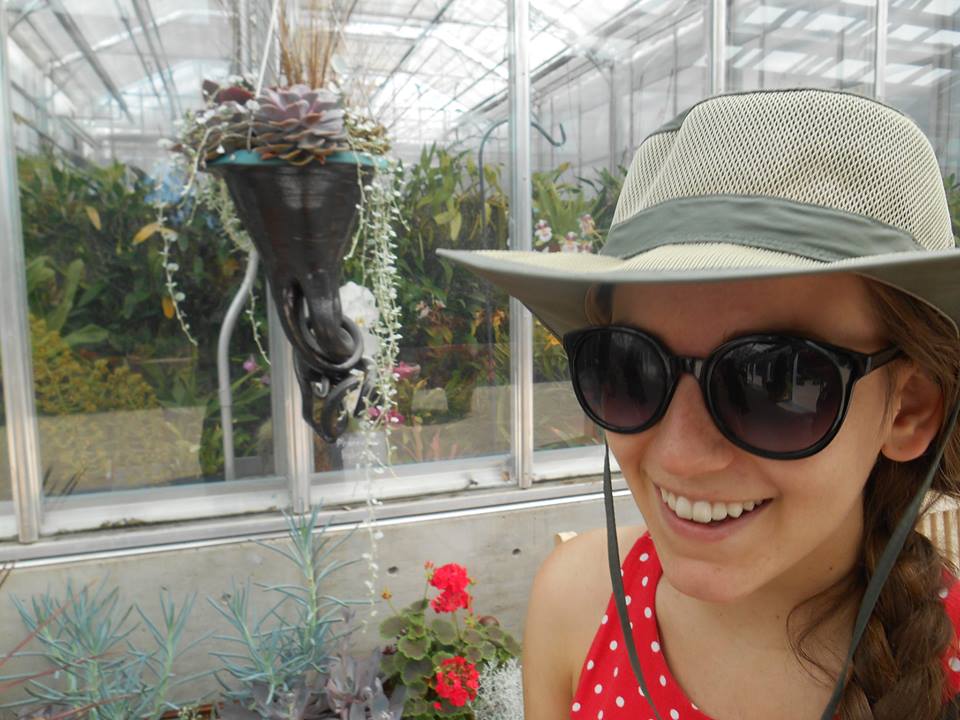
Ginni is a native of Denver, Colorado and is an undergraduate student at CU Boulder studying Ecology and Evolutionary Biology.  In the Tripp Lab, Ginni used UROP funds to conduct phylogenetic research on an impressive and apparently very rapid radiation of plants: the genus Petalidium (Acanthaceae). Species of Petalidium represent some of the most ecologically important plants in the ‘ultra-arid’ deserts of Namibia and adjacent southern Angola. She built datasets to answer the overarching question: How and why has Petalidium speciated to such a degree, in such a narrow corner of the Earth (biotically driven, abiotically driven, or some combination thereof)? She used fresh field collections of Petalidium in order to begin to reconstruct the evolutionary history of this fascinating radiation. Ginni also works (and has a lot of fun!) at the 30th Street Biology Greenhouses on campus. In her free time, she loves to garden, hike, bake, and spend quality time with her friends and family.
Michael Lawson

Michael Lawson

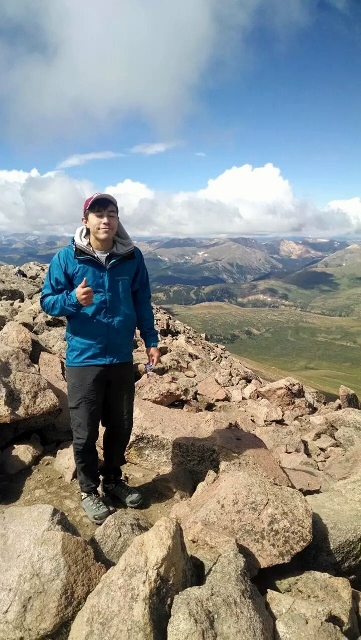
Michael is a native of Durham, North Carolina and an undergraduate student at CU Boulder. He is undecided in his major, but is interested in a biology route. In the Tripp Lab, he conducted phylogenetic research on the previously understudied genus Arthonia. With ~600 species, the genus Arthonia is one of the most diverse lineages of lichens on the planet. In North America, Arthonia is represented by ~150 species, making it the fourth most diverse genus in this region after Lecanora, Cladonia, and Caloplaca. What drives high diversification in this important biological radiation? Is it the fact that most species are sexually reproducing, or that they grow mostly on bark? Alternatively, is high diversification related to the rampant switching of modes of nutrition present in the genus (lichenized, parasymbiotic, parasitic, saprophytic)? The impressive ecological amplitude demonstrated by species of Arthonia demands an evolutionary context for understanding this radiation. Yet, at present, sequence data are available for less than 30 species (GenBank). The goal of this study is to build a phylogeny of North American members of Arthonia, to facilitate downstream comparative investigation. To accomplish this, he extracted DNA from fruiting bodies and then used PCR and sequencing to build molecular data. Once enough data are collected, a phylogeny will be reconstructed to study evolutionary features of this understudied genus. In his free time, Michael likes to play soccer, fly fish, ski, spend time with friends and family, and watch Duke Basketball!

Joseph Kleinkopf

Joseph Kleinkopf
Joseph, a Boulder native, is an undergraduate in the Department of Molecular, Cellular, and Developmental Biology with a flair for active pursuits and the arts. In the Tripp Lab, he is currently working on a project in collaboration with the COLO Herbarium (co-advised by Collections Manager Dina Clark) regarding phenotypic variation within the Amorpha nana species complex. This “species” has been treated as a single entity in western North America, but populations in southern Colorado are morphologically divergent from other populations elsewhere in Colorado. Joseph is using his MCDB skills to test whether these phenotypic differences are underlain by molecular differences or can instead be explained by environmental / other influences. Joseph’s academic interests include bio- and organic chemistries, genetics, and medicine, and he hopes to continue furthering his education in the life sciences after graduation. In his free time, he likes to hike, play/watch hockey, and discover tasty new micro brews.

Heather Stone

Heather (2)

Heather is not technically a grad student. (No one is 100% sure exactly what she is, but she does work as a research assistant and is definitely a mammal.)

She a Colorado native and graduate of CU Boulder with a BA in Spanish. In the summer of 2012, she traveled to Costa Rica with the aid of a UROP grant to augment her Spanish and work as a research assistant at La Selva Biological Station. The stunning biodiversity of Costa Rica and exciting atmosphere of the research station galvanized an intense curiosity and interest in science. This enthusiasm, coupled with a lifelong love of plants, made working with Erin Tripp a great fit. Among other projects, Heather is currently doing a large-scale reproductive isolation experiment on 16 Ruellia species, which will enhance understanding of what factors prevent or facilitate speciation within the genus. Her research interests include anthocyanins, pollination biology, and a little bit of lichens thrown in too. In her free time, Heather maintains an art and science website and co-hosts a podcast. She also likes to travel, enjoy the outdoors, make ceramics, bicycle, and draw.

Mathew Sharples

mat

Mathew is a Massachusetts native with a B.A. in English Literature (German minor) from the University of Massachusetts. He moved to Colorado after being inspired by some of the West’s extensive wildlands. Now, he studies Ecology and Evolutionary Biology, with a particular interest in Kingdom Plantae. His main research interests are floristics, phylogenomics of the Caryophyllaceae and other lineages, biogeography and evolution of Stellaria, and phylogeography. In his spare time he enjoys scaling some of the country’s—indeed, the world’s—highest peaks, and applying that literature degree to his own writings.

Mat recently returned from fieldwork and herbarium work in the Himalaya and other mountainous regions of eastern Asia. There, he completed sampling for a more or less full phylogenomic analysis of the genus Stellaria.

Mat’s floristic inventory of the South San Juan Mountains was recently published:
Sharples Floristic Inventory.

His website can be visited here: https://mathewsharples.com/

An updated C.V. can be located here: Curriculum Vitae – Mathew Sharples_Spring18

Vanessa Diaz

vanessa

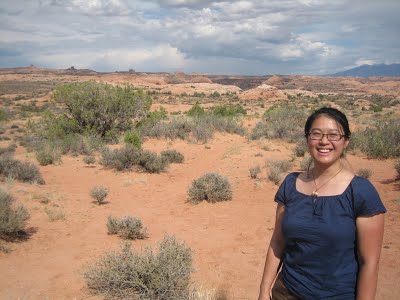
Vanessa (on the left!) is from Tucson, AZ and got her BS in microbiology form the University of Arizona. She moved to Colorado for the natural beauty and new opportunities the state had to offer. Over the years she has developed a special interest in mycology and is currently researching lichen development in the Museum and Field Studies program as a graduate student. Playing viola in the university orchestra, cooking, hiking, and trail running are among other activities Vanessa enjoys.

Erica Tsai

erica

Erica is a math-nerd with expertise in bioinformatics, phylogeography, and programming.  As a postdoc, she’s working on genome assembly and transcriptome analysis of next generation sequence data from Ruellia species.  She grew up in Fort Collins, CO, earned her B.A. at the University of Colorado Boulder, then did her Ph.D. at Duke University on the migration history of a parasitic plant.  Following a joint postdoc between Louisiana State University and the University of Notre Dame on phylogeographic methods development and ancient DNA analysis, she has returned to Colorado.  She happily enjoys hiking, biking, and the good life here.

Erin Tripp

IMG_20171026_085940_290

Erin is an evolutionary biologist who loves field, herbarium, and lab work (perhaps in that order: ask her!). She uses data from all three sources to reconstruct macroevolutionary patterns and correlates of biodiversity distribution and ecology. She attended University of North Carolina-Asheville for her undergrad degree, Duke University for her Ph.D., and Rancho Santa Ana Botanic Garden for a postdoc. Erin’s work draws primarily from rich datasets available for the pantropical family Acanthaceae, which is among the 10 or so largest families of flowering plants. Closer to home, she is keenly interested in discovery, documentation, and conservation of the North American lichen biota, in particular, of “her old favorite and new favorite places on Earth,” the Southern Appalachians and Southern Rocky Mountains. In her spare time, she enjoys botanizing, birding, exploration of wild areas on foot, carpentry, and flying airplanes. She dreams of starting a biological research station on top of a tepui…

Tepui Expeditions: Video Footage

You can reach Erin at erin.manzittotripp@colorado.edu.

Herbarium:

University of Colorado, Boulder
Museum of Natural History, COLO Herbarium
Clare Small Basement, Campus Box 350
Boulder, CO 80309
Phone: 303.492.2462

Molecular Lab:

University of Colorado, Boulder
Department of Ecology & Evolutionary Biology
C105 Ramaley Hall, Campus Box 334
Boulder, CO 80309

Ruellia yurimaguensis

Behold, a purple-flowered herb from wet forests of tropical western South America. I have never seen or collected it, but I have some suspicions that it may be synonymous with a couple of other ‘species’ in that part of the world. Many thanks to Alexander for sharing his photograph collection with me.

Wild collected, Bolivia, Erin Tripp #6031 w/ Manuel Luján, and Dina Clark; Photos by Manuel Luján and Dina Clark

Ruellia wurdackii

Ruellia_wurdackii

Here is a highly enigmatic species from Venezuela. I have tried to find it in the field, but have failed. If you know something of this plant, please do share. Its calyces remind me of Ruellia glischrocalyx, from Brazil.

Collector and collection information unknown, Venezuela; Photo unknown. If it is yours, kindly claim!