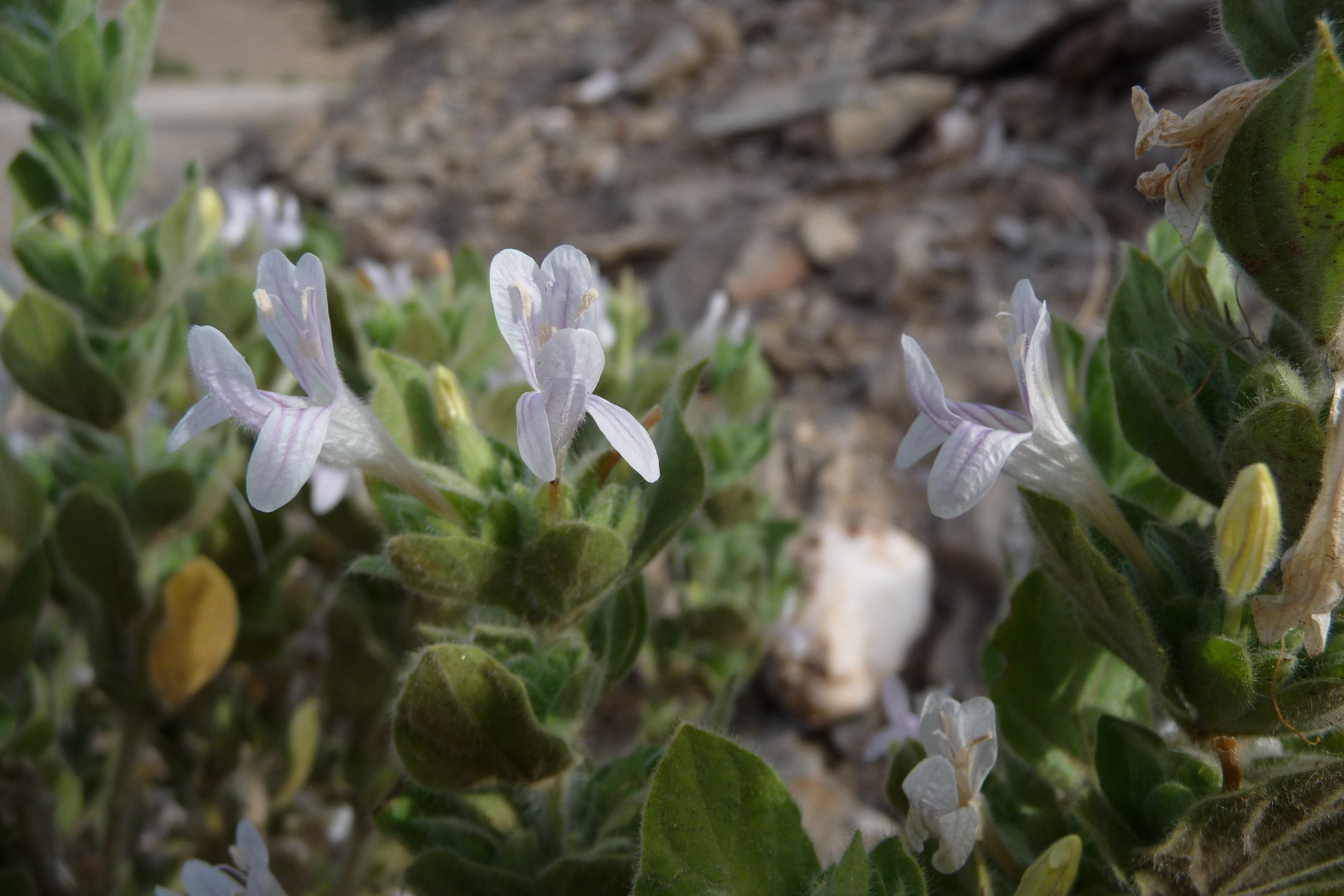
Ruellia aspera

Ruellia_aspera

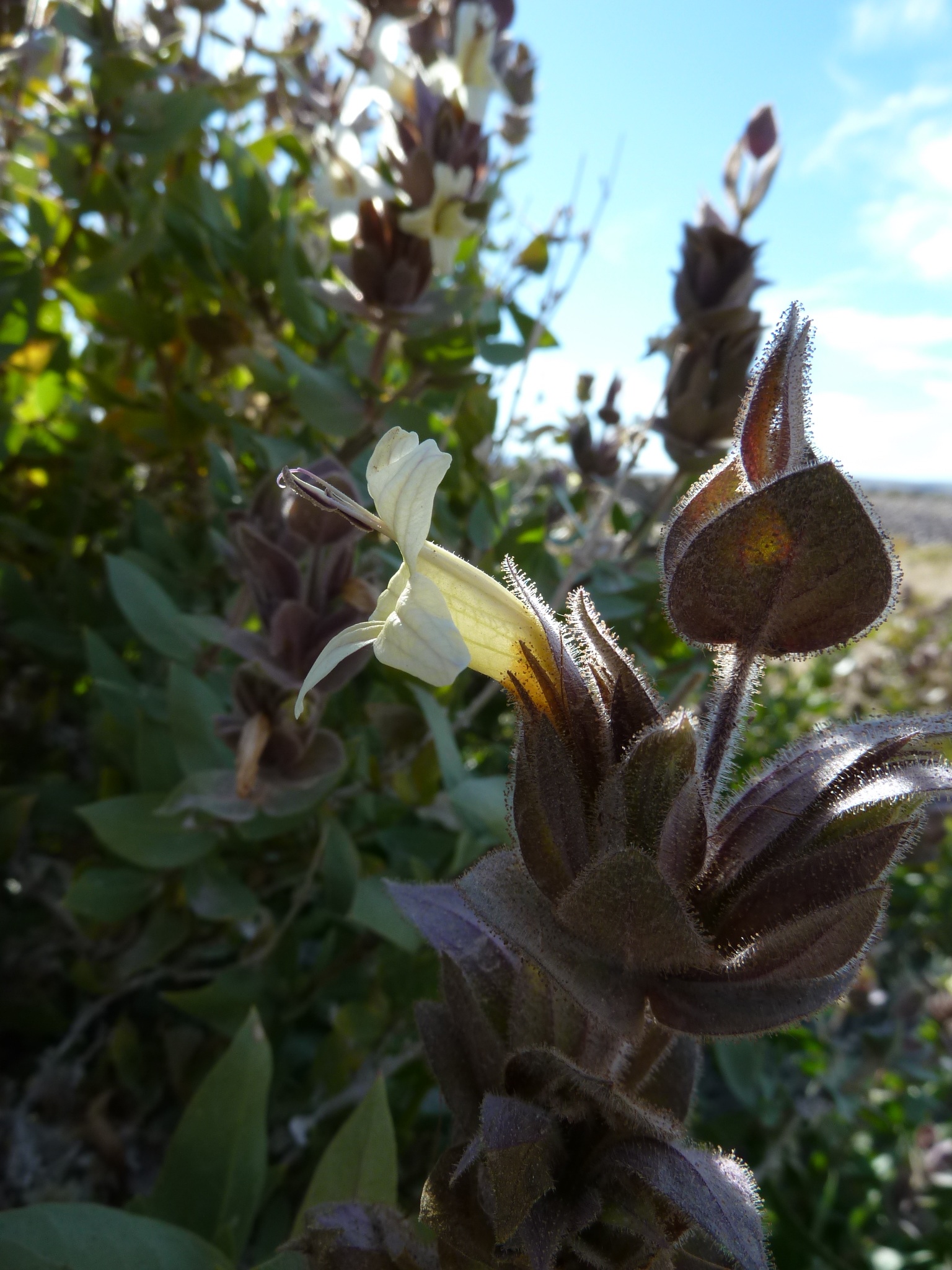
As the name implies – this plant is SCA-BROUS. Yep. In this case, the leaves… particularly older leaves. Ruellia aspera is an absolutely remarkable species from southern Namibia, where it is uncommon but, if found, locally abundant.

A real beauty, and one beheld surely by many eyes other than my own.

Wild collected, Namibia, Tripp & Dexter et al. #2079 (RSA-POM); Photo by Erin Tripp

Ruellia antiquorum

Ruellia_antiquorum

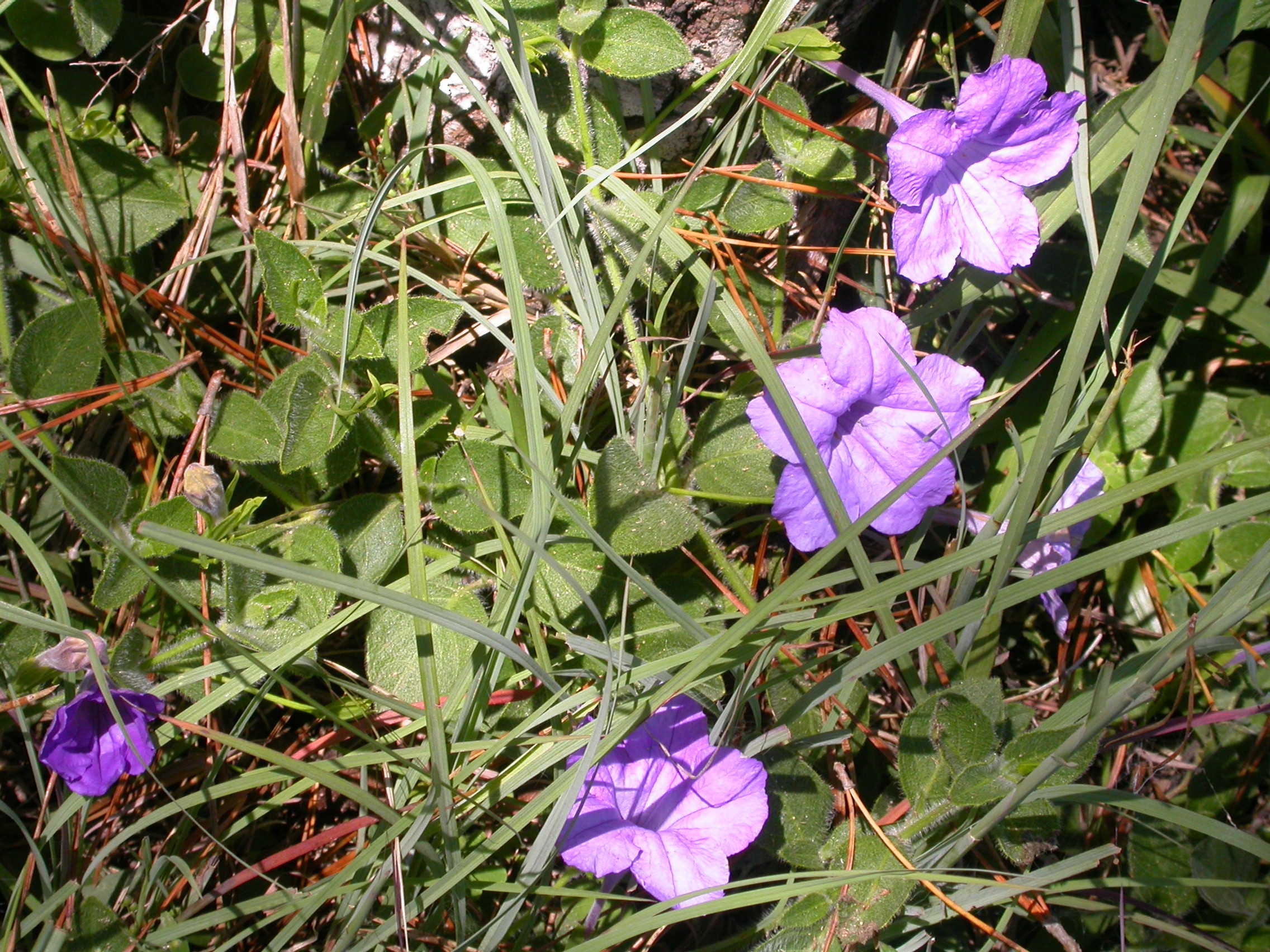
Here is a petite endemic species described by our colleagues Dieter and John in 2003. I have never seen anything of this plant other than the photos that John so courteously shared, but it looks distinctive to me.

I do not yet know what clade this species belongs to, but based on the protologue, I predict membership in Physiruellia.

Wild collected, Bolivia, Darwin Initiative Project #162/11/010; Photo by John Wood

Ruellia anthracina

Ruellia_anthracina

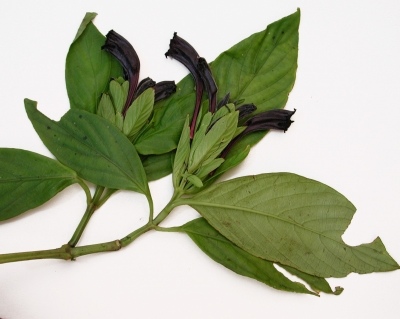
I am so incredibly envious of any and all of you who have had the fortune of seeing this one alive / in the field. I think I’ve been having dreams about it for at least a decade now – ever since Lucinda told me there was a black-flowered Acanth. Yep – black. Even the herbarium labels say such. Some overly committed anthocyanin accumulation in the flowers of this Panamanian endemic. Desperately seeking gene upregulation study.

I have no idea where this species ‘goes’ phylogenetically. Based on inflorescence structure, I’d not be surprised if it wound up in the (*gasp*) Ruellia blechum clade of all places…

Wild collected, Panama, Gentry #5691 (MO); Photo from STRI website

Ruellia amoena

Ruellia_amoena

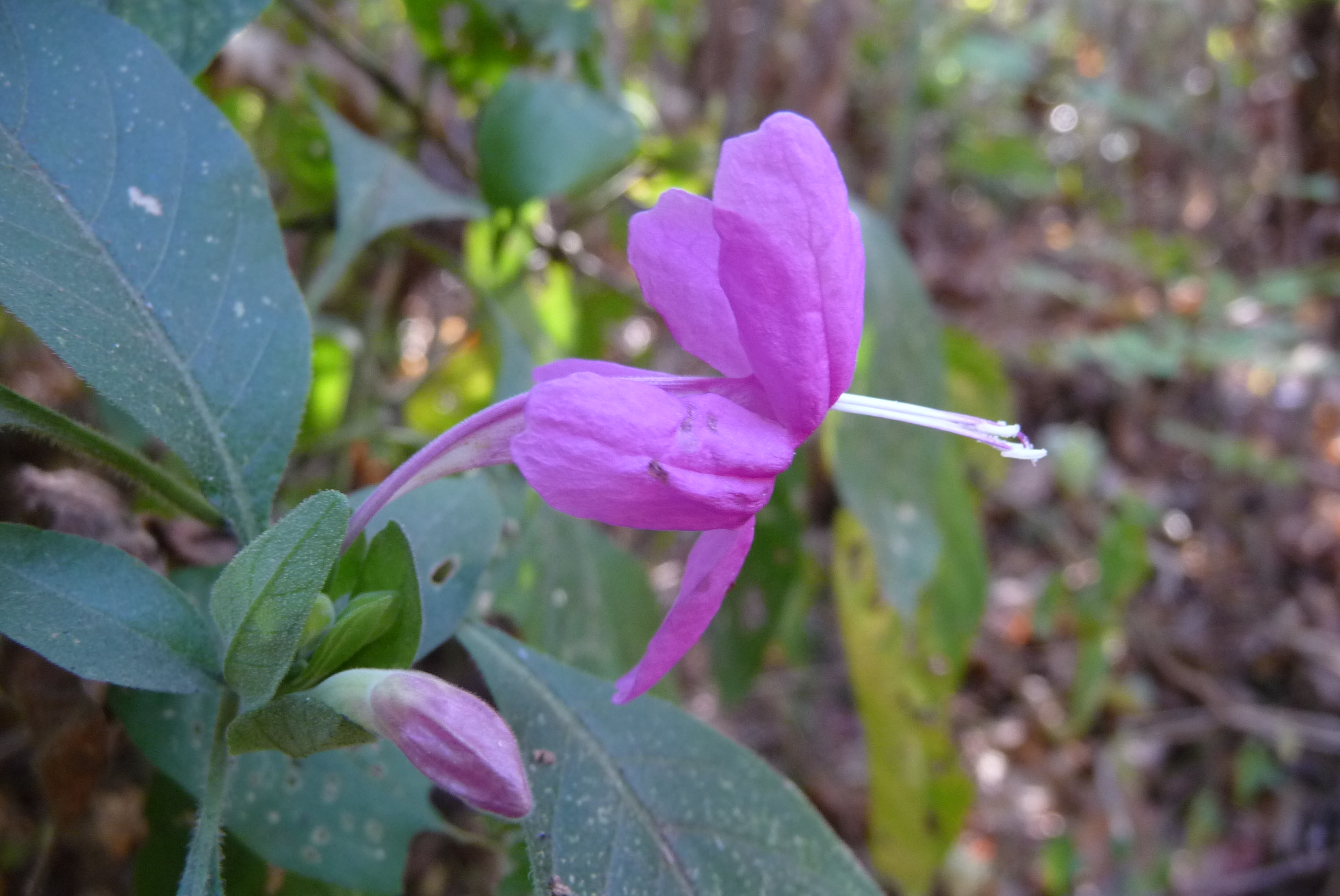
Here’s an opportunity. Ruellia amoena sure looks a lot like Ruellia foetida, but has pigmented instead of white flowers. One often finds these two species sympatrically, or nearly so. A “must study” taxon pair evolutionarily.

Wild collected, Mexico, Tripp w/ Kiel, & Hasenstab-Lehman #1225 (RSA-POM); Photo by Erin Tripp

Ruellia affinis

Gaudy Gaudy Gaudy! Carrie Kiel would love the flowers of this species, which sit atop vegetative portions of a rare growth form (vining) in the genus. One must really and truly appreciate the epithet. ‘affinis’. Hey – it’s got affinity to something, after all…!

Update (Aug 2016): As it turns out, Ruellia affinis is rather common in mesic forests of eastern Brazil. It really is a vine, and it really does looks strange in the field, but I will happily accept this species as a Ruellia. Hey – the genus does more interesting things morphologically than does my own…

I still do not know what lineage this plant belongs to – a classic rogue taxon in phylogenetic speak – perhaps RADseq data will soon resolve…

Wild collected, Brazil, Erin Tripp #5887 & #5889 w/ Nico Medina, Cíntia Kameyama (COLO); Photos by Cíntia Kameyama, Erin Tripp

Ruellia acetabula

Ruellia_acetabula

Just LOOK at that lower corolla lobe – absolutely amazing, and one of a kind. Kyle and I discovered and named this species after the acetabulum…a fine wine drinking vessel from ancient Rome. Nothing else in Ruellia comes close to this sort of odd morphology.

Ruellia acetabula is at present known only from Namibia, where it loves the very dry rocky hillsides of the northwestern province Kunene. This species is clearly related to a group of SW African taxa that have a unique “2+2+1” calyx morphology, and smell of citronella. This group includes Ruellia marlothii, R. kaokoana, R. aspera, and R. diversifolia. See Tripp & Dexter 2012, Systematic Botany.

Wild collected, Namibia, Tripp & Dexter #871 & #1991 (RSA-POM); Photo by Erin Tripp

Petalidium welwitschii

A harbinger of the Kaokoveld. Find Petalidium welwitschii, find the true Kaoko. You’ll first need to make your way through the Hartmann Mtns and Marienflüss. To our knowledge, this species is endemic to this very small stretch of Earth. In the second photo, bask in the weirdness of these two faces of P. welwitschii. These two branches actually derived from the same individual. And admire the Kunene River, across from which is Angola.

Wild collected, Namibia, Tripp & Dexter #4085 (RSA-POM); Photos by Erin Tripp

Petalidium variabile

This species is an absolute mess. It is WILDLY variable and likely forms hybrid swarms with who knows how many other species of Petalidium–and I think takes pride in such. Clearly, Petalidium variabile holds many evolutionary secrets that a botanist will want to soon unlock.

In the photos you can see two of the many faces that Petalidium variabile assumes. Also a nice field of it. (Is Kyle looking for plants or for chameleons?)

Oh – and Petalidium variabile is everywhere. And everywhere, it is…..variable. I guess the rest of us could learn a thing or two about plasticity.

Wild collected, Namibia, Tripp et al. #836, 873, 874, 1971 (RSA-POM); Photo by Erin Tripp

Wild collected, Namibia, Tripp & Dexter #4107 (RSA-POM); Photo by Erin Tripp

Petalidium subcrispum

You are looking at one of the most special plants in the world–really–lucky you to have stumbled upon this page! Here it is, Petalidium subcrispum, locally dominant and covering the bases of the Hartmann Mountains that flank the western margin of Marienflüss (looking north, the Angolan border is a mere 10 miles away).

But it grows nowhere else. That’s it: a local endemic, and as endemic as it gets.

We aren’t talking about subtle differences in morphology, here. This is a bona fide GOOD species: it isn’t confusable for anything else on Earth. Its floral syndrome suggests bee or other insect pollination. Purple flowered.

But here is the best part: its sister species, Petalidium subcrispum (red flowered, bird pollinated), grows abundantly just a couple of miles away — across the valley (Marienflüss), and flowers at the exact same time. Does pollen travel that far? Do the insects or birds that carry said pollen travel that far? If so, what maintains species boundaries? Kyle and I have been to the amazing Marienflüss three times now and have never seen a hybrid. This is a perfect in situ experiment for an eager graduate student who wants to escape to one of the more remote corners of the world. Maybe I’ll go back to grad school…..

Wild collected, Namibia, Tripp et al. #2013 (RSA-POM); Photo by Erin Tripp

Petalidium sp. nov–halimoides x setosum

On a special day towards the end of our May 2014 field trip, Essie, Leevi, Iain and I collected what appeared to be a Petalidium completely intermediate between P. setosum and P. halimoides. I’ve never seen anything like it.

A few intriguing observations: (1) it was growing vigorously and happily in a couple of minor, sandy drainages, but seen nowhere else along the way; I would have readily called it P. setosum, but (2) its leaves were glabrous instead of scabrous; (3) its inflorescences were nothing like typical P. setosum (lax, with wide bracts and bracteoles), but rather resembled perfectly those of P. halimoides (extremely congested with linear bracts and bracteoles); and (4) these plants were growing quite out of range for P. setosum. Like P. setosum, the plants did produce a musky honeysuckle floral smell typical of the former species.

Needless to say, I am very much looking forward to researching this, as soon as I have internet connection (the first time I’ve wanted it since our field trip began, to be sure!). It is mostly likely a naturally occurring hybrid, and one that needs a name….

Wild collected, Namibia, Klaassen et al. (awaiting data from Essie [WIND, COLO]); Photos by E. Tripp