Ruellia fulgida

Ruellia_fulgida

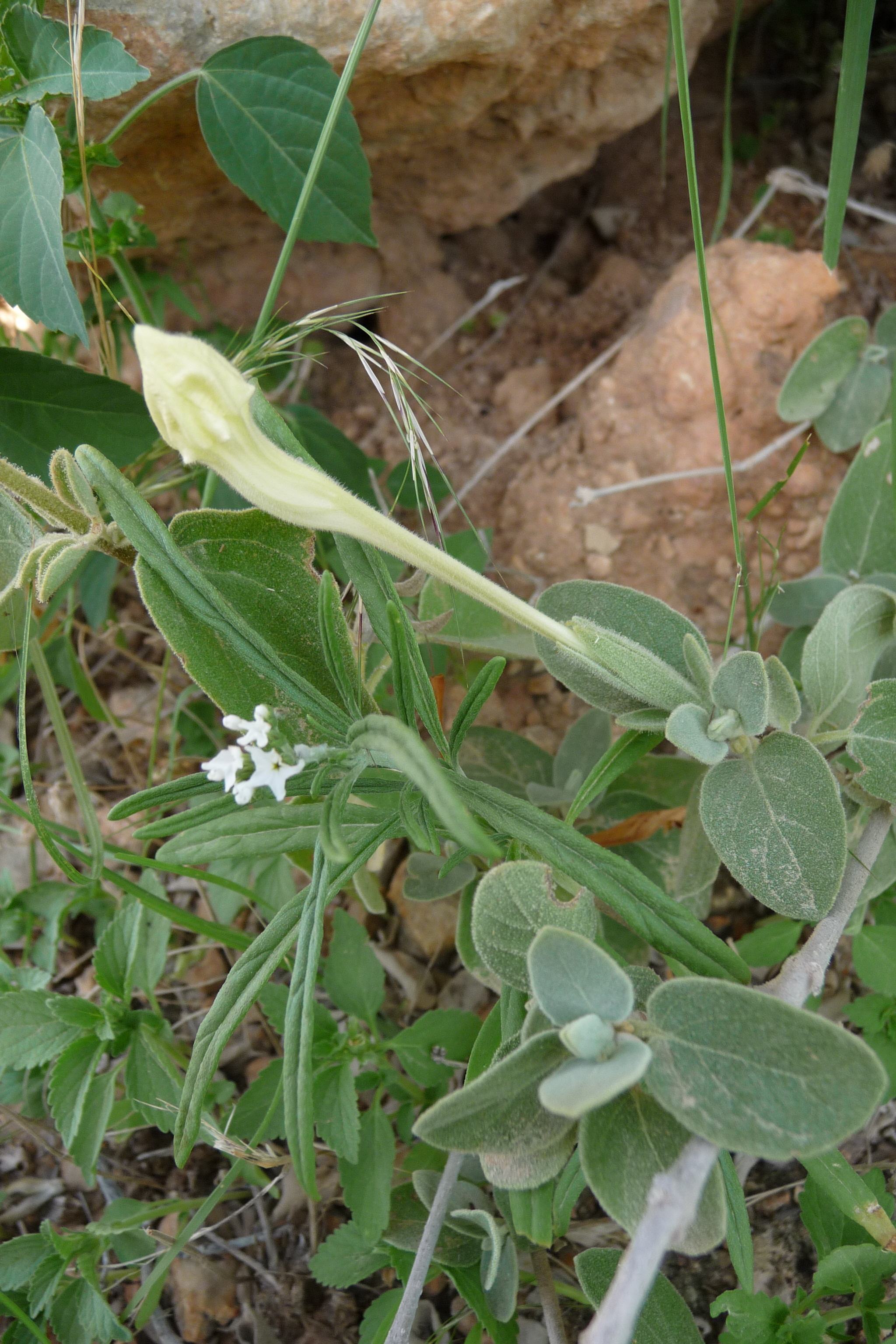
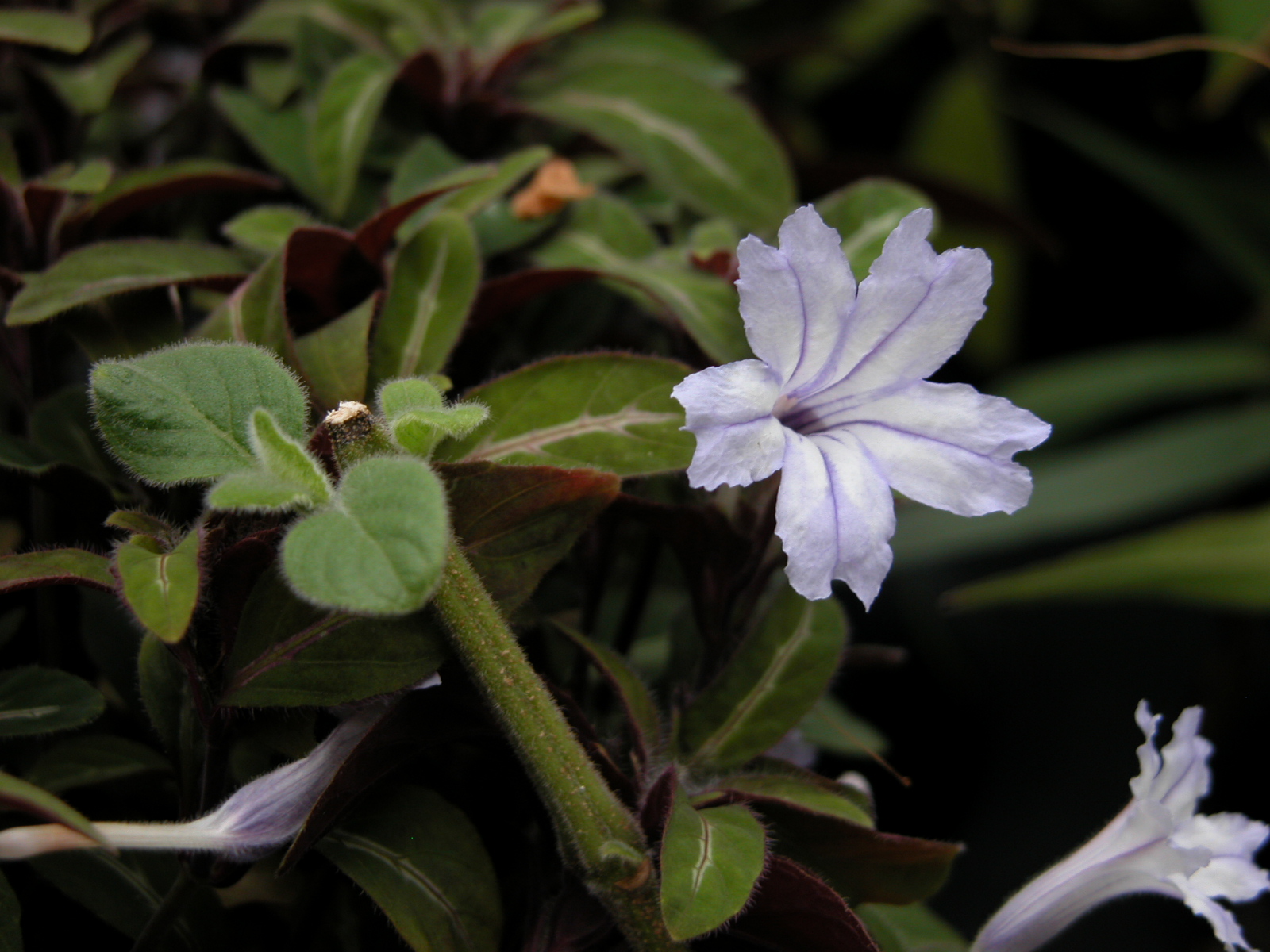
This is a fine species from northern South America. Not uncommon, but not terribly common either. Certainly you know it if you are from that part of the world. I was happy to lay eyes on her. Manuel and I found this late in the day after a very wild ride on a road that absolutely hugs the Atlantic coast in the steepest and most intimate of manners. Got stuck for many hours in a river crossing, actually right where the river dumps into the ocean. Tide rising, getting worried. Sat stranded until we flagged in a dinghy full of local fishers. Convinced them to come onshore. After another two hours, we finally unstuck the vehicle. Cruised on towards this population of Ruellia fulgida as if nothing had ever happened…

Wild collected, Venezuela, Tripp & Lujan #488 (RSA-POM); Photo by Erin Tripp

Ruellia fulgens

Ruellia_fulgens_Carol Gracie_French Guiana

If I could turn back time… then I might understand how it came to be that Ruellia fulgens evolved as the sister taxon to a massive South American radiation of Ruellia: the Physiruellia clade. A minimum of 50 and as much as 100 species.

Ruellia fulgens was previously treated in the genus Polylychnis, which was separated from Ruellia by plants having shorter calyx lobes, weakly opened corollas, and dentate nectary discs. The former two features are unreasonable distinctions given the tremendous morphological diversity in Ruellia, and the latter has not been systematically surveyed in Ruellia such that nectary shape is more or less unknown throughout the genus. See Tripp (2007, Systematic Botany) for the taxonomic combination into Ruellia. Out you go, Polylychnis.

There is more appeal the sister group relationship of Ruellia fulgens to the rest of the Physiruellia clade than doing away with a terrible name such as Polylychnis. Ruellia fulgens is one of very few Acanthaceae (period!) that occurs in the Guiana Shield…. an area conspicuously lacking in Acanth diversity. I pay a lot of attention to Neotropical phylogenies, and numerous are the instances in which the sister taxon to some massive Andean or Amazonian radiation occurs in the Guianas. The Guiana Shield has long been hypothesized to represent a biological refuge during Pleistocene glaciations and other climatologically dynamic events.

There is at least some phylogenetic evidence to support the above hypothesis, including our beloved red-flowered Ruellia baby.

Wild collected, French Guiana, voucher unknown, photo by Carol Gracie (thank you Carol!)
Ruellia fruticosa

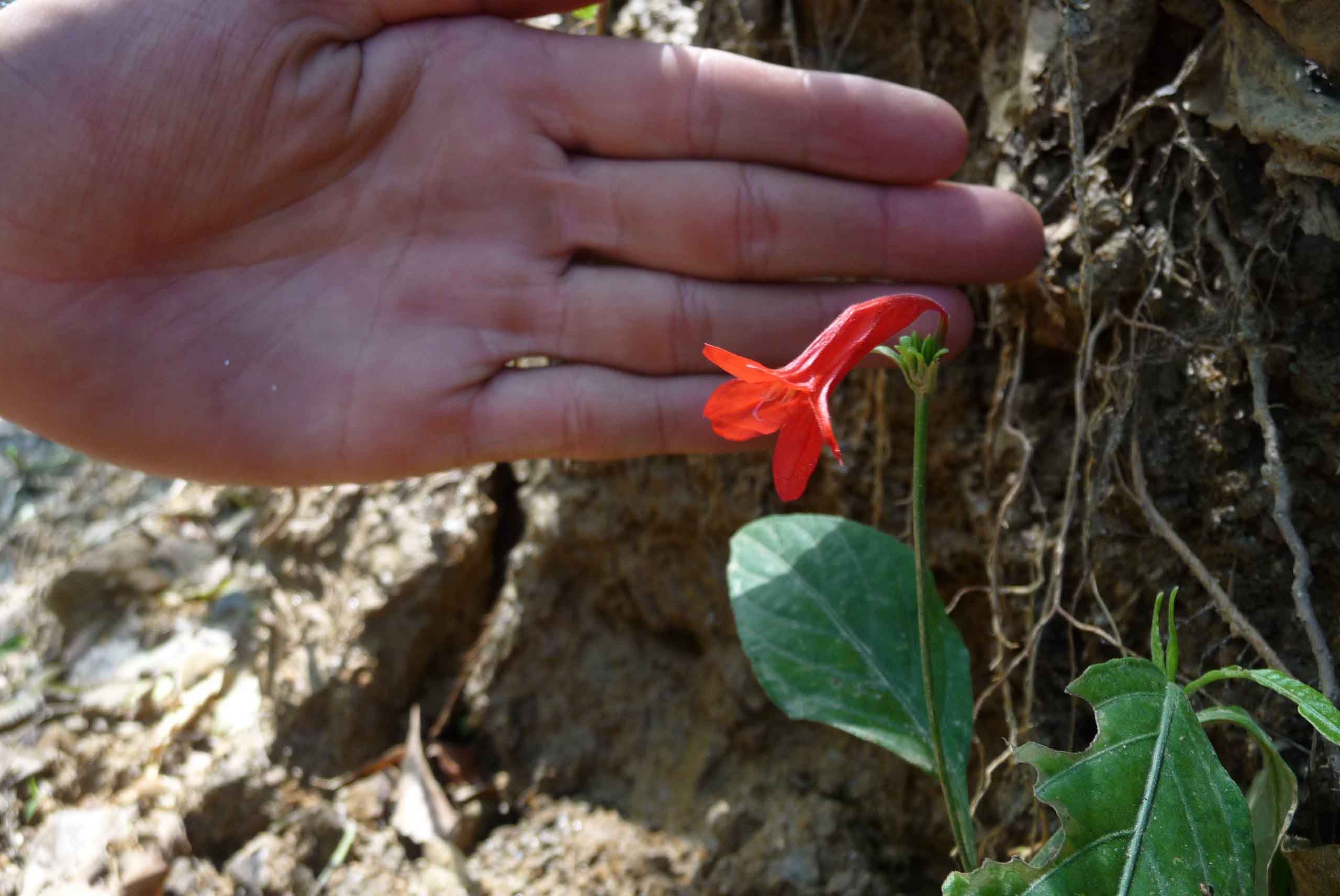
Another species in my favorite clade, Ruellia section Chiropterophila. This one is pretty funky morphologically – I have NO idea what pollinates it. As observed in the two photos, some flowers of Ruellia fruticosa are protogynous, and some are protandrous. Based on field sites I’ve visited in comparison to herbarium records, I suspect that this species, like most others in Chiropterophila, have declined in abundance through time, unfortunately (see Tripp 2010, Systematic Botany). I’d love to learn more about the natural history of this plant at some point in life. Preferably sooner than later.

Interesting green pigmentation at the tips of the corolla lobes, eh?

Wild collected, Mexico, Tripp & Acosta 165 (DUKE); Photo by Erin Tripp

Ruellia foetida

Ruellia_foetida

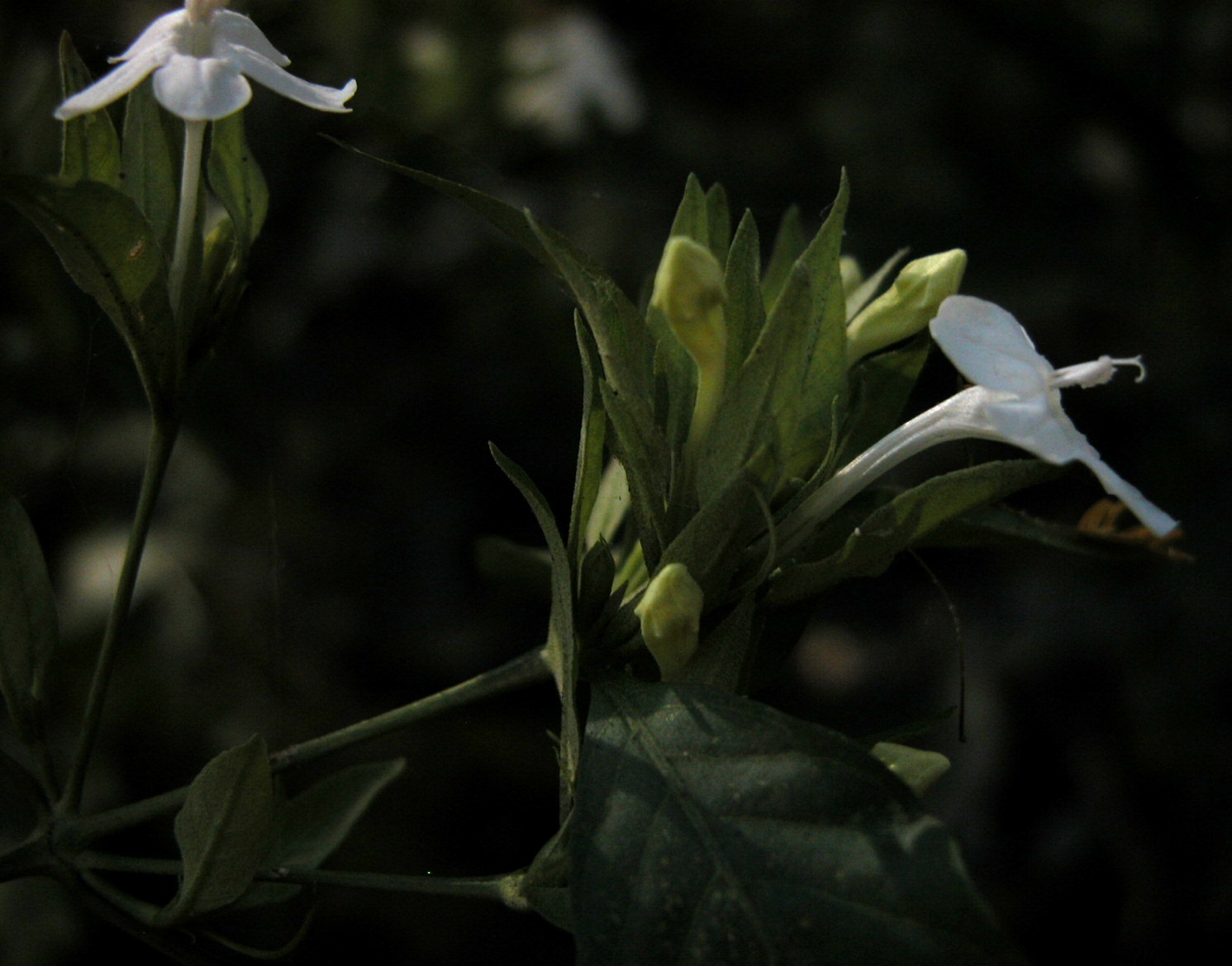
I am quite fond of this plant. I love the stark white flowers against its lime green vegetation. I love the tropical sub-deciduous forests it grows in. And I love the fritillary butterflies that pollinate it. If I were a painter, I’d paint it. And maybe that painting would turn out better than this old school photograph, which was taken in early grad school days… 2004 ish… with FILM! I first saw it in the cellulose while doing fieldwork with Linda, the mom…

Ruellia foetida is (not that odiferous, despite the name, but) closely related to R. amonea (see that page) and begging for further field study…

Wild collected, Mexico, Tripp, Kiel, & Hasenstab-Lehman #1213 (RSA-POM); Photo by Erin Tripp. Also seen and collected on an earlier trip with L. Tripp, the mom.

Ruellia exilis

Ruellia_exilis

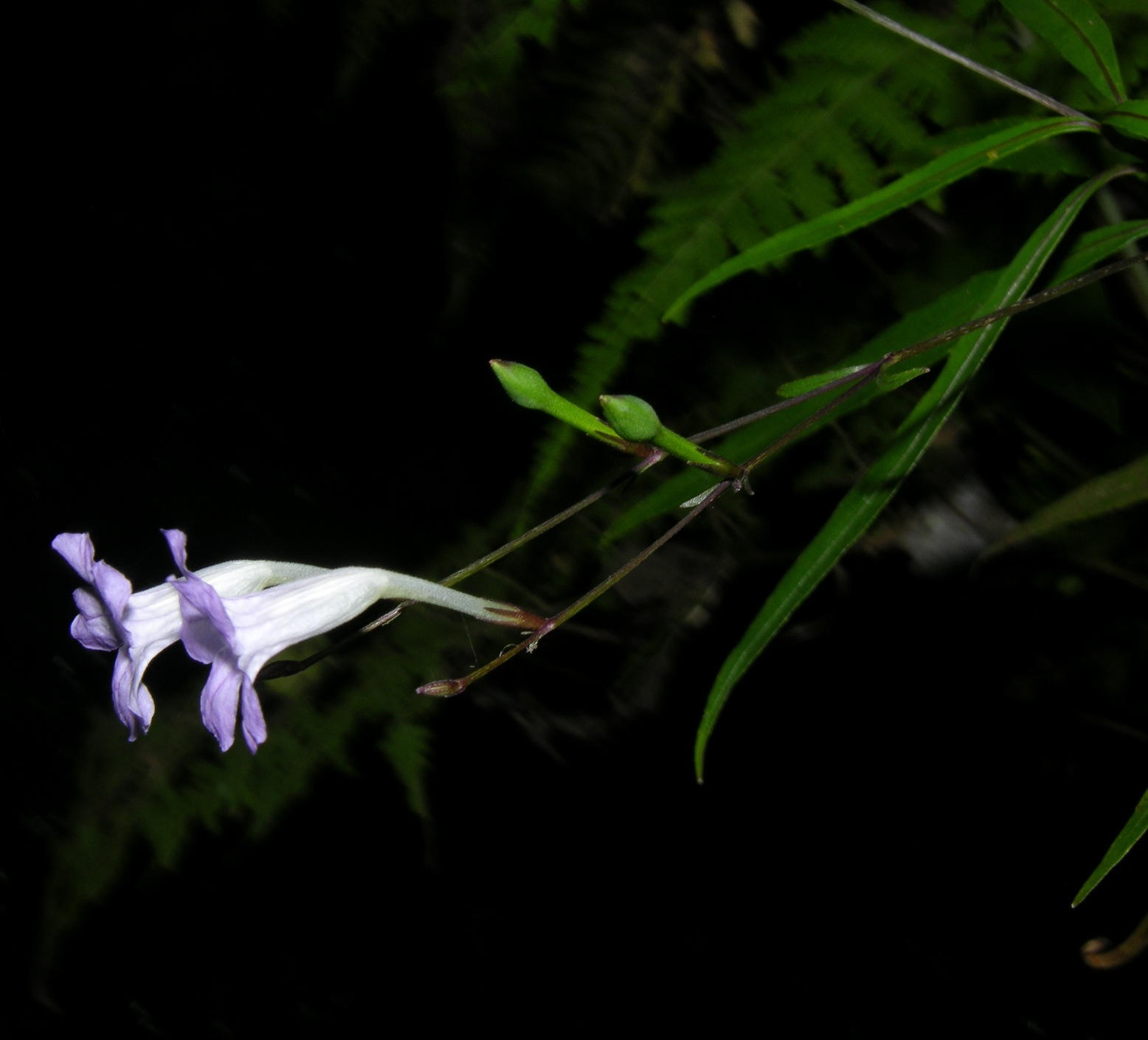
This is a species that Lucinda and I described a few years ago. Seems almost certainly related to other pedunculate Costa Rica species (e.g., R. pittieri, R. stemonacanthoides), but different by its seriously lanky leaves. Currently known only from the Osa area of Costa Rica. I was delighted when Ricardo sent us a photo of this – my first viewing of it in the cellulose, for we described it based on herbarium specimens only.

Wild collected, Costa Rica, voucher unknown; Photo by Ricardo Kriebel

Ruellia eumorphantha

Ruellia_eumorphantha

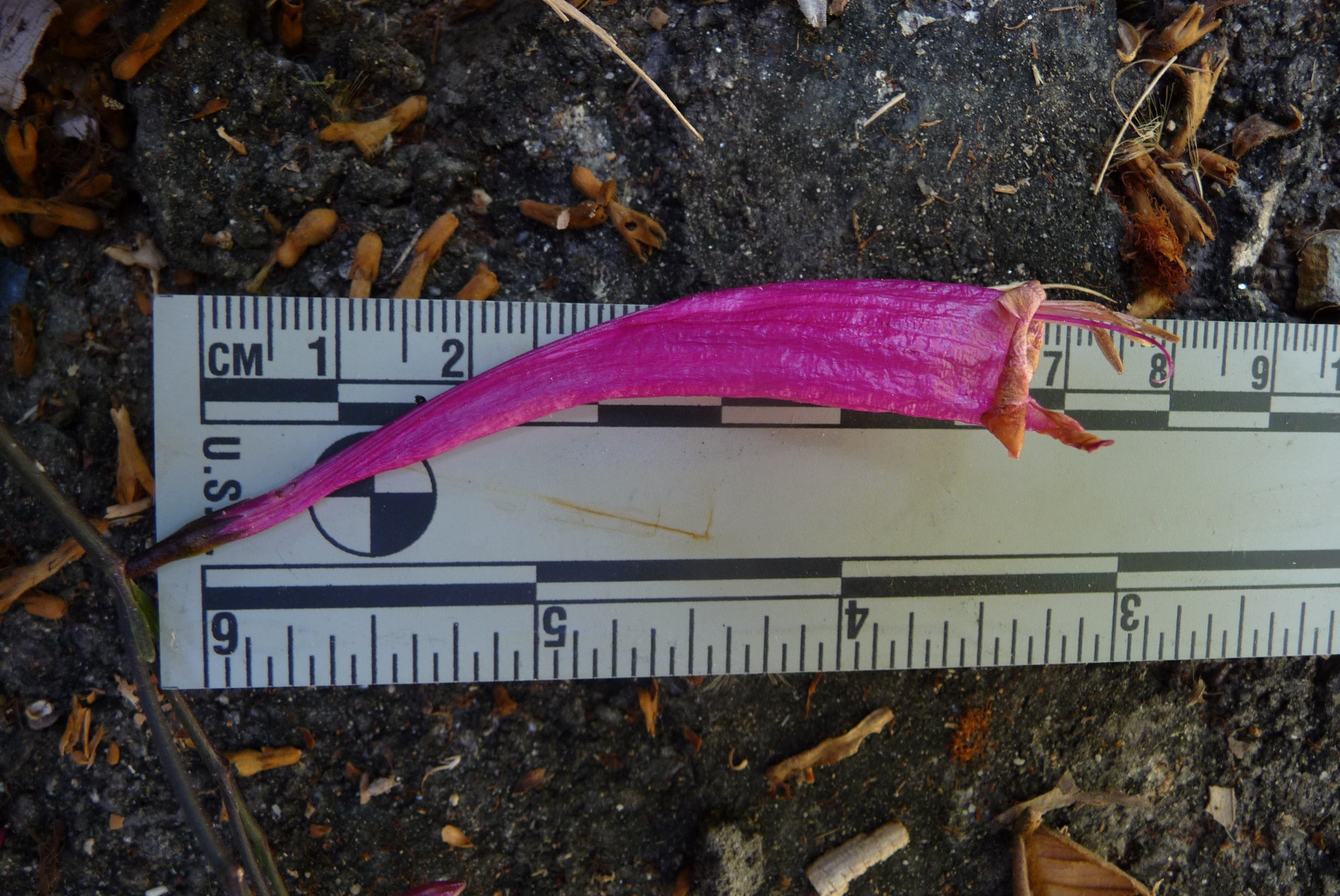
This plant is among the more exciting of my recent finds (well, not that recent). I don’t have any real reason why, other than that I find its flowers to be absolutely enchanting. A corolla tube nearly 7 cm in length? Must be a helluva hummingbird. And: I want to know all about those anthocyanins…

First (and the only time I have) found this species was on a highly successful collecting trip with friends and colleagues Carrie Kiel and Kristen Hasenstab-Lehman. We love Mexico.

Wild collected, Mexico, Tripp, Kiel & Hasenstab-Lehman #1221 (RSA-POM); Photo by Erin Tripp

Ruellia elegans

A Brazilian species known primarily not from its occurrence in the field but by its commonality in the horticultural trade. The photo on the left shows what I think to be an example of enantiostyly in Ruellia…. some flowers open with the upper style and stigma pointed to the right, and some to the left. A cool evolutionary story centered around reproductive outcrossing, if so.

The photo on the right shows a very interesting structure that our colleague Mariette Manktelow named “the filament curtain” in 2000. It is what it sounds like… each pair of filaments fuses to the corolla wall near the mouth, and forms a protrusion which continues all the way to the base of the corolla. All Ruellia have a filament curtain — in fact, almost all Ruellieae do (thus, it is synapomorphic for the tribe – see Tripp et al. 2013, International Journal of Plant Sciences). Currently, its function, if it has a function, is unknown. Hypotheses include floral stabilization, prevention of nectar evaporation, or some other function during plant pollination. See another example of the filament curtain under Ruellia bourgaei.

Not vouchered, cultivated (RSABG and DUKE Greenhouses); Photo by Erin Tripp

Ruellia discifolia

Ruellia_discifolia

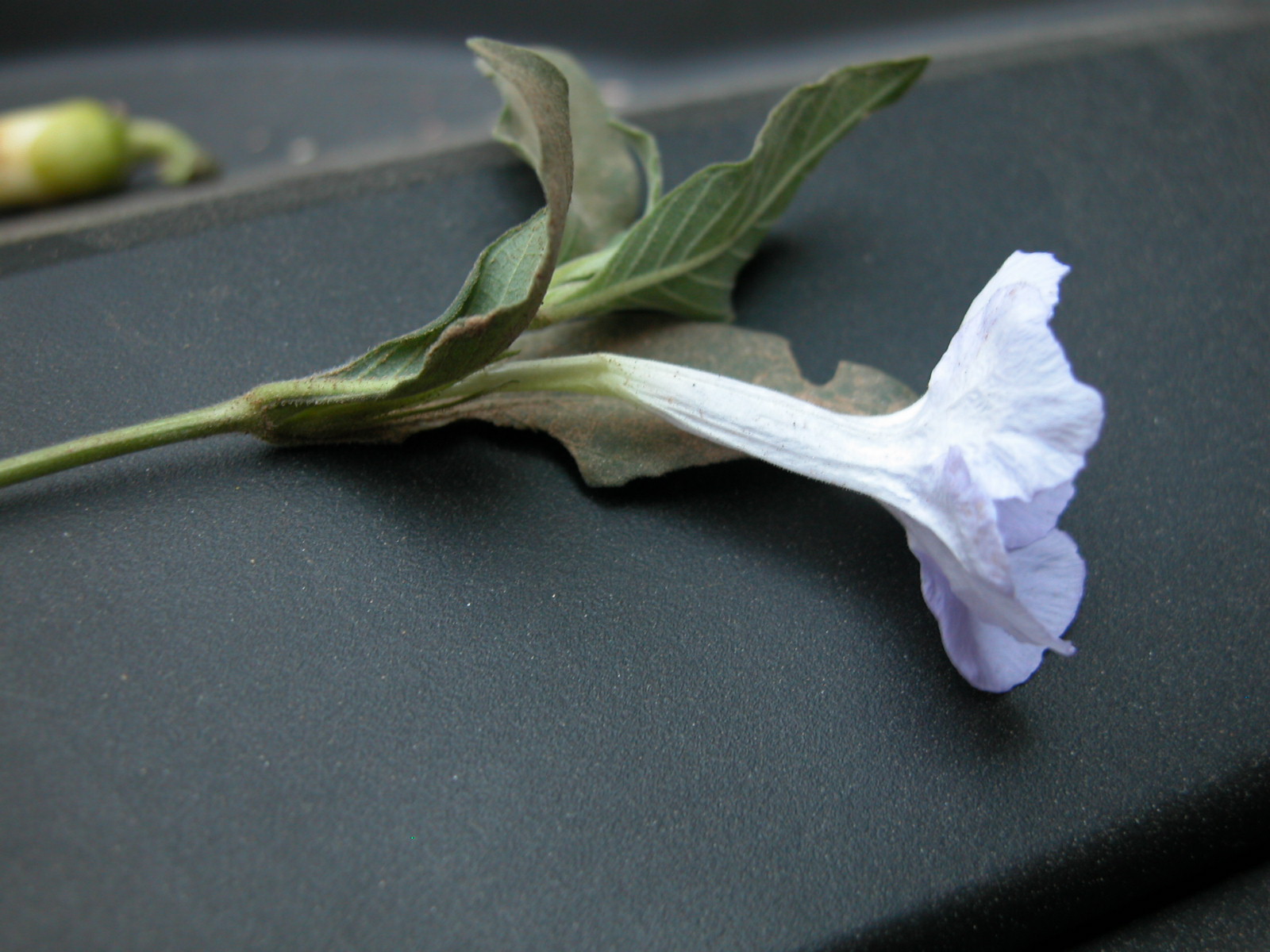
To take this photograph, Ensermu and I drove 550 km down a wretched gravel road in Ethiopia (ok – I actually quite liked the trip – every bump of it, in the back of our Toyota Land Cruiser) to the Somalia border. We arrived by ~4pm, which was the same time we were to turn around, for safety reasons. Unfortunately, I didn’t get to view the flower in its open / anthetic state. That’s because it flowers at night, likely an adaptation to nocturnal moth pollination.

Oh well. Another population I must revisit. Cool stellate trichomes on the leaves.

Wild collected, Ethiopia, Tripp & Ensermu #905 (RSA-POM); Photo by Erin Tripp

Ruellia devosiana

Ruellia_devosiana

I really don’t know where to start with this species. It is wickedly attractive and beguiling – both its leaves and flowers – that part is easy to conclude. I long suspected it was some horticultural monstrosity that wasn’t validly published, but recently learned I was wrong. At least about the latter bit. There is much still to learn about evolutionary and possibly anthropological history of this species.

Not vouchered, cultivated RSABG greenhouses; Photo by Erin Tripp