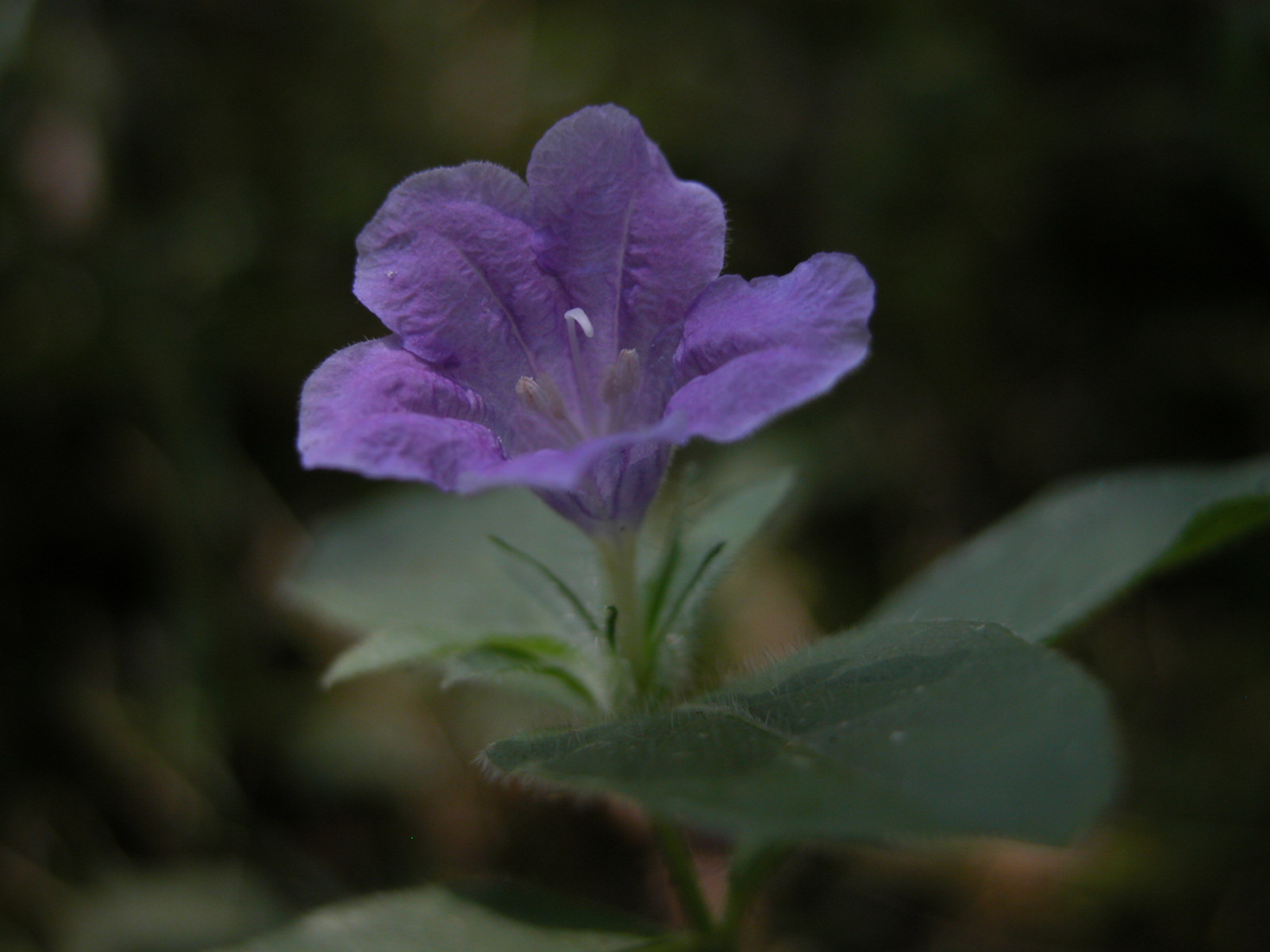
Homegrown. Limestone glade loving plant. You can’t blame her.
This is how it all got started…read the story under Ruellia strepens.
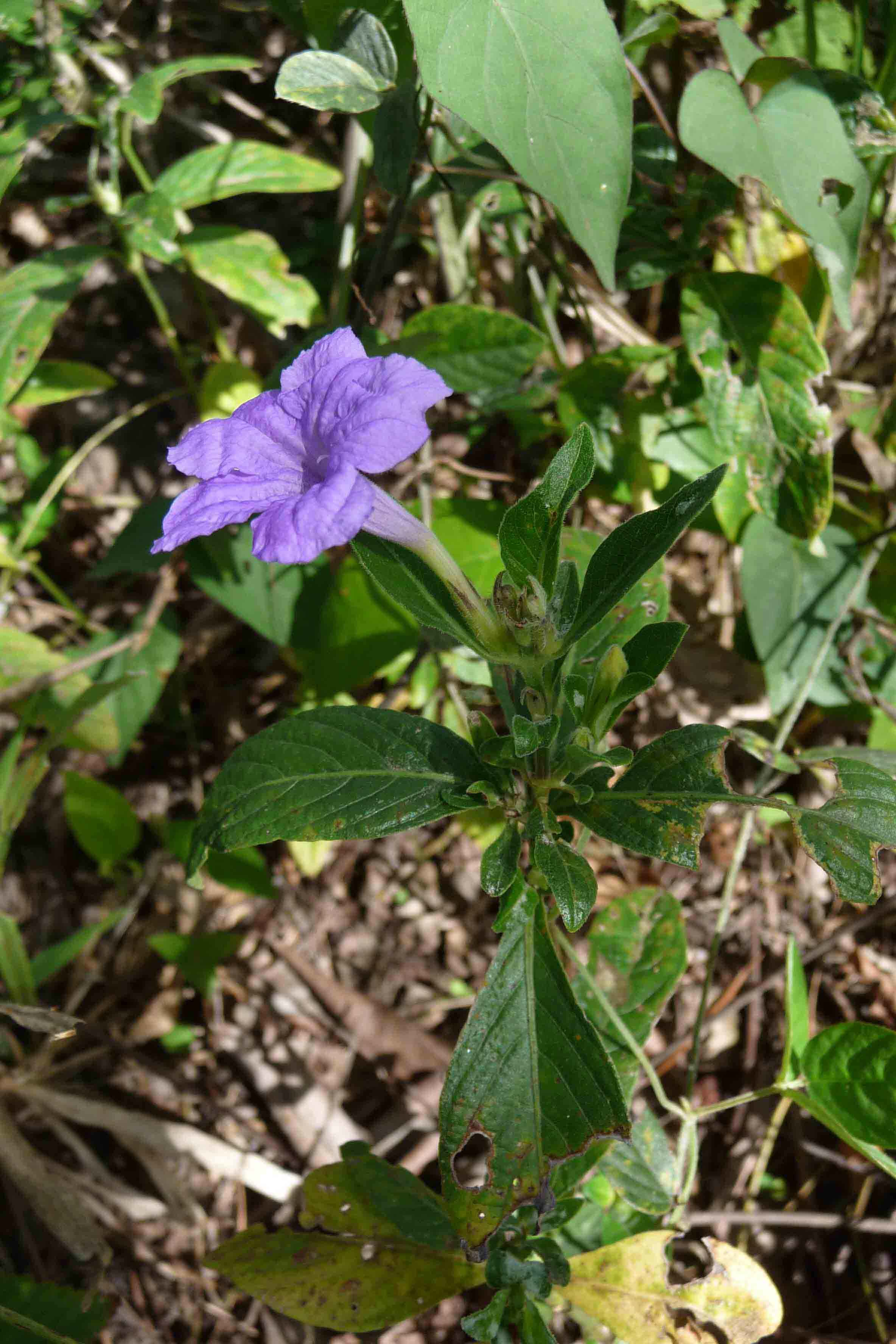
Wild collected, USA [Pennsylvania], Tripp #14 (PH); Photo by Erin Tripp
Homegrown. Limestone glade loving plant. You can’t blame her.
This is how it all got started…read the story under Ruellia strepens.
Wild collected, USA [Pennsylvania], Tripp #14 (PH); Photo by Erin Tripp


A remarkable species from northern South America, closely related to R. tubiflora. It grows as a vining shrub for several meters in height. Note the photos showing extrafloral nectaries and corolla tubes full of nectar. I was delighted to find and collect this species in a virgin neotropical rainforest with my friend and colleague Manuel.
A message from the hummingbirds: we LOVE you.
Wild collected, Venezuela, Tripp & Luján #495 (RSA-POM); Photos by Erin Tripp


I can’t believe this photo turned out as well as it did. Carrie must have taken it? I was busy having one of the worst fevers of my life. Thought I was going to die. Opened the car door, threw up, uncontrollably, on a roadside catholic shrine (NOT intentional), and spotted this Ruellia while crawling (literally crawling) back into the car. Made Carrie find us a hotel that was right across the street from an emergency room, just in case.
Two days of my life I never care to remember. Only the vaguest of recollections that she pointed out a new Ruellia to me.
Wild collected, Mexico, Tripp et al. #5750; Photos by Manuel Luján
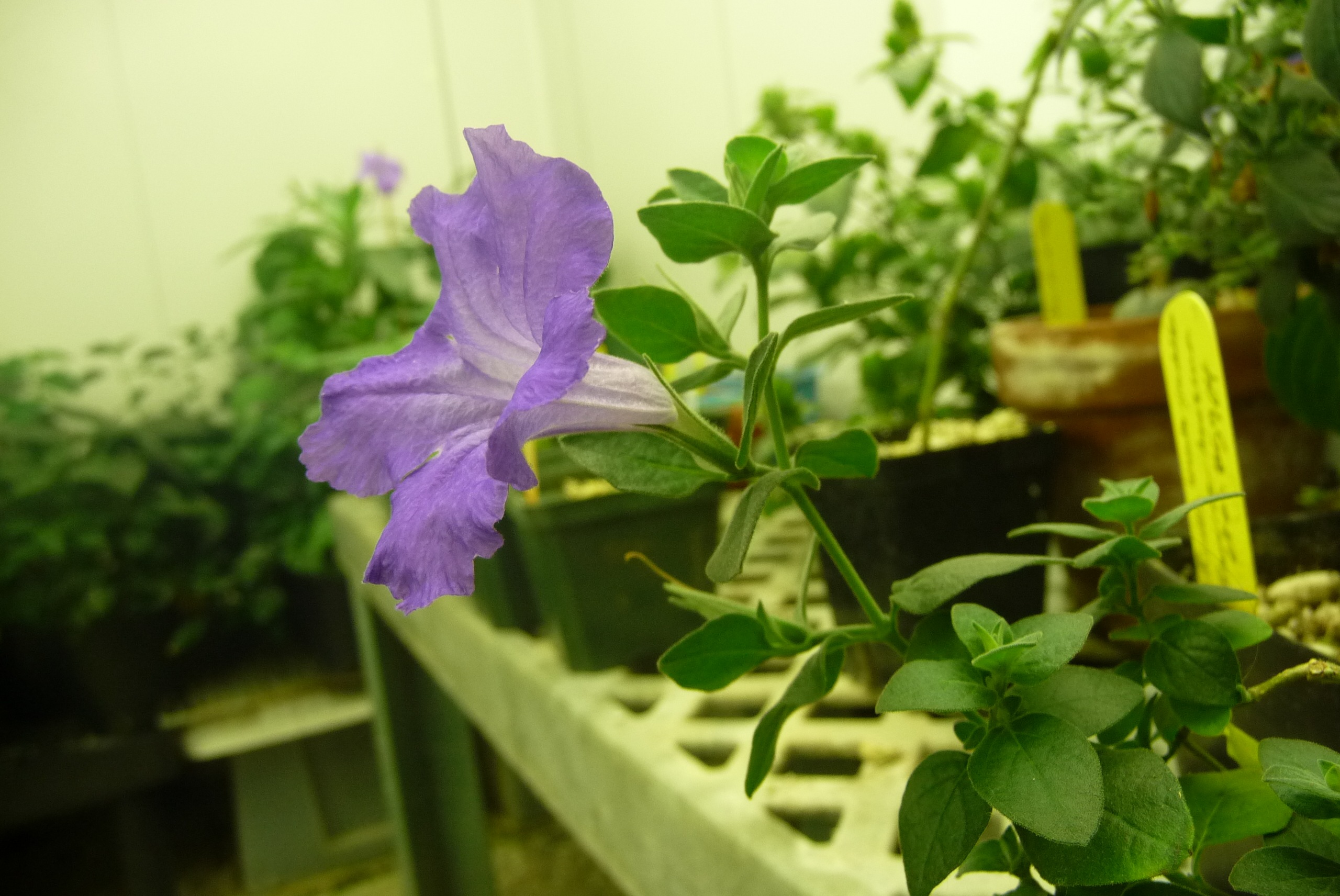
Another species I have been denied the fortune of seeing in the celluose, BUT: I grew some seeds that our colleague Victor Steinmann sent, and voila! Crapshoots pay on occasion.
I have some preliminary data that suggests Ruellia hirsuto-glanulosa may be sister to the yellow-flowered Chiropterophila clade. Now that would be something… and…. it would allow me to pinpoint with some accuracy, the evolutionary loss of floral pigmentation in this lineage of plants.
Tremendous thanks to Tom for clarifying aspects of the biology of this species in his extensive work on Mexican Acanthaceae.
Cultivated, RSABG Greenhouses, Tripp & Ly #938 (RSA-POM); Photo by Erin Tripp
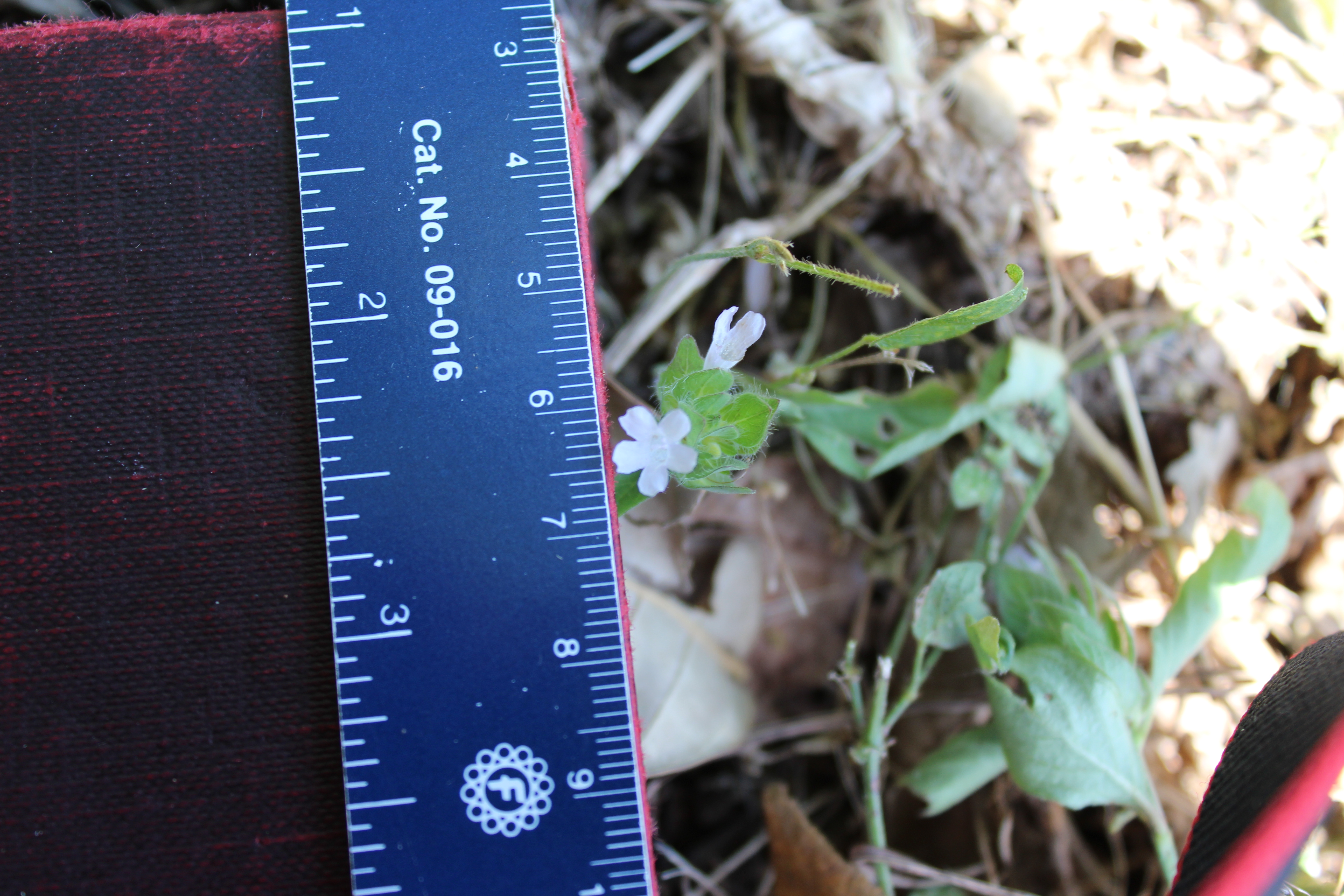
We all know that haughtyi would have been the much better spelling for this epithet that is presumptuous enough to mimic Ruellia blechum, but… we weren’t so lucky.
We have not seen your pollen, nor your DNA, but in Tripp et al. 2009 (TAXON), we combined you into Ruellia anyway. SORRY! Or not. It might turn out to be a more comfortable house, anyway.
Ruellia haughtii is a species very similar to R. costaricense but the leaves of the former are more distinctly serrate and the bracts are apically acuminate. Nonetheless, neither species is known from much herbarium material and as such, more field studies with new collections are needed.
The type collection of R. haughtii is from the Turbo area in Antioquia, Colombia. In January 2015, we found and collected it along the beautiful coastal highway between Arboletes (sigh) and Zapata, along both sides of a mowed road. Shortly before the best piña colada of my life.
Wild collected, Colombia, Tripp et al. #5182 (COLO); photo by Grant Godden
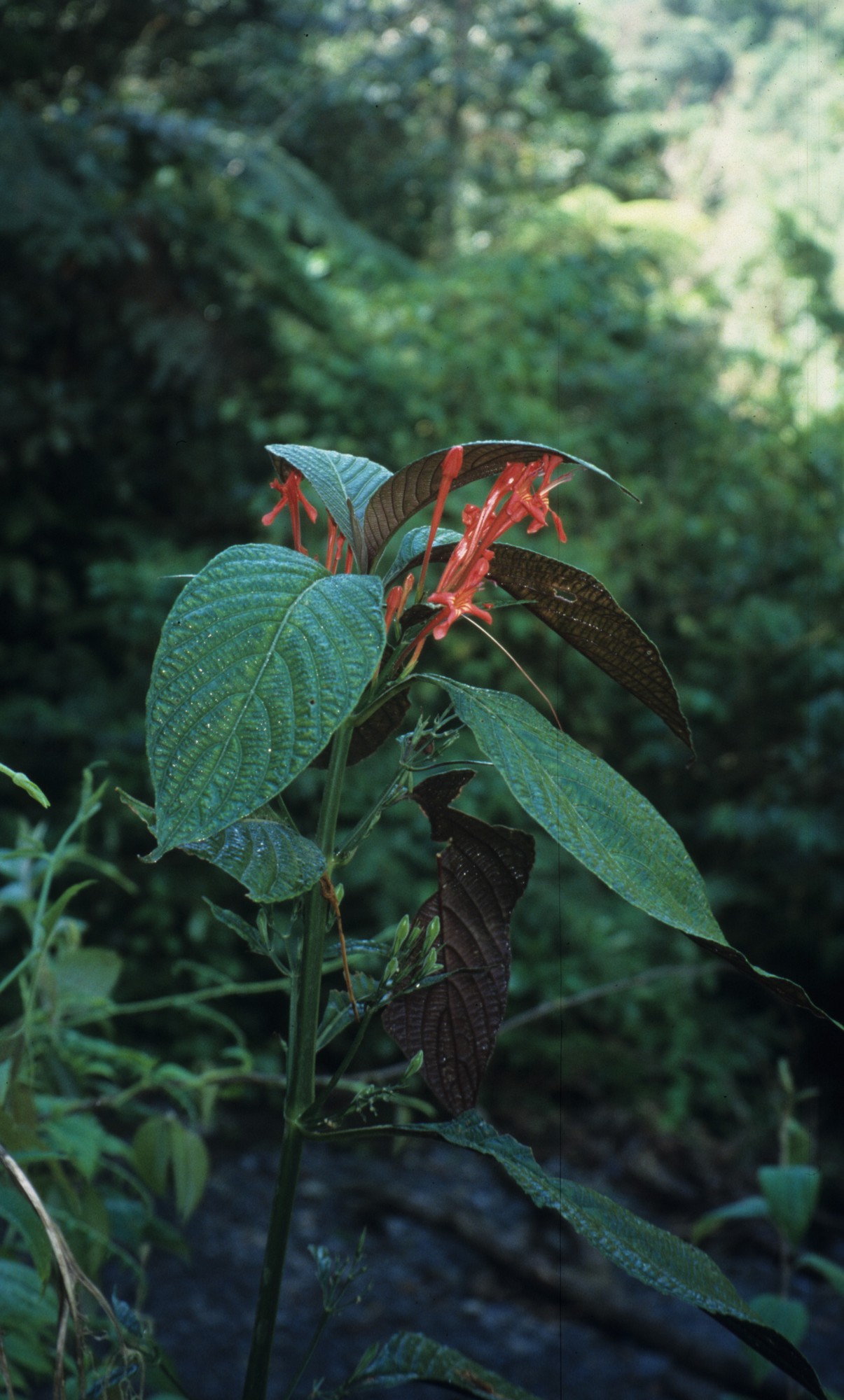
A fine South American species I haven’t had the pleasure of seeing myself (yet — my lifelong goal is to see every species of Ruellia in the field. Something like a birding life list, only better). Nice anthocyanin accumulation on the undersides of the leaves. WHAT is the adaptive value of that? Many have debated… None have an answer…
Wild collected, Bolivia, Schmidt-Lebuhn #82 (GOET); Photo by Alexander Schmidt-Lebuhn


Leonard described Ruellia grisea as a distinctive species based on a combination of features, but failing to compare it to the obvious close relative Ruellia fulgida. In general, I’m not inclined to trust Leonard in most cases. But he might have been right on this one. Grant, Nico, and Manuel scored a population of plants ascribable to R. grisea immediately after I left Colombia to return to Colorado (damnit, but yay). Check out the photos. Go ahead and study this plant (just as Manuel and Arecio are doing in this action shot that I love so much… actually, they are sampling leaves for RNA tissue, but let’s pretend they are studying the morphological complexity of this species while contemplating the meaning of the world). Obviously it is densely and evenly pubescent (hence the specific epithet). I have never seen Ruellia fulgida with anything more than a pre-school attempt at trichomes. Maybe Emery Leonard was correct after all.
For now, I am going with R. grisea. Ask me again in another 5 years.
Wild collected, Colombia, Tripp #5241 w/ Manuel Luján, and Grant Godden [COLO]; Photos by G. Godden


Not a species I have yet had privilege of seeing in the cellulose, but a BIG thanks to Ricardo for passing these photos my way. A Costa Rican endemic, Ruellia golfodulcensis is highly distinctive by its calyx alone. There is only one other species that, IMO, approaches a similar morphology, and it is Brazilian. I always thought Ruellia golfodulcensis had pure white flowers (based on herbarium labels), but so clearly you can see traces of anthocyanins in one of these photos. Learn something new every day!
Wild collected, Kriebel (voucher unknown); Photo by Ricardo Kriebel
Jesus, do you want me to write something about this terrible species? Are you going to pay me? If not, then at least send donations to:
The Ruellia Resolution Fund
c/o Erin Tripp
C105 Ramaley Hall
University of Colorado, Boulder 80309
Ruellia geminiflora is an extremely widespread species, ranging from Mexico south to Corrientes, Argentina. It is one of the (TOP THREE) most variable species in the genus, but for whatever reason, I can always pick it out.
Don’t ask me how to identify it. You don’t. You feel it. And on that note, there isn’t much more to say. Learn to respect what you don’t understand….
Wild collected, Venezuela, Tripp & Lújan #437 (RSABG); Photo by Erin Tripp
Wild collected, Bolivia, Tripp #5974, #6007, #6015 w/ Manuel Luján, and Dina Clark (COLO)


Long before I owned the molecular data to support the hypothesis, I strongly suspected that this funky little plant was clearly related to Ruellia inundata and Ruellia paniculata…. it has the flowers of one and the fruits of the other. I don’t have any chromosome data for Ruellia galeottii, but I’m sure curious to know if it is diploid. Someday, I’d really like to study this clade.
Wild collected, Mexico, Tripp & Dexter #159 (DUKE), photo by Erin Tripp
 The Tripp Report