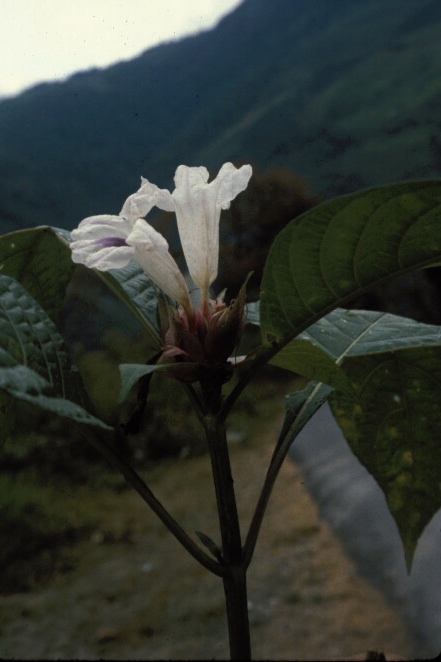
Ruellia tubiflora

Ruellia_tubiflora

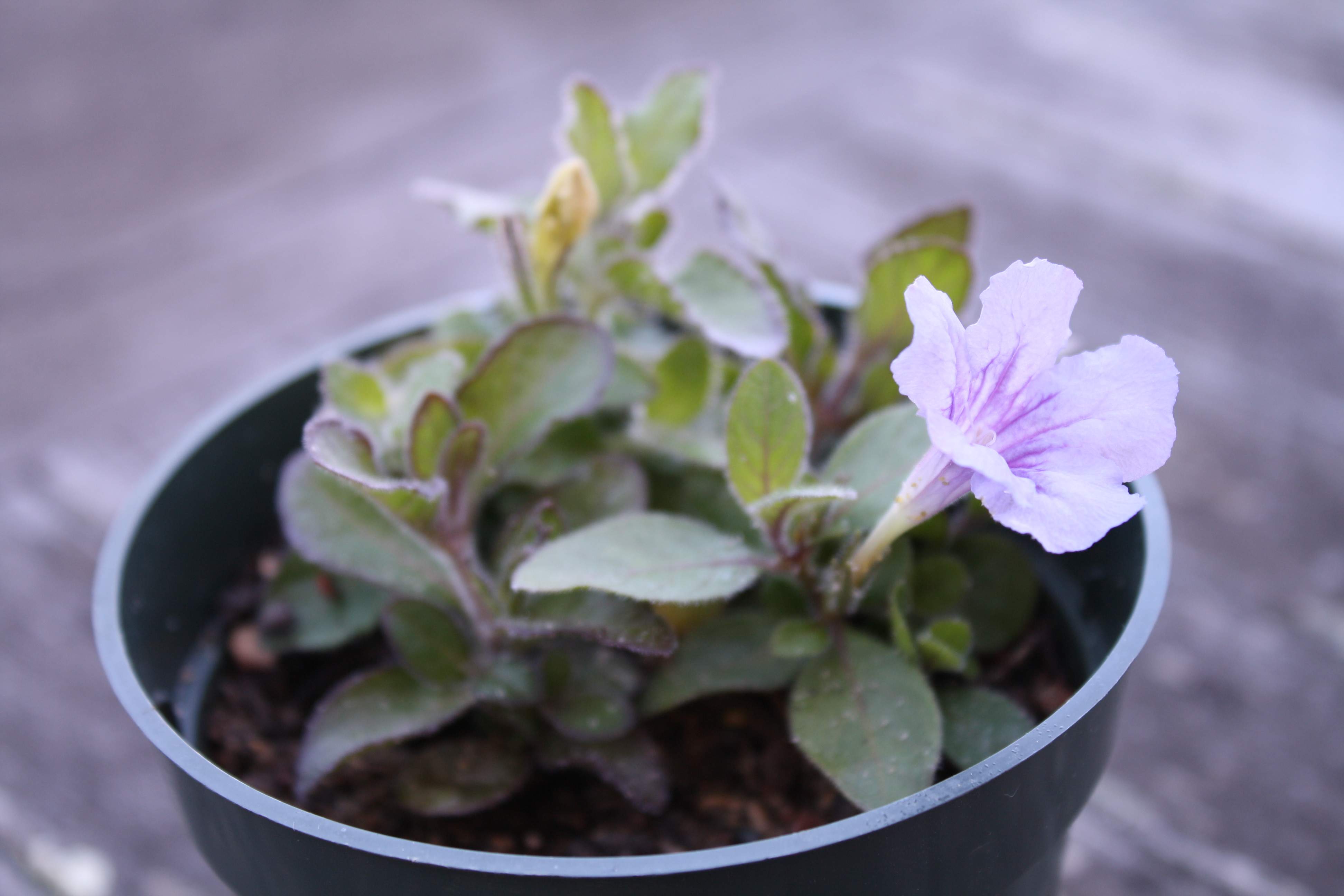
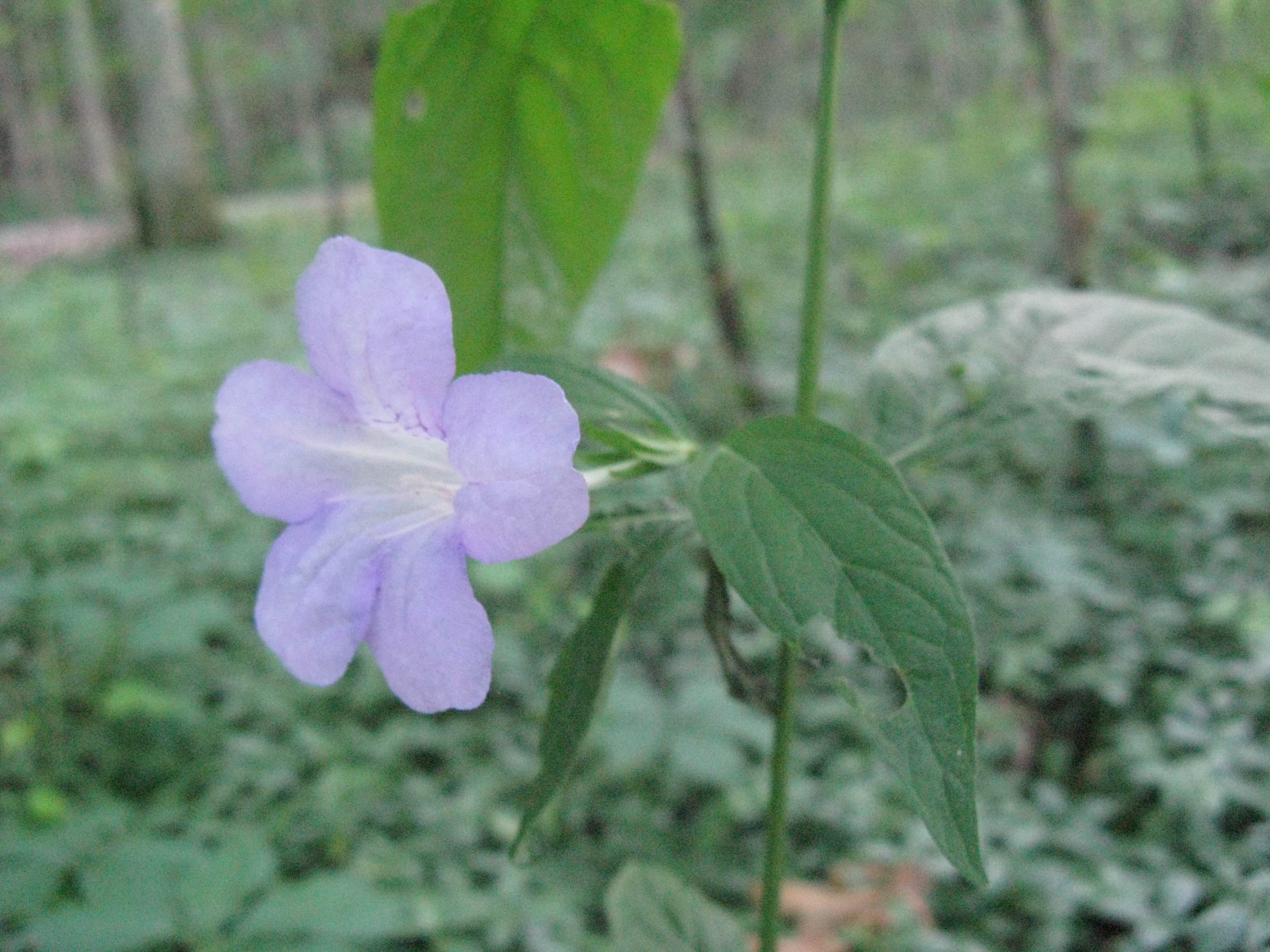
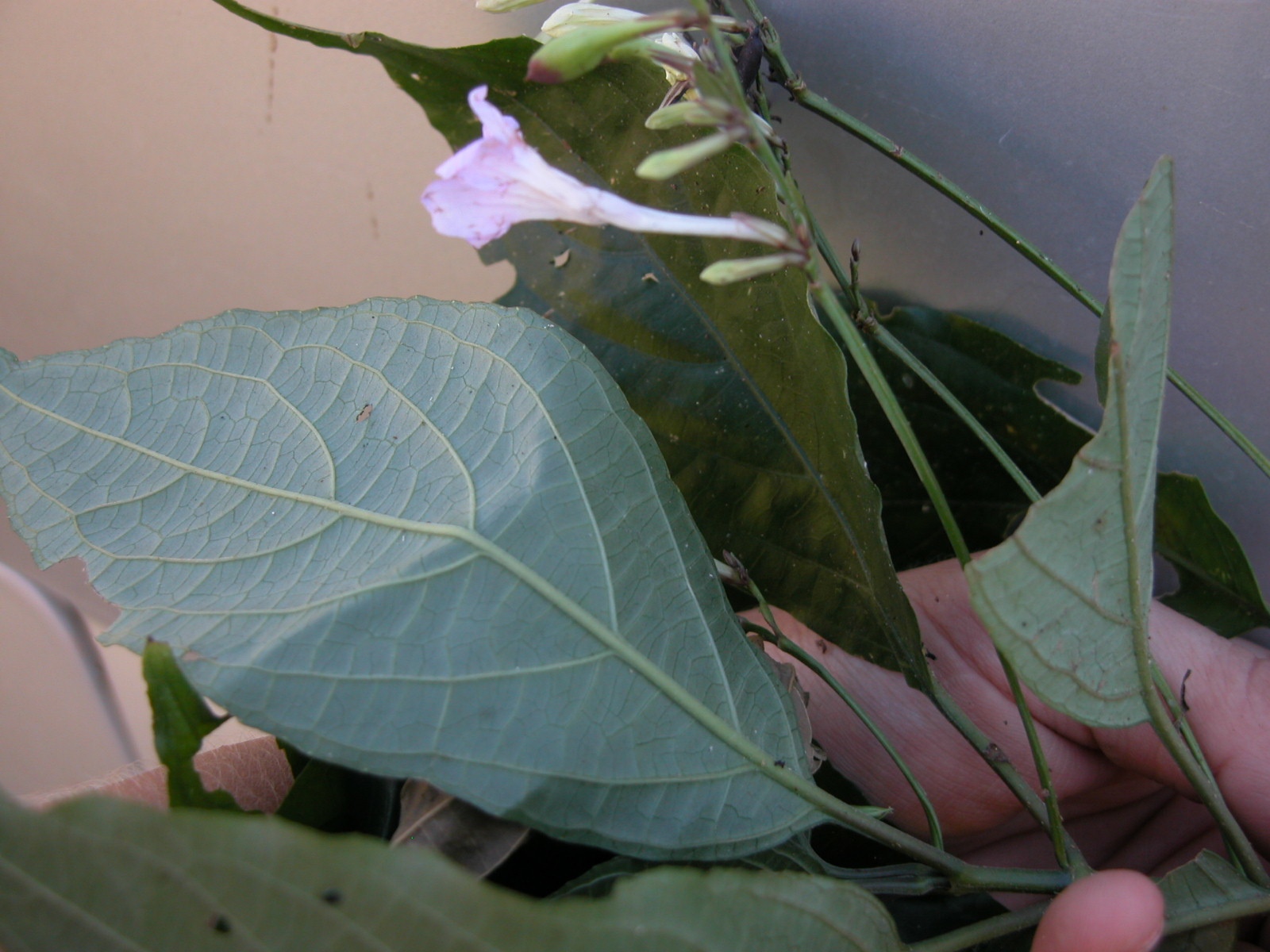
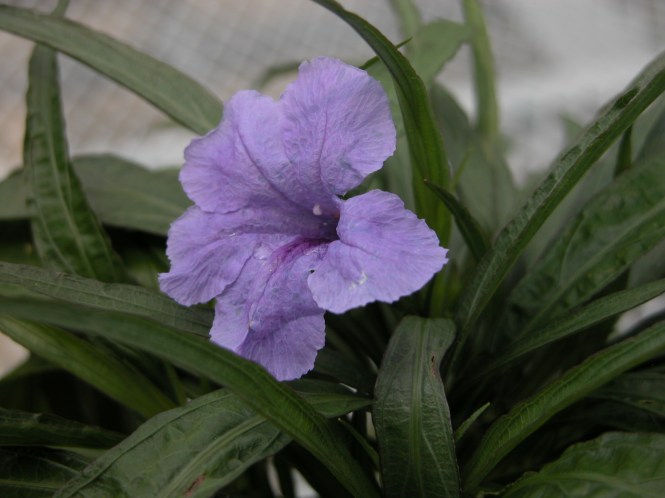
Oh, to rewind time and ask Emery Leonard out to dinner. Then, I might understand his basis for his habitual naming of minor variants. I might also ask him about the origins of his awesome first name. In any case, I digress. Ruellia tubiflora (var. tubiflora, if I must) is a small tree that produces lovely white flowers with a purple splotch in the throat. It was described a very long time ago by Kunth (1818) and grows happily in lowland to mid montane forests of northern South America – primarily Colombia. Some number of years later, a variant that produces pure white flowers was discovered and named by Leonard as Ruellia tubiflora var. tetrastichantha (a mouthful). This variety grows abundantly in similar habitats and in southern Centeral American and northern South America – primarily Venezuela. Along with variety tetrastichantha, Leonard proceeded to names six other infraspecific taxa… most of which are not in current use.

Here is a photo that long predates my existence in botany. It’s actually the first picture of any Ruellia that I ever laid eyes on…. pretty enough to convince me that the genus warranted further thought. Ruellia tubiflora is a highly charismatic species that is member to a clade that leaves behind conspicuous, congested, cone-like scars after flowers (and their pedicels) that have fallen. See Tripp 2007, Systematic Botany. Plants in this clade tend to prefer high quality, tropical habitats that stay on the wet side throughout the year. Thanks to Lucinda for sharing this with me as a young intern, way way back in 2002. I have since seen and photographed this beautiful plant numerous times in the wild, but I still prefer the above photo, which so altered the course of my life.

Wild collected, Colombia, McDade & Stein #933 (DUKE); Photo by Lucinda McDade

Ruellia tuberosa

Many people have expressed frustration at this species to me… that it looks a lot like a few other weedy, pedunculate, purple-flowered species (e.g., R. simplex, R. nudiflora). I find Ruellia tuberosa, the type species of the genus, to be rather distinctive owing to its leaves that are almost always obovate or oblanceolate. Its native range is northern South America.

The second photo depicts a fruiting specimen…long elliptical in shape, preparing to explode (yes, ballistically) and fling its seeds about the environment.

Wild collected, Venezuela, Tripp & Lujan (RSA-POM); Photos by Erin Tripp

Ruellia tolimensis

One quick look at this plant would send most to the name Ruellia potamophila. But you would be wrong if you did that. Look closer. Note the very gradual expansion of the narrow, unexpanded portion of the tube in this plant compared to the very abrupt expansion of the narrow, unexpanded portion tube to the expanded portion of the tube in Ruellia potamophila. Now do you see the difference? To say that beauty is in the details drastically underestimates the enormity of the task of taxonomists. Every detail counts. This is Ruellia tolimensis. Until now, known only from a single collection to my knowledge (that of the type). Note the slight curved nature of the tube in R. tolimensis. Even Leonard nailed that one in the protologue….

Ruellia tolimensis is an incredibly rare and undercollected species that is, so far as known, endemic to Colombia. I haven’t had the pleasure yet of introducing it to the sequencer, but when I do, I will be able to confirm its placement in the Physiruellia clade based on its seeds with trichomes restricted to the margins. I wasn’t able to lay eyes on the plant personally because I had to leave Colombia after one month in the field. Nico, Grant, and Manuel continued on without me, and they found this species just a few short days after my departure….

Wild collected, Colombia, Medina et al. #849 [COLO]; Photo by N. Medina

Ruellia terminale

Ruellia_terminale_cleistogamous flowers

It is sometimes absolutely impossible to discuss even the basic biology of a species without diving 20 feet under, into the de-oxygenated regions of its taxonomic and nomenclatural history.

No idea what I’m talking about? Let me try. Find this plant in Guatemala. Find it in Peru. It used to masquerade under vastly different names, of which the most common were Ruellia metallica, Ruellia riopalenquensis, Ruelia pennellii, and Ruellia consocialis. Come on! Ruellia metallica alone is enough to intrigue the mind…

Anyway, it turns out that after 10 years of sweating over the subject, we decided that all these names represent the same species. See Tripp & McDade 2012 (Brittonia).

Oh – there is other gunk in the mix, too. Ruellia pygmaea, Ruellia oaxacana…. check back in 20 years. And yes, I measure my life in coffee spoons, too.

The open flowers of this species aren’t exactly remarkable, so I thought I’d show you a photo of cleistogamous flowers in Ruellia. They are common throughout the genus. Never open. Subject only to self pollination. Ahh, the life.

Wild collected, Costa Rica, Tripp & Salazar-Amoretti #148 (DUKE); photo by Erin Tripp

Ruellia succulenta

Ruellia_succulenta

Tom and I aren’t so sure about this “species”….it has a lot of Ruellia caroliniensis in it, but… until we are able to see this thing in the field and assess otherwise, call it a south Florida endemic.

Not vouchered, cultivated San Francisco Conservatory [originally from Florida]; Photo by Tom Daniel

Ruellia strepens

Ruellia_stepens

This was my earliest love – it along with Ruellia humilis. Together, these are the first species of Ruellia that I saw alive / in the field, and also the first I ever conducted research on (however elementary it may have been).

The love affair started with a one year internship I held in Philadelphia, joint between Morris Arboretum of the University of Pennsylvania and The Academy of Natural Sciences – oldest natural history institution in the Western world.

As the “Flora of Pennsylvania Intern”, I was tasked with developing a research project on some aspect of the state flora. There was a slight problem: I was fresh off the tepuis of western Guyana and had caught the tropical botany bug in a rather serious way.

Hence my conundrum: I wanted to work on tropical plants, but I had to work on something Pennsylvanian. I also liked pretty flowers, and at the time I was sort of into conservation biology / rare and endangered species. I also wanted to study a group of plants that was wide ranging geographically such that I’d forever have an excuse to travel to distant lands.

Put it all together, and you wind up with Ruellia: a tropical genus that reaches its northeastern limit in Pennsylvania, where a couple of species happen to be rare, one other is extirpated, and all are a pleasure to gaze at… to the botanist hot on gaudy flowers.

Ruellia strepens is easily distinguished from all other eastern North American species by its wide calyx lobes. Through subsequent fieldwork across the eastern US, I later learned that some populations of this species produce resupinate flowers, such as those on the limestone outcrops of north-central Alabama (pictured here)… a place I have called home for many years.

Wild collected, USA, Tripp & Family #547 (RSA-POM); Photo by Erin Tripp

Ruellia stemonacanthoides

Ruellia_stemonacanthoides

Here we have a wide-ranging species from Central America to Mexico. It belongs to the “long pedunculate group”, as Lucinda and I have affectionately (or sometimes unaffectionately) referred to as such, which includes a host of other things that aren’t exactly screaming “UNIQUE!” to the botanist…

Wild collected, Costa Rica, Tripp & Salazar-Amoretti #151 (DUKE); Photo (I am embarrassed to say) by Erin Tripp. Not a pretty one.

Ruellia vel. aff. tubiflora, Tripp et al. 5228

This species is surely sister to or very very near to Ruellia tubiflora and also must be related to another oddity that T2 (Matt Schreiber), Manuel Luján, and I just picked up in Ecuador (see Ruellia vel. aff. tubiflora, Tripp et al. 6776).

I predict this species, whatever it ends up being, will nicely clade up with R. tubiflora and the pile of other ‘cone-like inflorescence scar’ species in Ebracteolate, following molecular work. Bet you 100 Colombian Pesos.

We found it in two localities in southern Colombia, both in the vicinity of Morelia (not far from Florencia). Grows in very wet, still, quiet forests…

Wild collected, Colombia, Tripp et al. #5227 & 5228 (COLO); Photos by Erin Tripp, Manuel Luján, Grant Godden

Ruellia simplex

Ruellia simplex (2).JPG

Here’s a complex issue. Call it whatever you wish for the moment: Ruellia brittoniana, Ruellia malacosperma, Ruellia coerulea… given the available data, or rather lack thereof, I think colleagues Cecilia Ezcurra and Tom Daniel did a fine job of placing all these names into synonymy with the oldest available name for the taxon, Ruellia simplex Wright, in their 2007 Darwiniana paper. It may very well turn out that “Ruellia simplex” is composed of multiple species…. or not. But it is going to take some serious molecular data, and an intrepid graduate student.

Whatever the case may be, all these entities together form a species complex that is, to me, pretty distinctive, and can’t be confused with any other recognized species in the genus. This plant is cultivated for its attractive growth form and alluring flowers (see photo) but unfortunately, has become a noxious weed in some areas such as subtropical Florida. For several years, I have been working with horticulturist Rosanna Freyre at the University of Florida to attempt to understand what, if any, threats this species poses to the widely distributed native Ruellia caroliniensis.

Not vouchered, Mexico; Photo by Erin Tripp

Ruellia solitaria

Is this species even validly published? [note to self to check; yep, it is…. Vellozo 1825; now to sort thru the type material….].

Regardless of the correct name for this plant, it is super distinctive owing to its paired, large, leafy floral bracts. It reminds me of but of course is totally unrelated to the only other species in the genus with this sort of paired configuration: Ruellia boranica…. named by our dear friend and colleague Ensermu Kelbessa, who recently passed from this fine Earth.

The leaves of Ruellia solitaria are also incredibly fleshy (yep: just took the dive; first step is feigning familiarity), which is rather distinctive in the genus. Fits right into an everwet tropical rainforest.

It’s floral pigments are interesting too… not purple, not red… that in betweeny thing I can sympathize with.
Where does the plant get off being so variegated? Does it have some foreign genomic material that we don’t know about? Do I?

A lot to learn about this one. Keeps the botanists in business….

Wild collected, Brazil, Cíntia Kameyama #326 w/ Lucinda McDade (COLO); Photos by Cíntia Kameyama