Ruellia laslobasensis

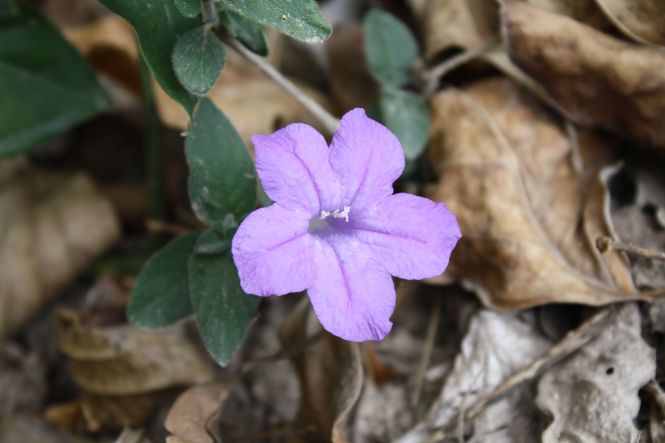
This species was one of the most memorable discoveries of my life. My sister Gretchen, Kate, and I were riding in the back of a Jeep up a very steep route in Oaxaca when I spotted this species out of the corner of my eye. I immediately knew it was undescribed, and before I could find the Spanish word to say STOPPPPPPP I lunged out of the moving vehicle towards it. We sat up a couple of nights with it, but only saw sphinx moths visiting the flowers. See Ruellia conzattii: I think this species is also intermediate between bat and hummingbird pollination…

My tremendous thanks to Álvaro and Efrén Scherenberg, owners of Finca Monte Carlo in Oaxaca, for facilitating this discovery. What a cool plantation and family history you have.

The specific epithet honors the women who historically inhabited the area and ran a coffee farm there long long ago, plus the local mountain (Los Lobos). Hence, “the she-wolves”…

Wild collected, Mexico, Tripp, Deregibus, & Lowman #317 (DUKE); Photo by Erin Tripp

Ruellia lasiostachya

Ruellia_lasiostachya

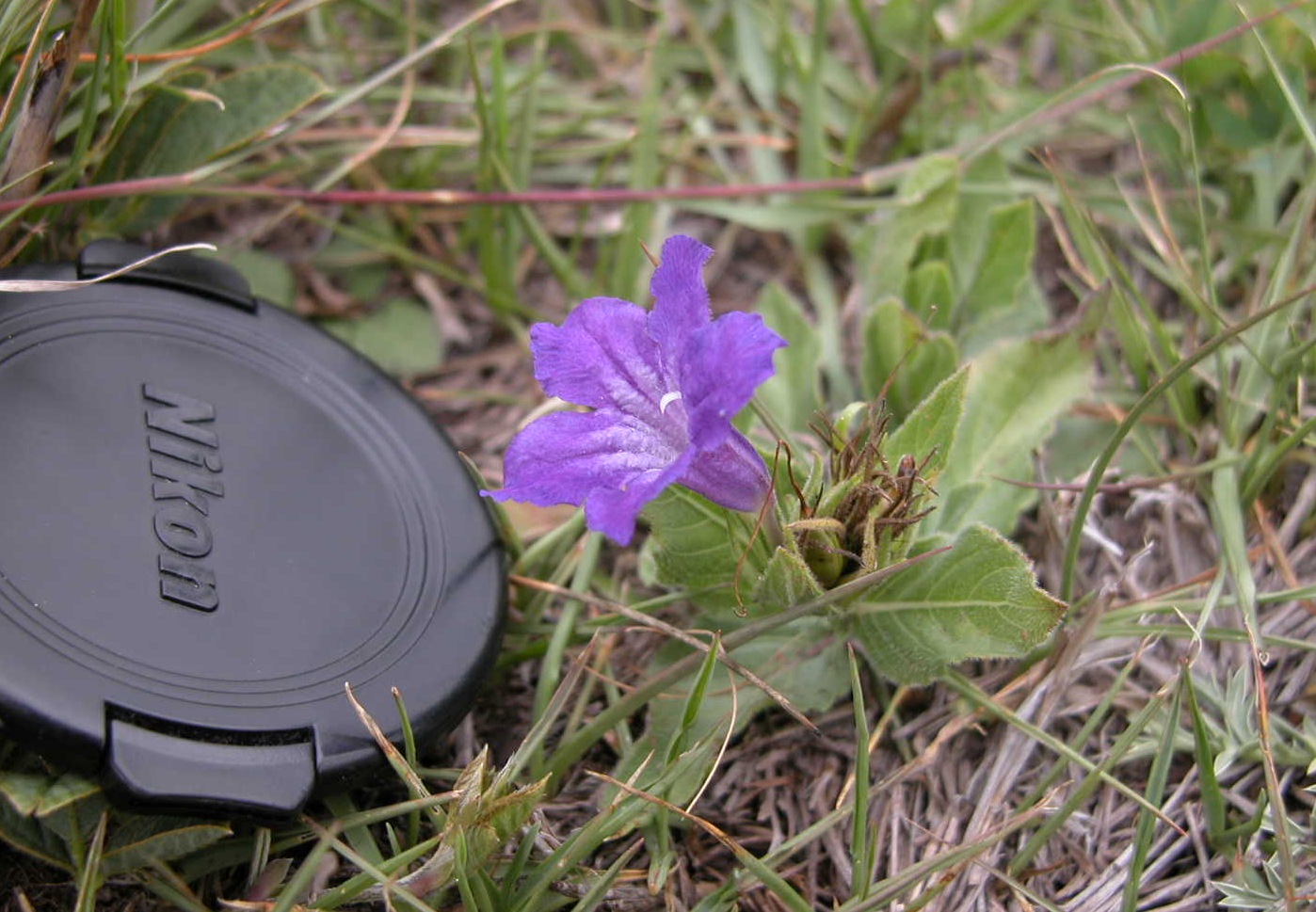
Trichomes gone wild. What do you want me to say? Regulatory network broken. Transcription factor co-opted for some other, less hairy function. I don’t know. I can’t even tell you what clade this crazy species belongs in because its trichomes keep clogging up the DNA sequencer.

Yep: a bona fide TERRIBLE photo. But you take what you can get when you’re in the depths of southern Colombia.

Wild collected, Colombia, Tripp et al. #5230 [COLO]; Photo by E. Tripp

Ruellia lactea

Ruellia_lactea

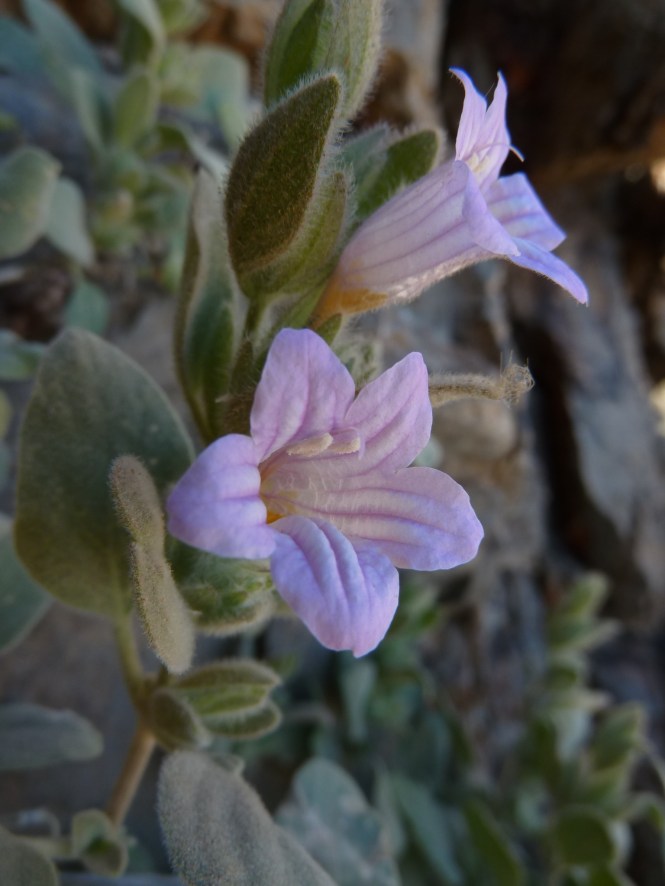
A darling little basal-rosette forming species, seen with colleague Salvador Acosta. Trouble is: this species also forms an erect herb. Yep – email me for additional photos. Never a dull in Mexico…

No: it doesn’t produce any bitter and thick white latex as you might be conjuring up, based on the specific epithet. Certainly nothing like lettuce.

Wild collected, Mexico, Tripp & Acosta #166 (DUKE); Photo by Erin Tripp

Ruellia kaokoana

ruellia_kaokoana

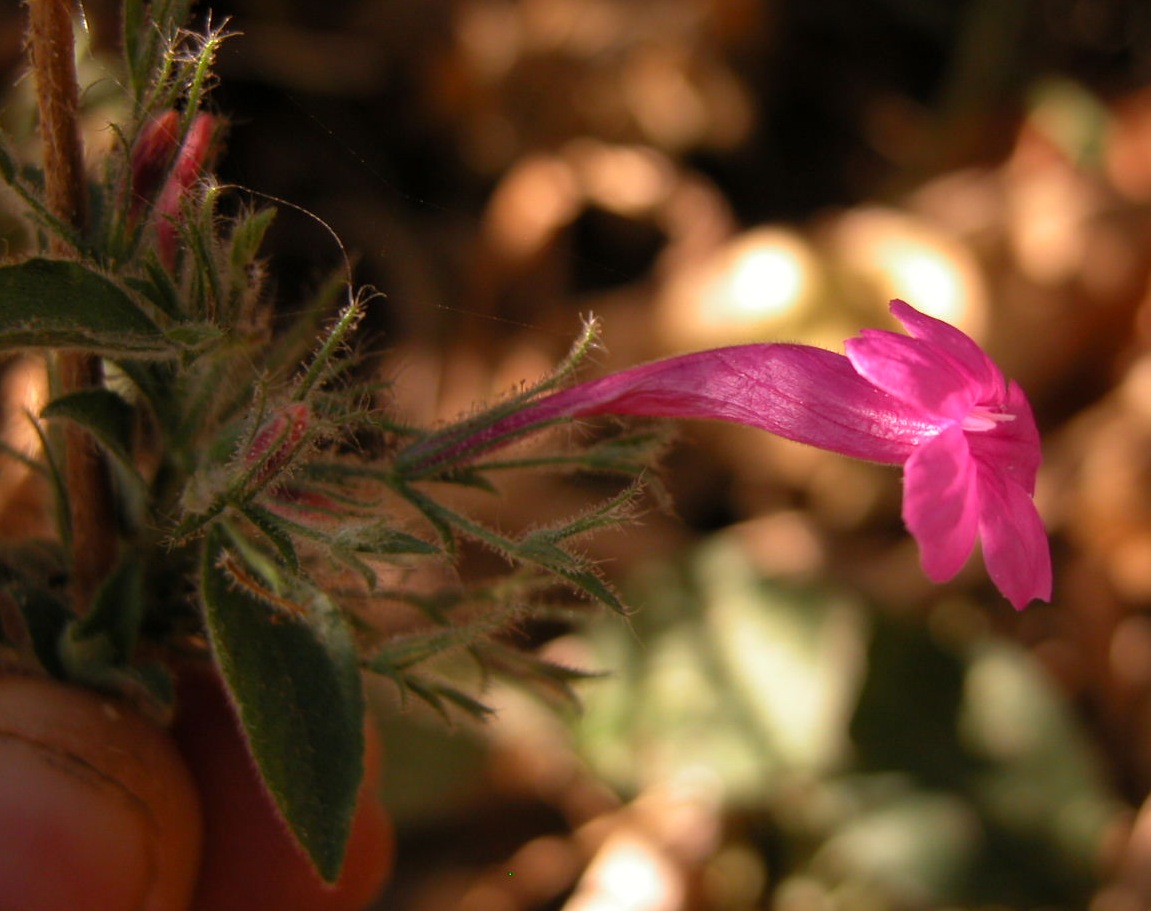
The readily lovable Ruellia kaokoana inhabits the driest of dry, slaty hillsides, mostly of northwestern Namibia (hence the epithet we honored the new species with). It’s sprawling / prostrate growth form is distinctive among the species it is related to (R. acetabula, R. aspera, R. diversifolia, R. marlothii…). This group is united by the presence of a unique “2+2+1” zygomorphic calyx configuration, with a prominent collecting vein on the widest calyx lobe, extremely dense / bracteate inflorescences, and production of a citronella-like vegetative odor. See Tripp & Dexter 2012, Syst. Bot.

I can’t believe how dry the habitat is in which this species thrives. Phenomenal. Some years, not a single drop of rain…

Wild collected, Namibia, Tripp & Dexter et al. #2019 (RSA-POM); Photo by Erin Tripp

Ruellia jussieuoides

I know that I’ve said all the other species in this genus are highly distinctive, but if any stands worthy of the uber designation, it is Ruellia jussieuoides.

First: Ruellia jussieuoides loves high quality, wet rainforest habitats. Second: as visible even from the photo, the secondary venation is raised above the plane of the leaf. Third: floral tubes of R. jussieuoides are extremely long and thin, and the orifice / opening is equally as narrow – all indicative of adaptation to butterfly pollination.

I first saw this species at a rather magical swimming hole in Chiapas (Cascadas de Agua Azul) with Kyle, on the first of many wonderful international trips we’ve taken together. In retrospect, I’m still not sure whether the plant or the neon blue swimming hole was more enchanting. But at any rate, it is also among the first few Neotropical Ruellia that I saw in the field.

Turns out this species is almost certainly synonymous with Ruellia puri from South America. A sweet little geographic disjunction going…read about it in Tripp & McDade 2012 (Brittonia). Ruellia jussieuoides has a neat geographic disjunction between Central America and central / western South America… bypassing northern South America. See paper cited above for more info.

Big thanks to our colleague Alexander for sharing photos of this plant with us. Helped to convince me that the two names were indeed representative of the same biological species.

Wild collected, Mexico, Tripp & Dexter #156 (DUKE); Photo 1 by Erin Tripp

Not vouchered, Bolivia; Photo 2 by Alexander Schmidt-Lebuhn

Ruellia jaliscana

Meet Ruellia jaliscana….as the name implies, native to (and also endemic to) Jalisco, Mexico. This is a striking plant that is sub-woody and can grow several meters in height, just like its close relatives in section Chiropterophila. In the flowering season, all parts of the plant are extremely pungent. In the vegetative season, this odor is not apparent. Inflorescences of this species are highly dissected, fimbriate, and I would add, stunning!

Kate and I sat and watched this species for many hours for multiple days, with and without sunlight. The flowers open (and anthers dehisce) between 5-7 pm, and for the most part fall in mid morning. We observed abundant hummingbird pollination during crepuscular hours but no bat visitors despite nocturnal observations and infrared videotaping. We did, however, hear some sweet sounds bouncing around the noctural Mexican forest while enjoying some tasty resveratrol….

Ruellia jaliscana was beautifully illustrated by Amanda Labadie of the Academy of Natural Sciences in Philadelphia (the original now hangs in Kate’s living room), along with the other 10 species in Ruellia section Chiropterophila. See Tripp 2010 (Systematic Botany) for examples of her fine work. Kate’s hand is equally impressive….

Wild collected, Mexico, Tripp & Deregibus #199 (DUKE); Photo by Erin Tripp

Ruellia inundata

Ruellia_inundata

Very cool plant in a very cool clade that has some evolutionary secrets to unlock… This species is so very clearly related to R. paniculata and R. galeottii, among others in the clade (see Tripp 2007 and Tripp & Manos 2008). Like R. paniculata, it is extremely widespread, occurring from Mexico through Central American and continuing south. Ruellia galeottii, on the other hand, is a restricted endemic to hot, semi-deciduous forests of southern Mexico.

The floral colors (plus their shapes) are what intrigue me. Ruellia inundata is a dark pink – mauve of sorts whereas R. paniculata and R. galeottii are purple. There is a long story to discover here….

Best population ever seen of this species: atop some little known, little visited, little appreciated, but most remarkable EVER Mayan ruins in Campeche: Calakmul Biosphere Reserve. Check it out… you and the toucans.

Wild collected, Costa Rica, Tripp & Deinert #121 (DUKE); Photo by Erin Tripp

Ruellia insignis

Here is a special species from the Cabinets of Curiosities of Socotra… home to so many peculiar plants, many of them endemic, many of them Acanths. I have no idea how this plant made it into cultivation, but one sees it flitting about various living collections across the world (especially those of the cool kids). It flitted its way into…. then out of… mine. If you are growing it, please get in touch – I’d love to be re-acquainted.

In addition to all of the other reasons you might just come to LOVE this species (e.g., those enchanting flowers, succulent leaves, or its furtive distribution), this plant has THE COOLEST CYSTOLITHS (check it – ‘rock sacs’) of ANY ACANTHACEAE. It’s true. They are dimorphic! Ruellia insignis produces the cigar shaped cystoliths typical of most other Acanths but in addition, it produces others shaped like a medieval mace! Notice how you can see them just under the upper leaf epidermis. This is heavy stuff…

This belongs to an early diverging grade that is paraphyletic with respect to Neotropical Ruellia. We have a lot of work to do in reconstructing this region of the phylogenetic ‘hood. Most immediately: we’d like to know how closely related this species is to other Ruellia endemic to Socotra, such as Ruellia carnea (which, consider yourself among the chosen few if you have ever seen this plant in the wild… I haven’t, and may never….).

(Formerly) cultivated, RSABG Greenhouses, originally from Socotra (Yemen), Not Vouchered; Photos by Erin Tripp

Ruellia inflata

Ruellia inflata is a distinctive species from central/western South America by its vining habit, its disproportionately large red flowers with long-exserted reproductive parts, and in some individuals, its ant domatia (see photo). That’s right – ant homes are not just for Acacia and Tibouchina. Acanths make them, too!

Not vouchered, Bolivia; Photo 1 by Alexander Schmidt-Lebuhn

Voucher unknown, Bolivia; Photo 2 by Erin Tripp