Ruellia megasphaera

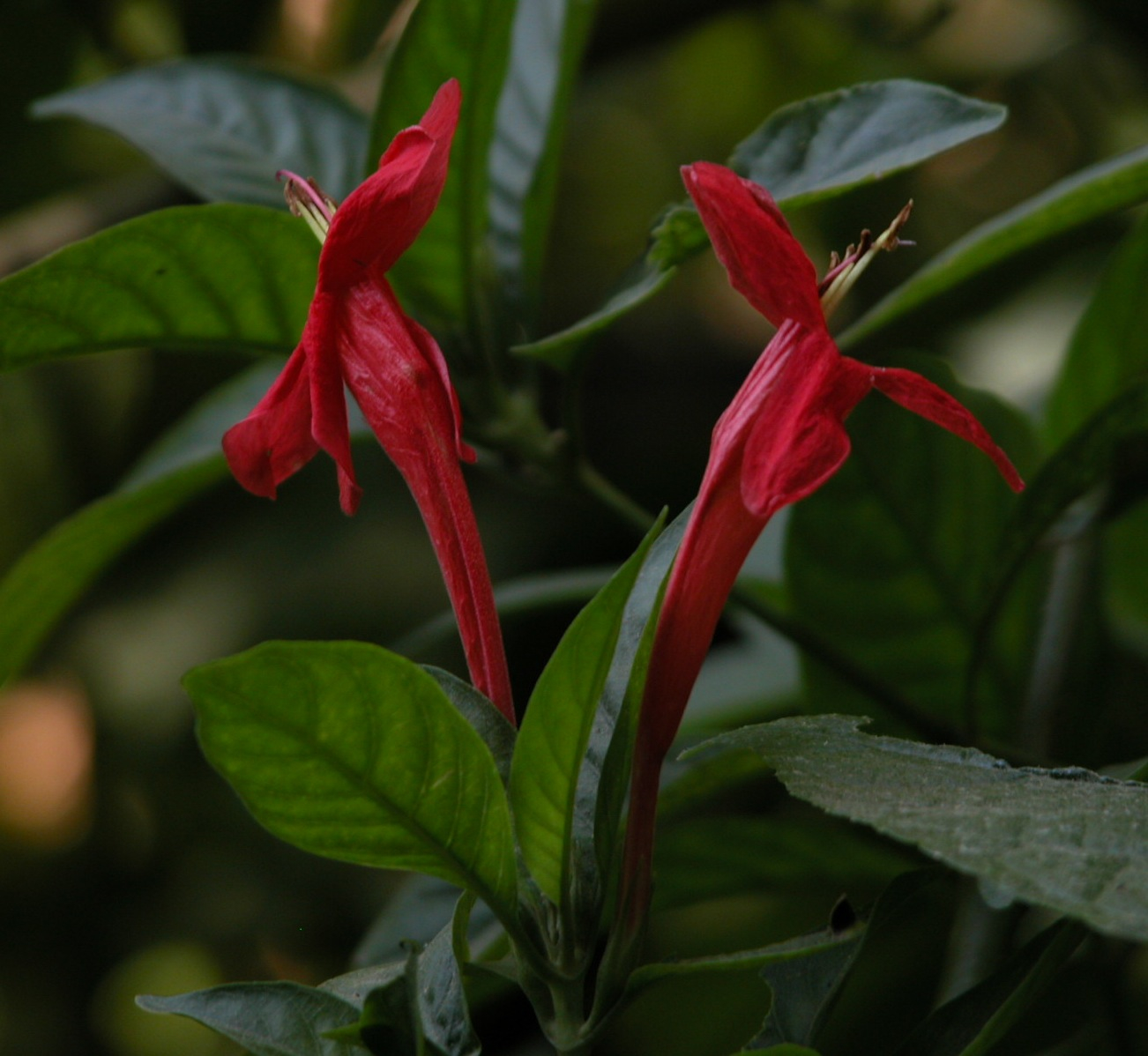
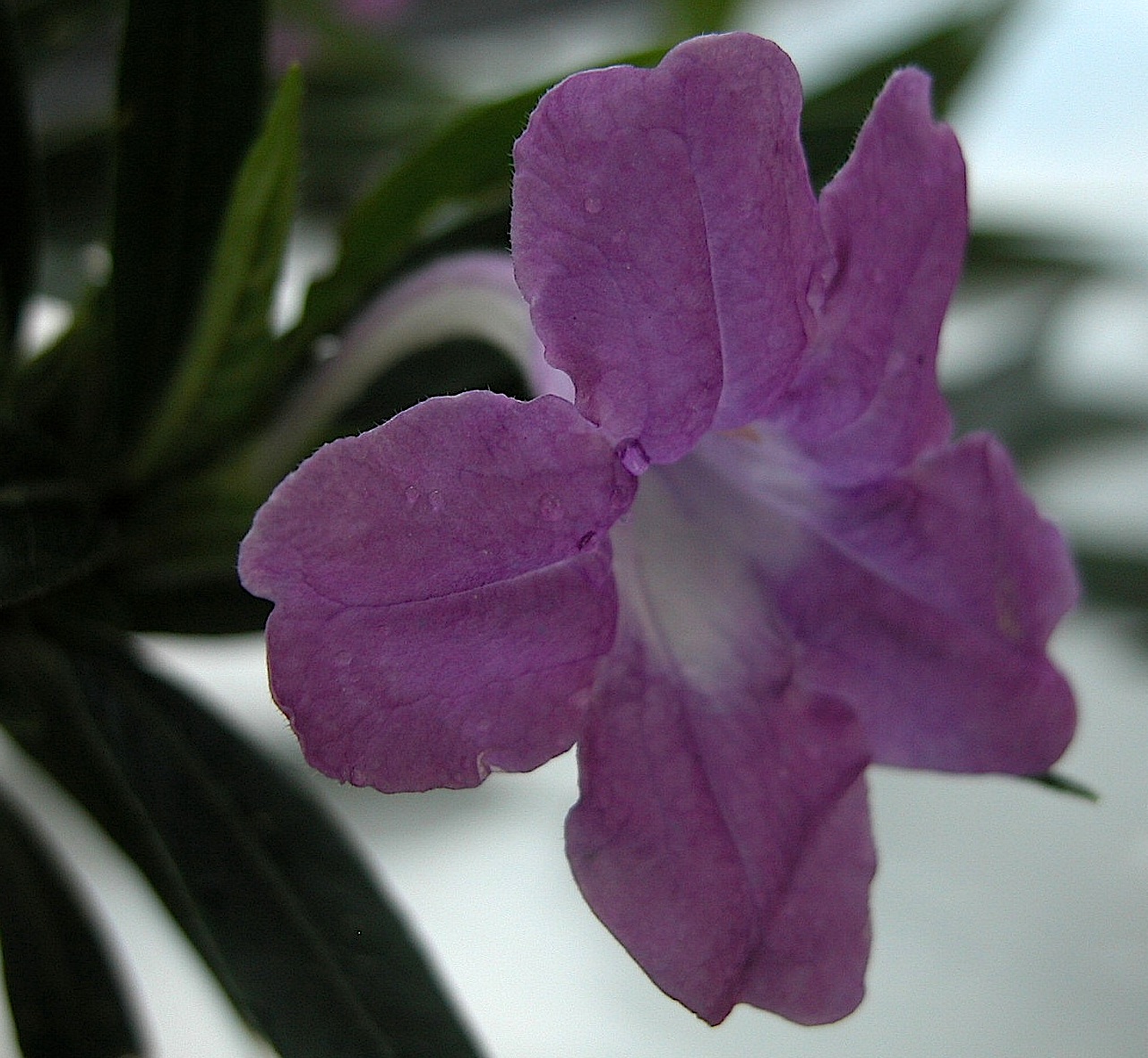
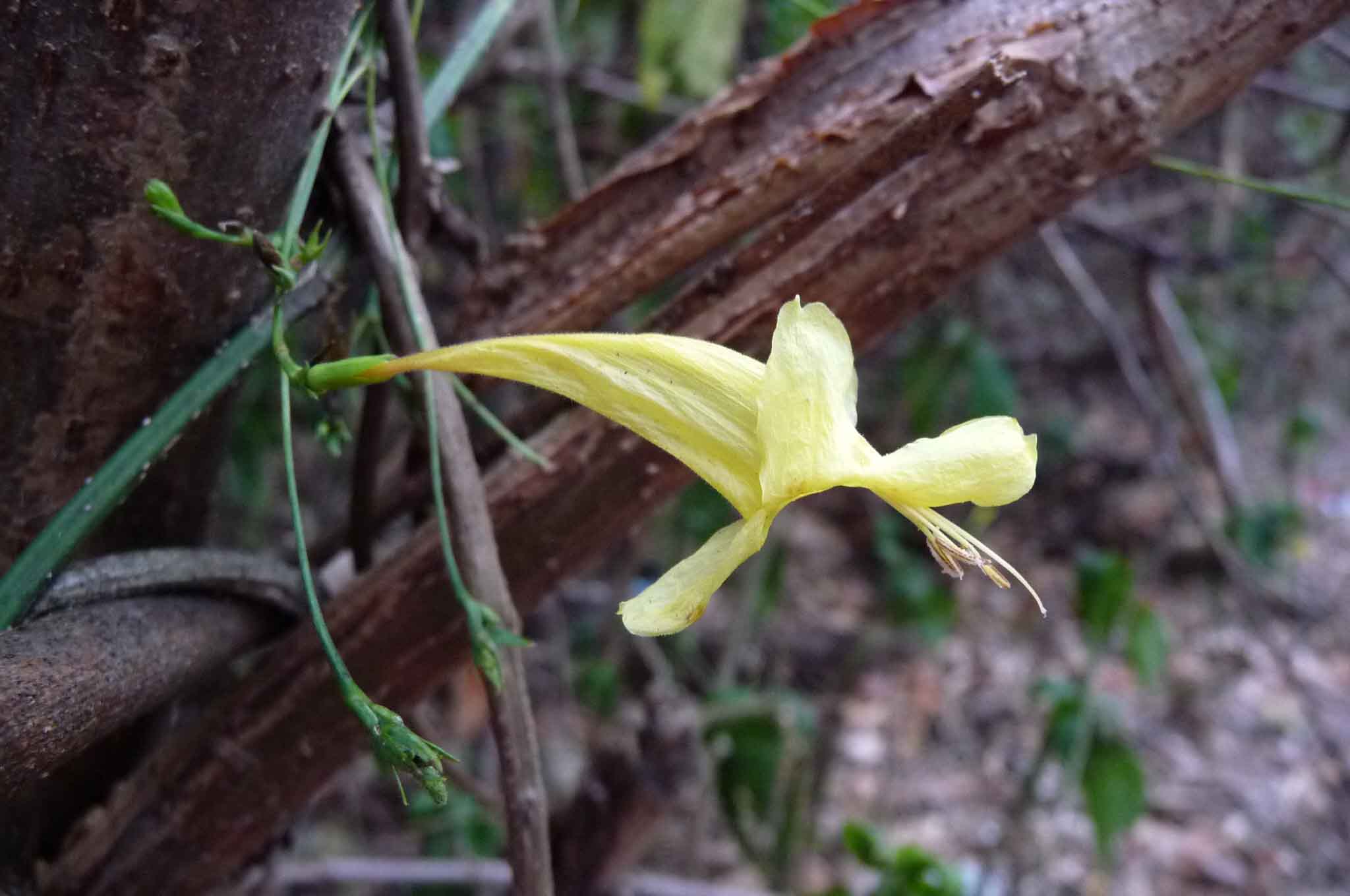
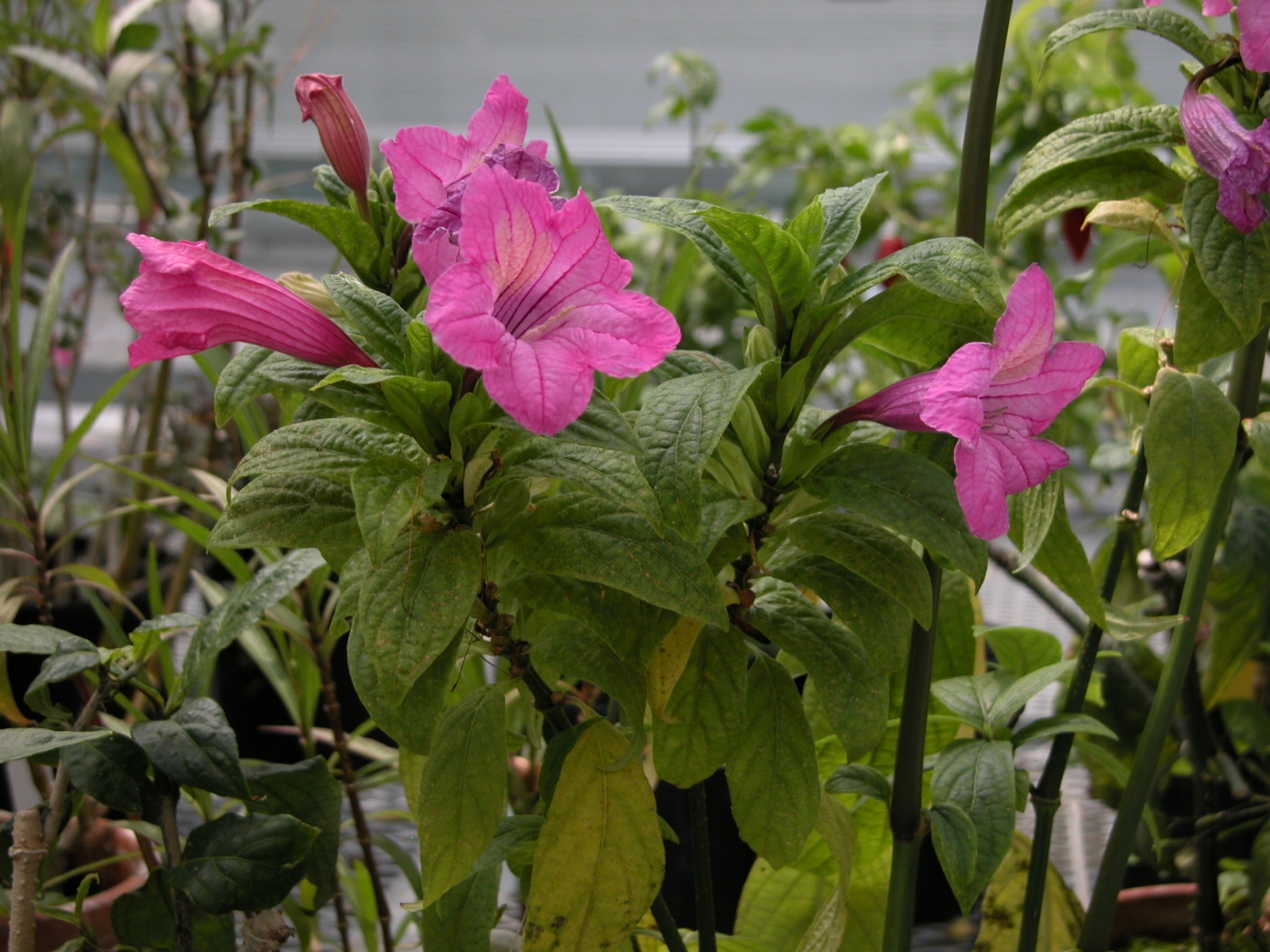
One of many still elusive (to me) Mexican species of Ruellia. This fuchsia-flowered plant appears to be closely related to several other Mexican taxa including: R. novogaliciana (red flowered), R. mcvaughii (red), R. petiolaris (yellow), R. matagalpae (purple), R. foetida (white), R. amoena (fuchsia), and R. alboviolacea (white). Sweet clade. I have never seen it, but our good friend and colleague Tom Daniel kindly provided me with this photo. I’d really like to grow it in my yard.

Fast forward to 2016… and THANK YOU US NATIONAL SCIENCE FOUNDATION FOR THE OPPORTUNITY TO CONDUCT THIS LATEST RESEARCH! First, start by reading the entry to Ruellia matudae. Second, stop and grab an elote. THIS was a damn fine day in Chiapas! Ruellia megasphaera was the pot of gold at the end of the rainbow that, despite our giggles and good atty-tudes (you there, Philadelphia), we three field leprechauns never thought we would find. The good fortune started with Amanda Fisher somehow spotting Ruellia matudae from the narrowest slice of daylight visible directly above her head from the crowded back seat of our rental jalopy. WAAAAAAIIIIIIT! She called it. Acanth party time, folks! Just one hour later and two kilometers up that dirt track, we found a single individual of Ruellia megasphaera. With sessile inflorescences, pale greenish-white bracts, and the darkest loveliest pink flowers that will make any botanist wooze to her kneeze, this species goes down as one of the most curious in the entire New World radiation. Ask me why….

Wild Collected, Mexico, Tripp, Luján, & Fisher #5756 (COLO); Photos by M. Luján

Ruellia mcvaughii

Ruellia_mcvaughii

This is among my favorite finds in Mexico (wait – is this accurate? how many favorites am I allowed?). Kate and I stumbled upon it rather accidentally, while on an intense day of fieldwork in Jalisco, traversing the state from north to south. Its crimson red corollas are visited by hummingbirds. Ruellia mcvaughii is a very very close relative of Ruellia novogaliciana…its sister species, in fact.

Wild collected, Mexico, Tripp & Deregibus #202 (DUKE); Photo by Erin Tripp

Ruellia maya

Ruellia_maya

I love this species – Tom did an excellent job describing it. It is incredibly distinct and could never be confused with any other Ruellia. Its phylogenetic position (closely related to Ruellia blechum) is intriguing…I’m still not sure what to make of it. At any rate, it appears to be a highly endemic specialty of southern Mexico. I saw it on the same magical day that Kyle and I first saw Ruellia jussieuoides, while basking in the hot yellow sun and warm turquoise waters of Cascadas de Agua Azul.

Wild collected, Mexico, Tripp & Dexter #157 (DUKE); photo by Erin Tripp

Ruellia matudae

So you’ve driven 600 miles and you find yourself finally at the end of the road. Central Chiapas. Comfortably close to the border of the ever mysterious Reserva Biosfera El Triunfo. You took your chance on some place to rest your head in that tiny, coffee town at the end of the road, Finca Custepec. But just like the locals warned you, there is only worker bunk housing here. Fortunately, I arrived with two most excellent traveling companions: Manuel Luján (reliable and terrific as always) and my dear bud Amanda Fisher… long time grass expert but slowing catching the Acanth fever. They are non-complainers. We are here in attempt to track down a couple of rare species of Ruellia, both of which are Chiapas endemics or near-endemics. We didn’t find either along the way, despite regular searches throughout the course of our all day journey. We will try tomorrow….

Lucky for us, we were introduced to El Jefe of the Finca. I am trying desperately to remember his name but am failing to do so (dear kind soul: if you read this, please get in touch!). He had 3 beds available for us at his private quarters, but only 2 of them had mattresses. Nevermind that, I love sleeping on hard, wooden planks (true). It was a cold night, but the most excellent hospitality in combination with the stupendous, hot espresso and thrill of the next morning made up for the shiver.

On my early morning jog, I took a couple of side trails up nearby mountains, through what appeared to be suitable habitat for the species we were after: Ruellia matudae and Ruellia megasphaera. Zero for two. I got a lot of funny looks by the locals but waved as if everything was as normal as possible. Back and showered by 7:30 AM, Amanda, Manuel, and I set off up the hill for a long, much needed multi-hour walk. There are two routes out of the finca on foot – one leads to some unspecified primary forests on some unspecified piece of land, and the other leads to El Triunfo proper, eventually crossing up and over the Sierras before dropping down towards Pijijiapan on the Pacific Slope. We are warned not to go the latter route because of robbers, which immediately made me want to do so. But we opted for route #1 instead. We hiked for numerous hours, crossing in and out of more fincas for the most part, with occasional bouts into primary forest. The footpath eventually ended at a family finca… a very nice couple who welcomed us in. They said there was no other route into the primary forest. Major bummer.

Feeling defeated, we retreated. We reached Finca Custepec and our car well after mid-day. But we still felt curious about label data written up by Dennis Breedlove and other ‘old pros’ at the Cal Academy. Thus, we made a very very slow retreat out of that wonderful place, driving up various side tracks along the way. It worked, and all of the above is to say: many unnecessary details occlude the final moment of finding what you are after. In this case, it was Amanda sticking her head sufficiently far enough outside the rear window to spot, in passing, a small pink flower on a nearly vertical slope. It was Ruellia matudae. We spent the next several hours studying and collecting it, scrambling the scratchy slopes until we had enough material in hand. This plant has the sexiest winged peduncles ever. You can also check these out on Matuda’s 1966 type specimen. Ruellia matudae is quite interesting because of its floral color (dark pink) and its close relationship to Ruellia pereducta, which is also dark pink, and to Ruellia breedlovei, which is purple. Based on currently available data, it is unknown whether Ruellia matudae is ancestral to or derived with respect to these two species

On the way out, we bagged Ruellia megasphaera nearby. Both species utterly remarkable and both species ‘new to Erin’. More on the latter species under that entry.

I love Chiapas – its plants AND its coffee.

Wild Collected, Mexico, Tripp, Luján, & Fisher #5754 (COLO); Photos by M. Luján


Ruellia marlothii

One bird, two bird, red bird, blue bird….pink, yellow, red.. what is it? The veritable, variable Ruellia marlothii. Yep – all those colors are pretty much the norm in Kunene Province. Note the Dusky Sunbird happily pollinating the local dominant. Definitely something worthy of study happening with these color morphs / anthocyanin variants…

Wild collected, Namibia, Tripp & Dexter #870 (RSA-POM), Tripp & Dexter et al. #1980 (RSA-POM), Tripp & Dexter et al. #2016 (RSA-POM), and so many other collections; Photos by Erin Tripp

Ruellia malaca

Seeing bat-pollinated Acanths in the field is like a welcoming to paradise (better than the ladies with grape leaves, I’m convinced). I could sit night after night in full relaxation mode, watching for these elusive pollinators.

Ruellia malaca is endemic to northern South America. Flowers open (and anthers dehisce) just after nightfall, and corollas fall in the morning. Note the starkness of the calyces and bracts (lighted photo), making these plants presumably more “visible” to nocturnal visitors. Manuel and I measured several flowers at night, not long after anthesis, and found that they contained over 200 milliliters of nectar. REMARKABLE – you could spread this stuff on your toast!

This species definitely merits further study – be the one!

Wild collected, Venezuela, Tripp & Luján #464 (RSA-POM); Photo by Erin Tripp

Ruellia macrophylla var. lutea

Ruellia_macrophylla_var_lutea

Manuel and I wrote extensively about this species in our recent treatment (Venezuelan Ruellia: A Monograph; Memoirs of the New York Botanical Garden). I will paraphrase here: what you need to know is that Ruellia lutea has a miniscule geographic range – one of the smallest ranges of any Acanth known. Ruellia lutea, which masquerades under its former name Ruellia macrophylla var. lutea, is endemic to a small portion of Parque Nacional Henri Pittier (can’t blame anyone for choosing a home in mountains named after a botanist). Here, it occurs in side-by-side sympatry and flowers concurrently with its red flowered sister species, Ruellia macrophylla, which is in contrast an extremely wide-ranging species of northern South America.

Ruellia lutea and Ruellia macrophylla are not known to form hybrids… why not? How do they maintain reproductive isolation? Is reinforcement that strong afterall?

In any case, the lack of hybrids is precisely why Manuel and I raised Leonard’s variety (one of many I have in mind such treatment for) to the species rank.

Curiously, almost none of the collections of Ruellia lutea bear fruit. The reproductive biology of this species remains enigmatic and needs investigation. As always: “be the one”.

Wild Collected, Venezuela, Erin Tripp #491, w/ Manuel Luján (RSA); Photos by Erin Tripp

Ruellia macrantha

Ruellia_macrantha

Not totally evident from this photo, but Ruellia macrantha and the very closely related Ruellia neesiana are the only two species thus far known in the genus to have resupinate flowers (look closely and you can see the reproductive parts of the flower oriented 180 degrees from their normal position). These are some extremely showy flowers that I’d quite like to see pollinated (must be a REALLY BIG bee).

Ruellia macrantha is wide ranging in the mtns of Minas Gerais and São Paulo. The related Ruellia neesiana (no photo, unfortunately) is allopatric and occurs in the mountains of Goiás. Tremendous thanks to Brazilian colleague Cintia Kameyama for additional information on these species.

You can buy seeds from Logee’s, which is swell.

Not vouchered, cultivated (RSABG + COLO Greenhouses); Photo by Erin Tripp

Ruellia longipedunculata

One of the many beautiful, red-flowered and hummingbird pollinated species of Ruellia in western South America (specifically, in the Physiruellia clade). I was fortunate enough to grow this by the good will of a good colleague, Alexander, who sent me seeds to cultivate. Originally collected by him in Bolivia…

Cultivated (RSABG Greenhouses), originally from Bolivia, Tripp & Ly #945 (RSA-POM)

Update (Sep 2016): Saw this species on steep, sandy slopes in transitional forest (from dry deciduous to wet) within the Santa Cruz region of Bolivia. This species like others encountered on this trip is endemic to Tucuman Bolivian forest belt which extends from this part of Bolivia to northern Argentina. Just as beautiful in the wild as it is in the greenhouse!

Wild collected, Bolivia, Tripp et al. #6025 (COLO); Photos by Manuel Luján; Blog post by Dina Clark

Ruellia longepetiolata

This is the plant that sometimes gets called Ruellia squarrosa in the horticulture trade, but that name [specifically, Ruellia squarrosa (Fenzl) Cufodontis ex E. Walker] represents a later synonym for Ruellia longepetiolata (Oerst.) Hemsl., which has priority (published in 1855! ….can you believe there were people wandering around Mexico admiring Wild Petunias back then??) So many protologues, so many available names (>1,000 in Ruellia alone), so little time…but fortunately Tom Daniel clarified this one in his 2003 Flora del Bajío treatment.

I have never seen this species in the wild, but I have seen photos of it growing in its natural habitat. The photos above derive from plants in cultivation, which is probably why they look just a little bit less like a true wild type….

Cultivated (COLO Greenhouses), Tripp #397 (DUKE); Photos by Erin Tripp