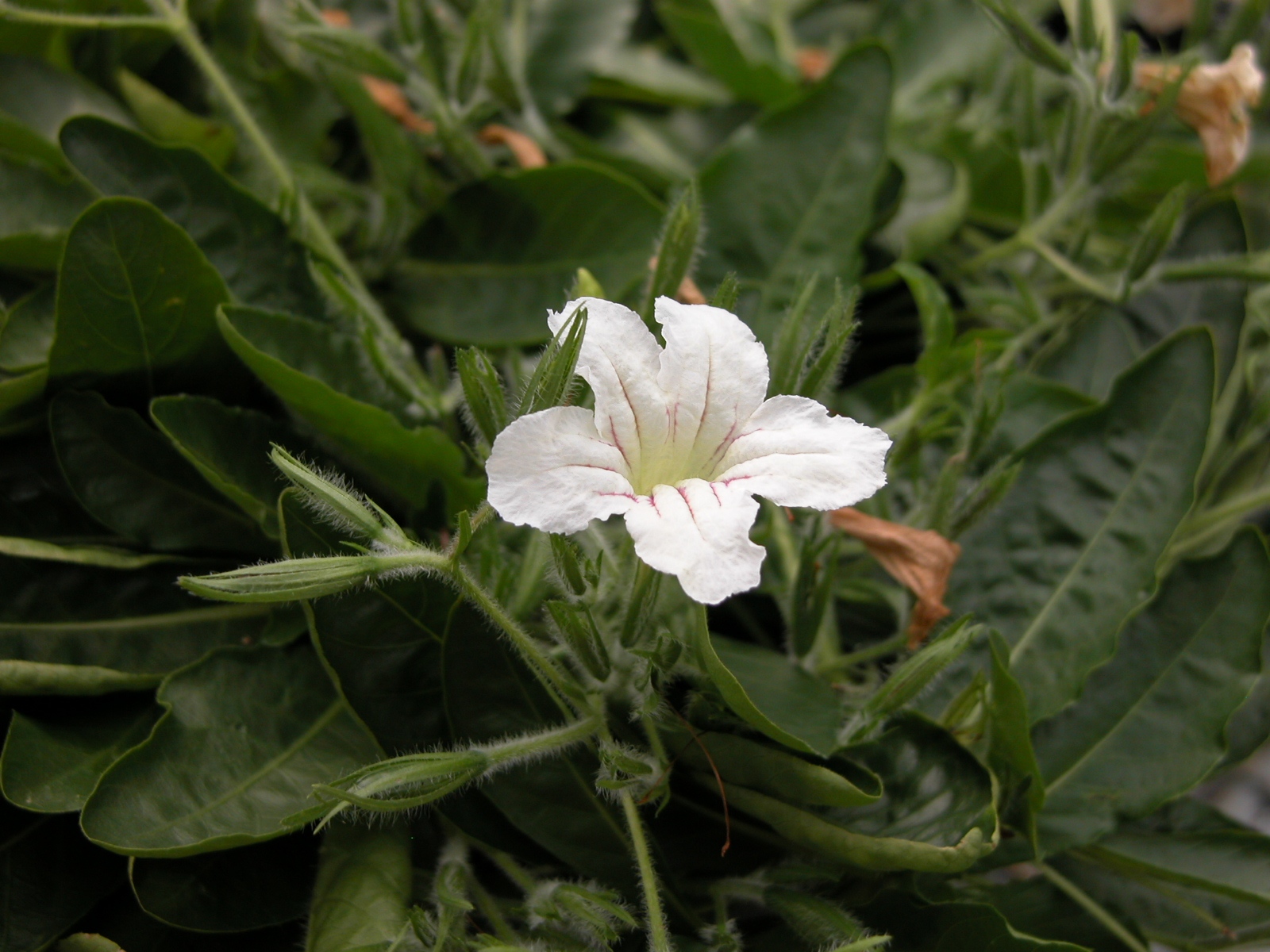
Ruellia pearcei

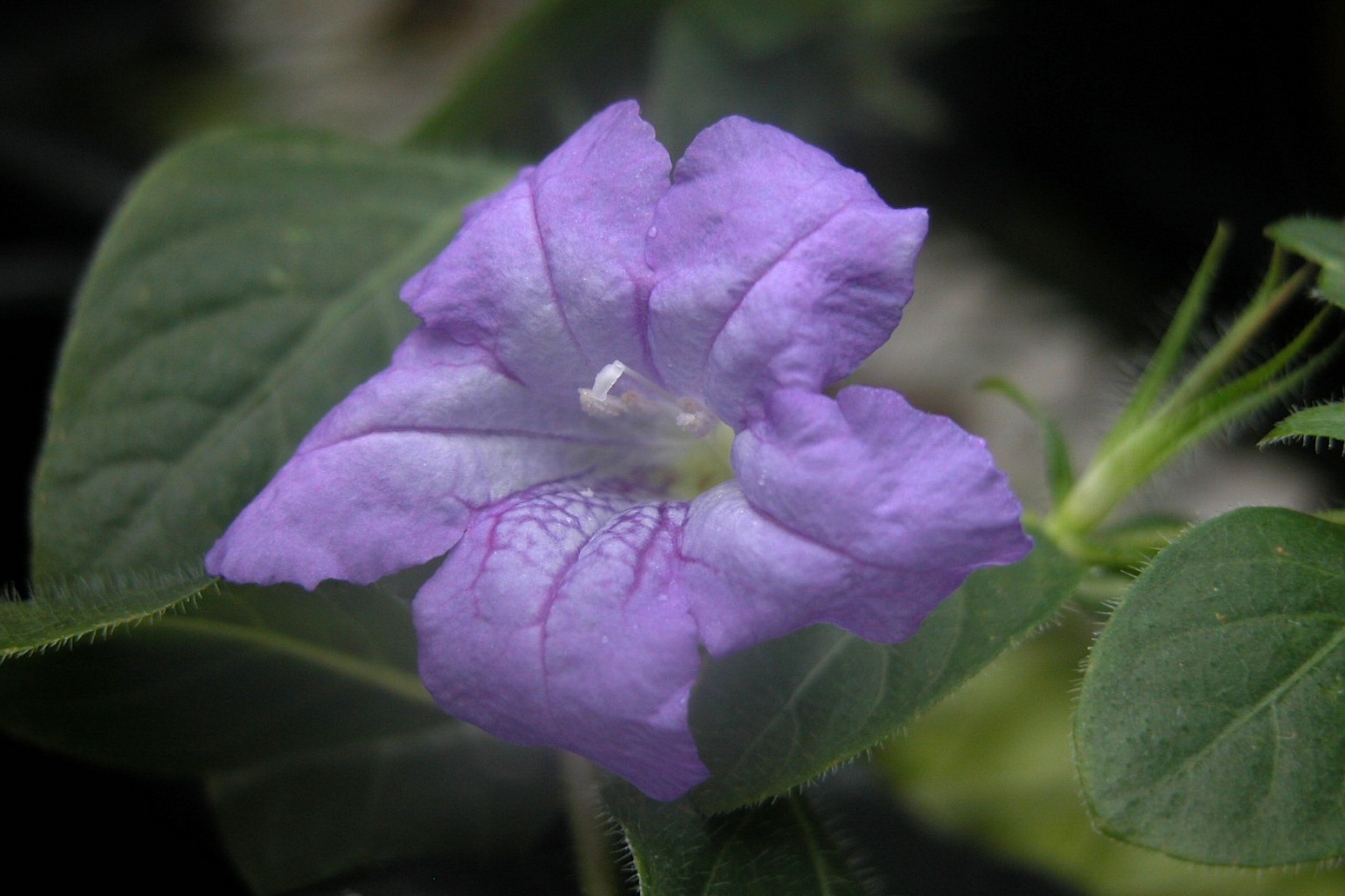
I sure like this plant. It is member to the large, taxonomically rich, morphologically diverse Physiruellia lineage. There is a heckuvalot of hummingbird pollination going on in this clade, with most species making these lipstick red flowers (not the Sarah Palin kind). Species in Physiruellia are particularly fond of western South America. This one is distinct by its abaxially purple leaves, primarily. Well, there are other features… See for yourself.

Update (Sep 2016): saw this species in Bolivia growing in a rich mesic shaded forest above a river after only previously seeing it in the Duke greenhouse.

Wild collected, Bolivia, Erin Tripp #5891 w/ Manuel Luján, and Dina Clark (COLO); Photos by Manuel Luján; Blog post by Dina Clark
Ruellia patula

Ruellia_patula

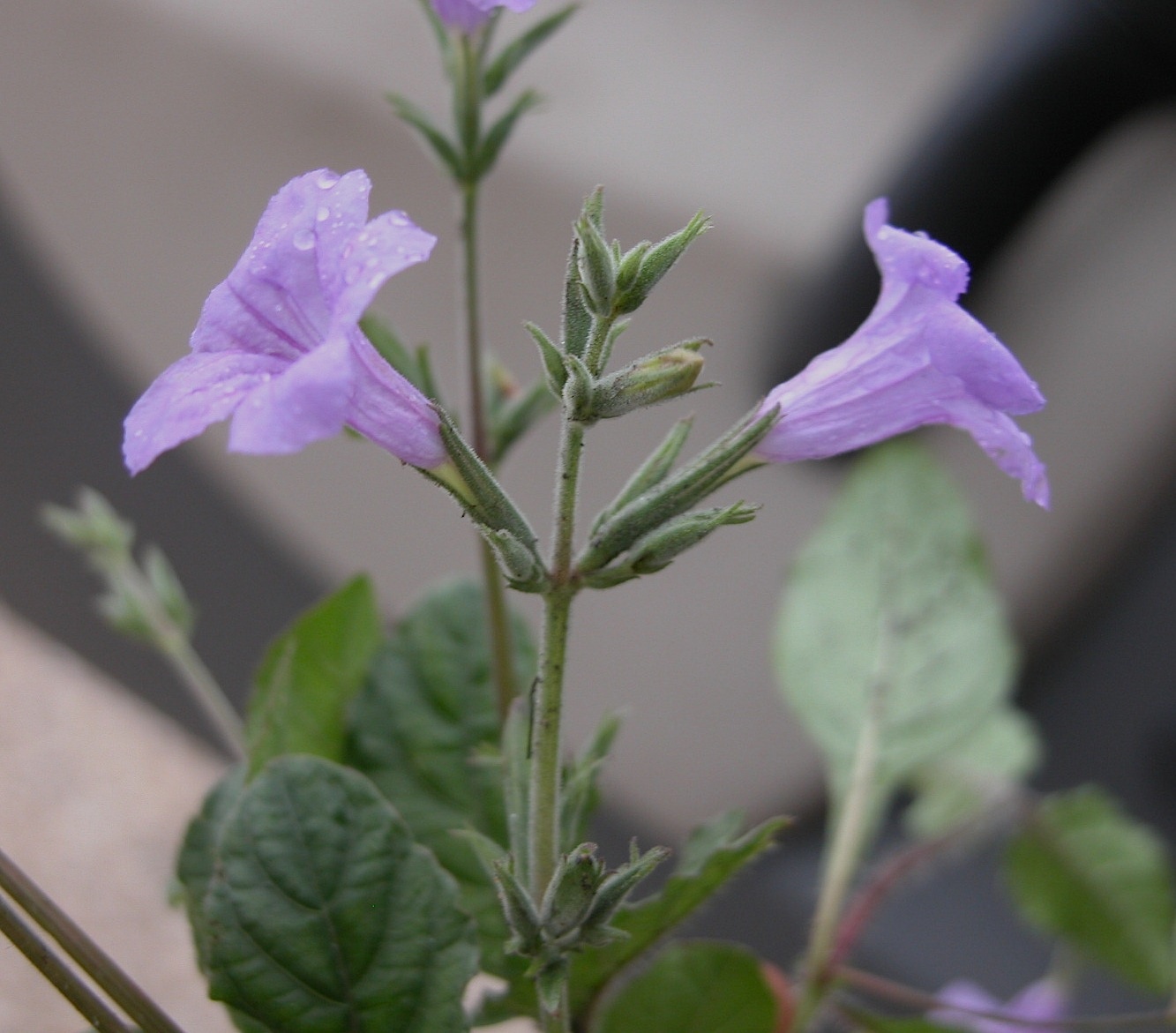
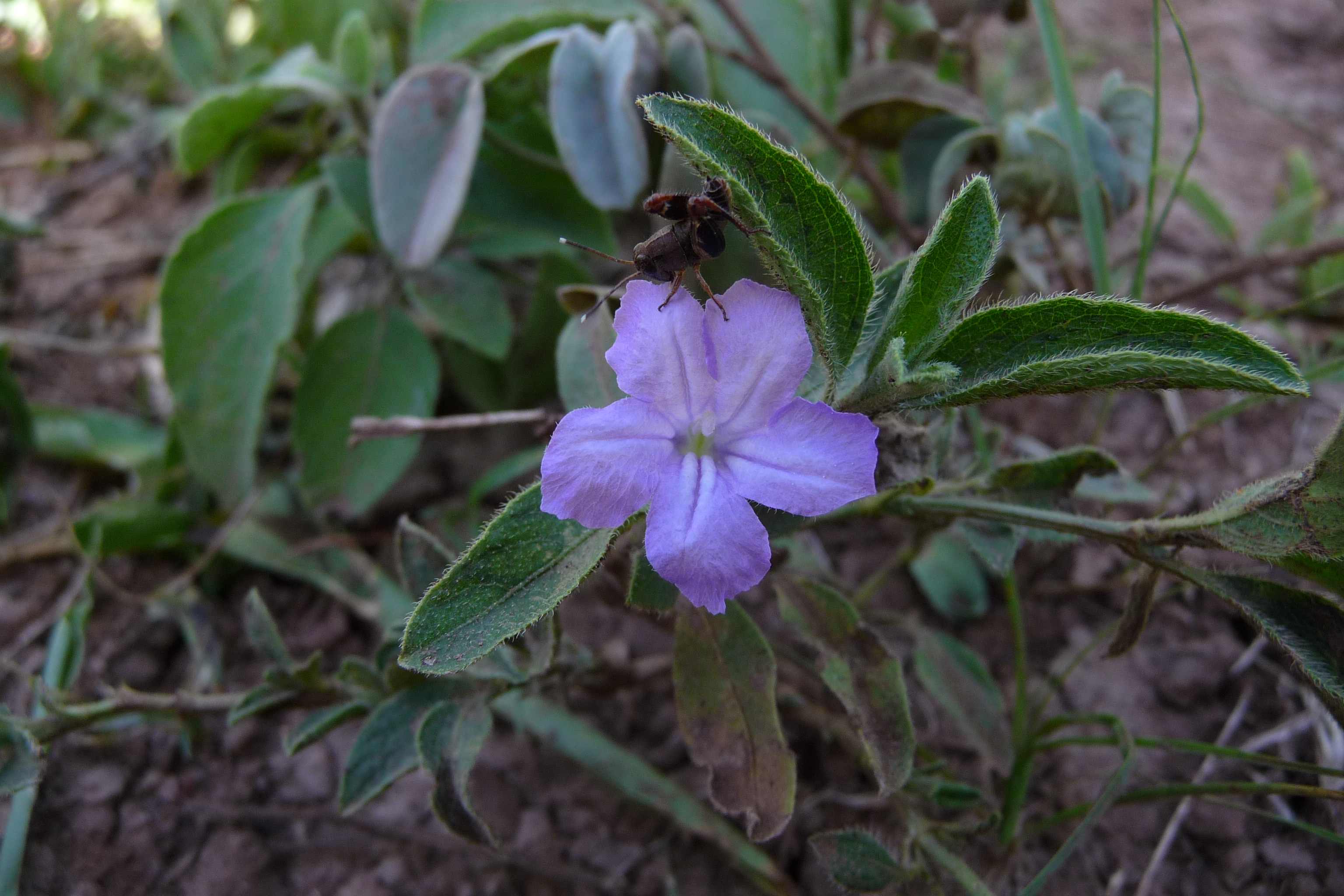
This is practically the Ruellia nudiflora of Africa — a common weed across much of the continent. I don’t really know how to communicate its distinctiveness, though with some thought, if I opted for that, I’d figure something out.

Oh – I CAN say that it doesn’t have the pubescent ovaries that R. prostrata has…the other common, widespread in Africa, purple-flowered Ruellia.

It simply is what it is. Ruellia patula. Try gestalt. Several accessions collected in different geographic areas suggest the species is monophyletic.

Wild collected, Ethiopia, Tripp & Ensermu #895 (RSA-POM); Photo by Erin Tripp

Ruellia paniculata

Ruellia_paniculata

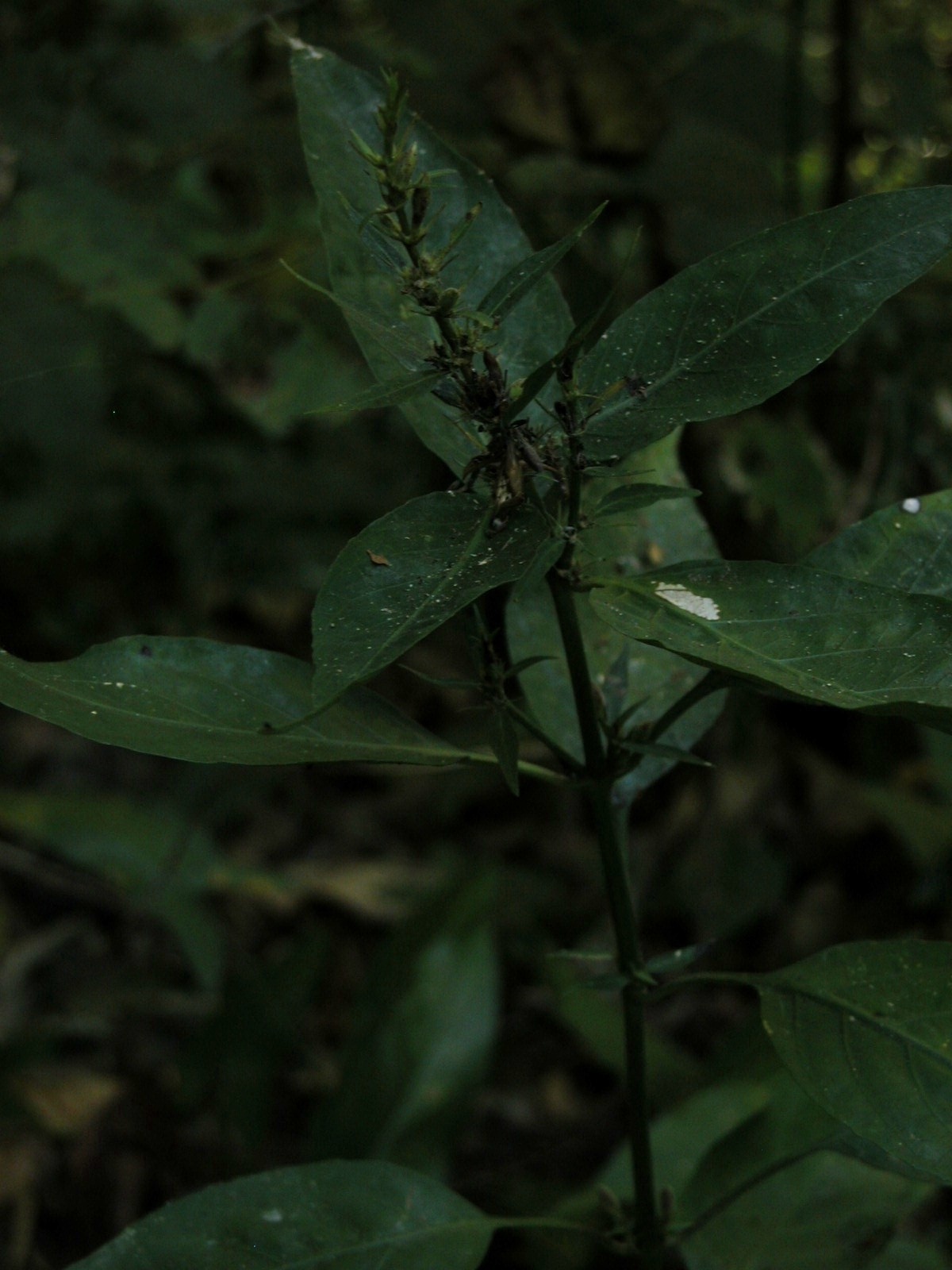
Ruellia paniculata is a very interesting species that represents an important member of the clade to which it belongs (see pages on R. inundata and R. ochroleuca). It is rather widespread geographically, which poses some interesting questions about gene flow in areas that it occurs geographically proximal to close relatives. Where R. paniculata occurs, it is often locally dominant.

Stinky vegetative odor, just like its relatives.

Wild collected, Costa Rica, Tripp & Deinert #122 (DUKE); Photo by Erin Tripp

Ruellia palustris

Ruellia_palustris_Durkee_holotype

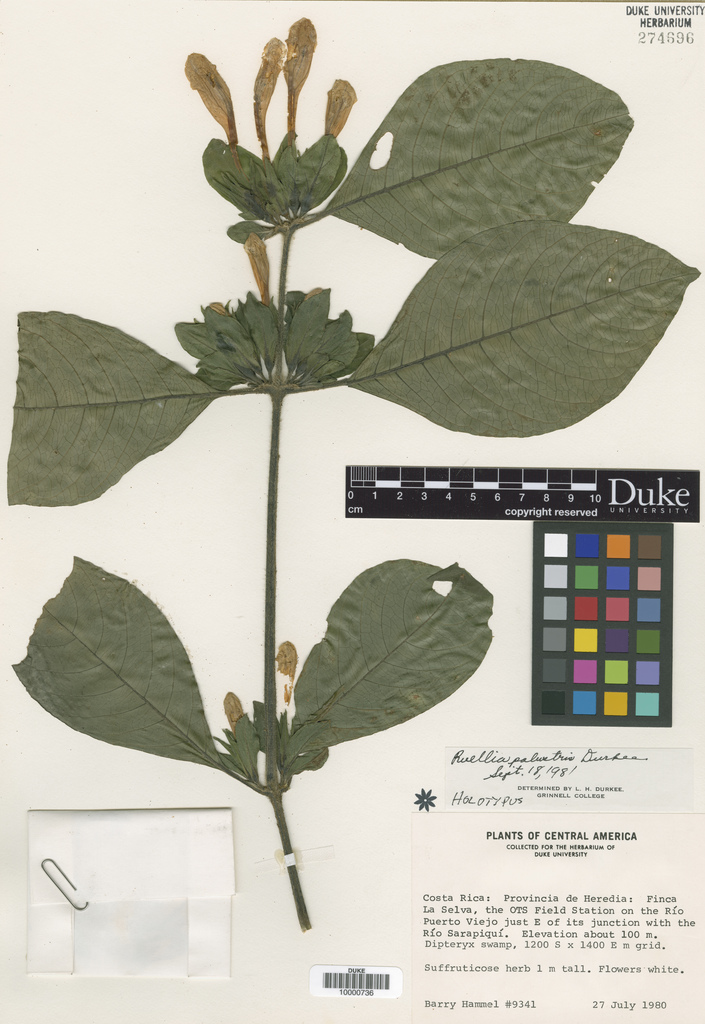
You won’t believe me because I have no photo nor herbarium voucher to prove it, but…. I have both seen and collected the rare and elusive Ruellia palustris in the cellulose. Unfortunately, at the end of that most memorable OTS ecology course back in 2005, I forgot my specimens next to the plant drier at Las Cruces Biological Station while packing in haste for Barro Colorado Island at 2:30 AM. Those specimens were never recovered….just like Alfred Russell Wallace’s tragic loss of Amazonian collections when his 1848 ship caught fire. OK: maybe a little less dramatic. But no less painful!

I have no idea what Ruellia palustris is related to. It is a narrow endemic and obviously a source of my anxiety until I can find and study it again. The type collection is from La Selva, near the junction of the Río Sarapiquí and the Río Puerto Viejo. Swamp forest, just like the epithet implies (thanks Durkee).

Have you seen it while traipsing around an OTS station? Go ahead, rub it in. Maybe even squeeze a little lemon into that sore, irresponsible wound of mine. Then send me a specimen and a photo….

Wild collected, Costa Rica, B. Hamml #9341 (DUKE, holotype)

Ruellia odorata

ruellia_odorata

Every species has a story – I feel pretty lucky to have stumbled upon an amazing genus for which one could literally make a new discovery every day. Here is one example. Ruellia odorata first “came to us” during a period in which Lucinda and I were reviewing “problem” specimens, in preparation for the Ruellia treatment of Acanthaceae in Flora of Costa Rica. Through some herbarium sleuthing, we determined that this was one of four species that needed to be described as new to science, from Costa Rica alone.

[some number of years pass…]

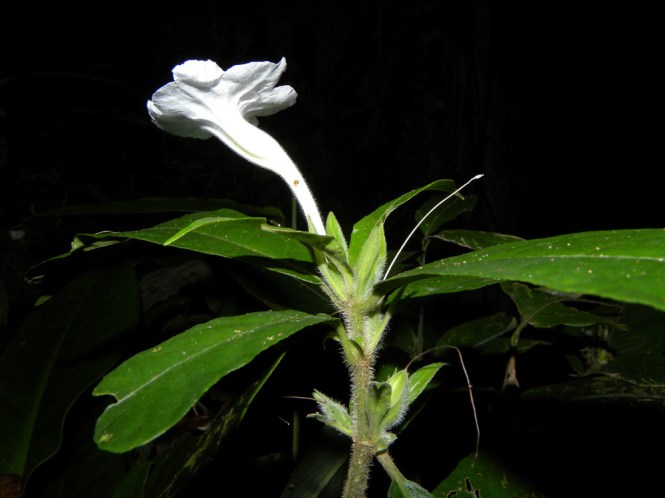
We receive in our email inboxes an image of a mystery plant… a white flowered Ruellia from the western slopes of Costa Rica. I knew it immediately: Ruellia odorata, which we had described based only on herbarium material. The photo was a dead ringer, and I was happy to finally see this species “in the cellulose.” HUGE thanks to Reinaldo Aguilar, for sharing this with us.

I don’t know if you can see it, but on the photo I can see a small hole in the corolla tube, near the junction of the “narrow unexpanded portion” and the “expanded portion” (see McDade & Tripp 2008, Brittonia, for corolla terminology). This is most likely the result of nectar robbing by a hummingbird. They like to drill holes in floral tubes and steal the goods. Hence, botanists call them “illegitimate floral visitors.”

Wild collected, Costa Rica, voucher unknown; Photo by Reinaldo Aguilar

Ruellia oaxacana

Ruellia_oaxacana

I first saw this species while doing some solo fieldwork in Mexico, at the terminus of an already dark and dreary day. Not enough sunlight for profound thought or for photography. Nonetheless, I was convinced it was Ruellia metallica and that I was seeing this species for the first time in Mexico.

[Time passes…a year later….]

Looking at my collection of this plant more carefully in the herbarium, it seems to consistently have more seeds per fruit and more slender fruits than does R. metallica (which is now affectionately known as R. terminale; see Tripp & McDade 2012, Brittonia). As it turns out, several other collections from this portion of Mexico also fit this pattern. With some additional research, I decided that these plants should be attributed to Leonard’s infrequently used name, Ruellia oaxacana. This species is genetically distinct from R. metallica/R. terminale, which was quite interesting to learn.

Wild collected, Mexico, Tripp 189 (DUKE); Photo by Erin Tripp

Ruellia nudiflora

Ruellia_nudiflora

Here’s my best advice: good luck with this one.

Ruellia nudiflora epitomizes a true species complex that, as colleague Tom Daniel once said to me, “I wouldn’t even wish it on a PhD student.”

This “species” occurs from the southern USA into Central America and seems especially happy in subtropical Mexico. It’s variable, it’s widespread, it would love for you to study it.

Wild collected, Mexico, Tripp & Dexter #162 (DUKE); Photo by Erin Tripp

Ruellia nocturna

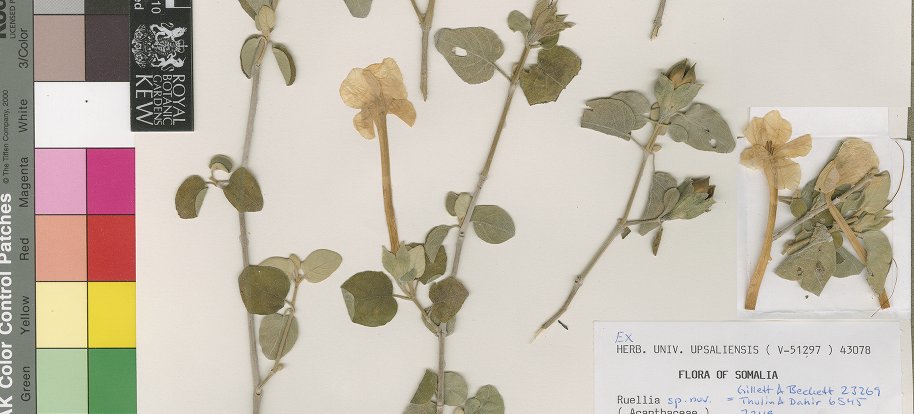
Ruellia_nocturna_portion of holotype at Uppsala

Mikael Hedrén published this absolutely drop-dead gorgeous new species, known only from central Somalia, in 1993. Its closest relative is probably Ruellia discifolia that, unlike R. nocturna, is much more widespread in tropical areas of northeast Africa. The two species differ primarily in calyx morphology, with lobes of R. nocturna being conspicuously connate. Don’t believe me? See the photo for yourself. Simply spectacular… you’ll want to invite it over for a glass of wine.

My educated guess: R. nocturna and R. discifolia are sister species, together with R. carnea. Oh, and somewhere in the mix is R. insignis. Times are tough in Old World Ruellia. Don’t give up.

Wild collected, Somalia, photo of holotype (Thulin, Hedrén, & Dahir #7380) at Uppsala.

Ruellia morongii

Ruellia_morongii

Basal rosette forming species from Brazil that I wish I knew more about. Please chime in. Likes to grow in my yard in California, where I have learned that all fruits mature at once, and their explosive dehiscence is hygrochastic, i.e., they open upon wetting.

Ruellia morongii is not too distantly related to Ruellia hygrophila – from a similar part of the world. They occupy the Euruellia clade in the genus – see Tripp 2007 (Systematic Botany) for morphological features that characterize the clade.

Not vouchered, cultivated (RSABG + COLO Greenhouses), originally from Brazil; photo by Erin Tripp

Ruellia menthoides

Ruellia_menthoides

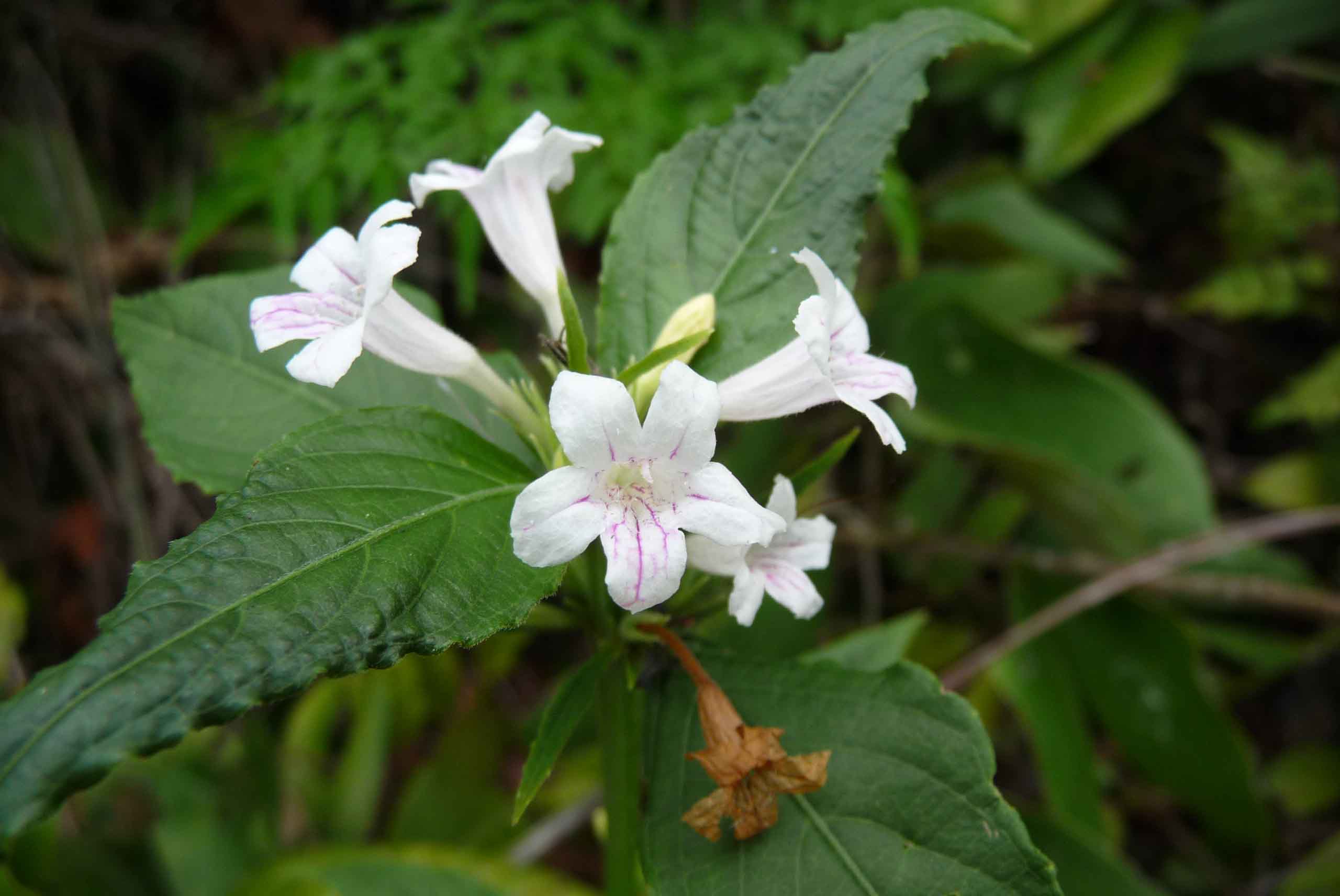
I am guilty of saying that every species is my favorite species, but it can’t be helped. Each conjures recollection of some wild ride required to collect the thing in the first place. Ruellia menthoides is one such special species with a special story of discovery. I’ll leave it at that for now. What a beauty.

This is a highly distinctive locally endemic species of the Venezuelan flora… first seen and collected with my most terrific traveling companion Manuel Lujan in 2009. Note the characteristic pink stripes on an otherwise stark white corolla.

Wild collected, Venezuela, Tripp & Lujan #470 (RSA-POM); Photo by Erin Tripp