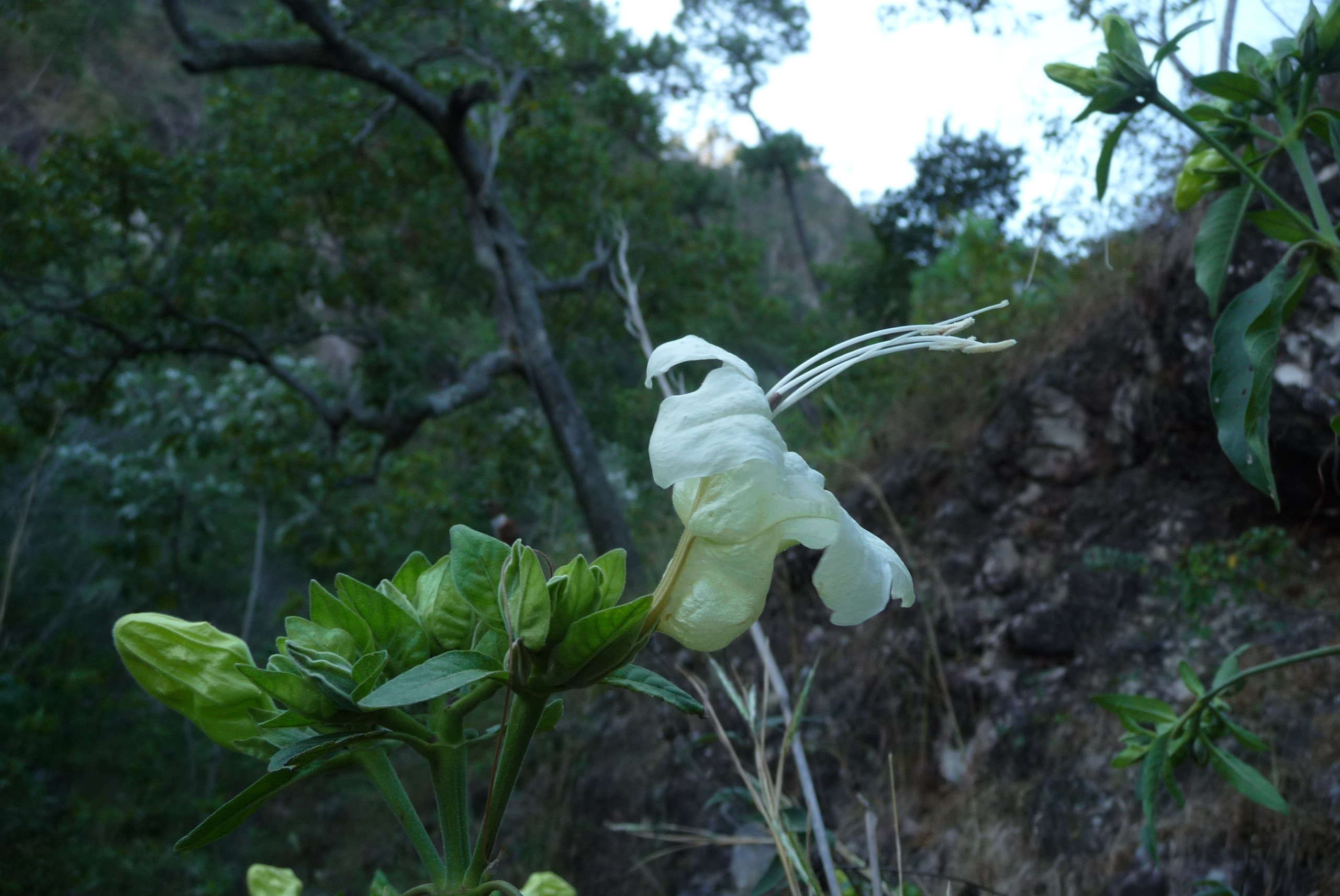
Ruellia saeri

Ruellia_saeri

Well here is an interesting species, and one I was very surprised to find in the field with my collaborator and friend Manuel Lujan. We didn’t have high hopes, given its restricted range within Venezuela.

Ruellia saeri is a small statured, high-elevation endemic species to that country, and was named by Silvia Llamoza. I don’t yet know much about its phylogenetic position, but based on its distinctive, decussate floral bracts, I predict relationship to the Ruellia blechum clade. Time will tell.

Wild collected, Venezuela, Tripp & Lujan 514 (RSA-POM); Photo by E. Tripp

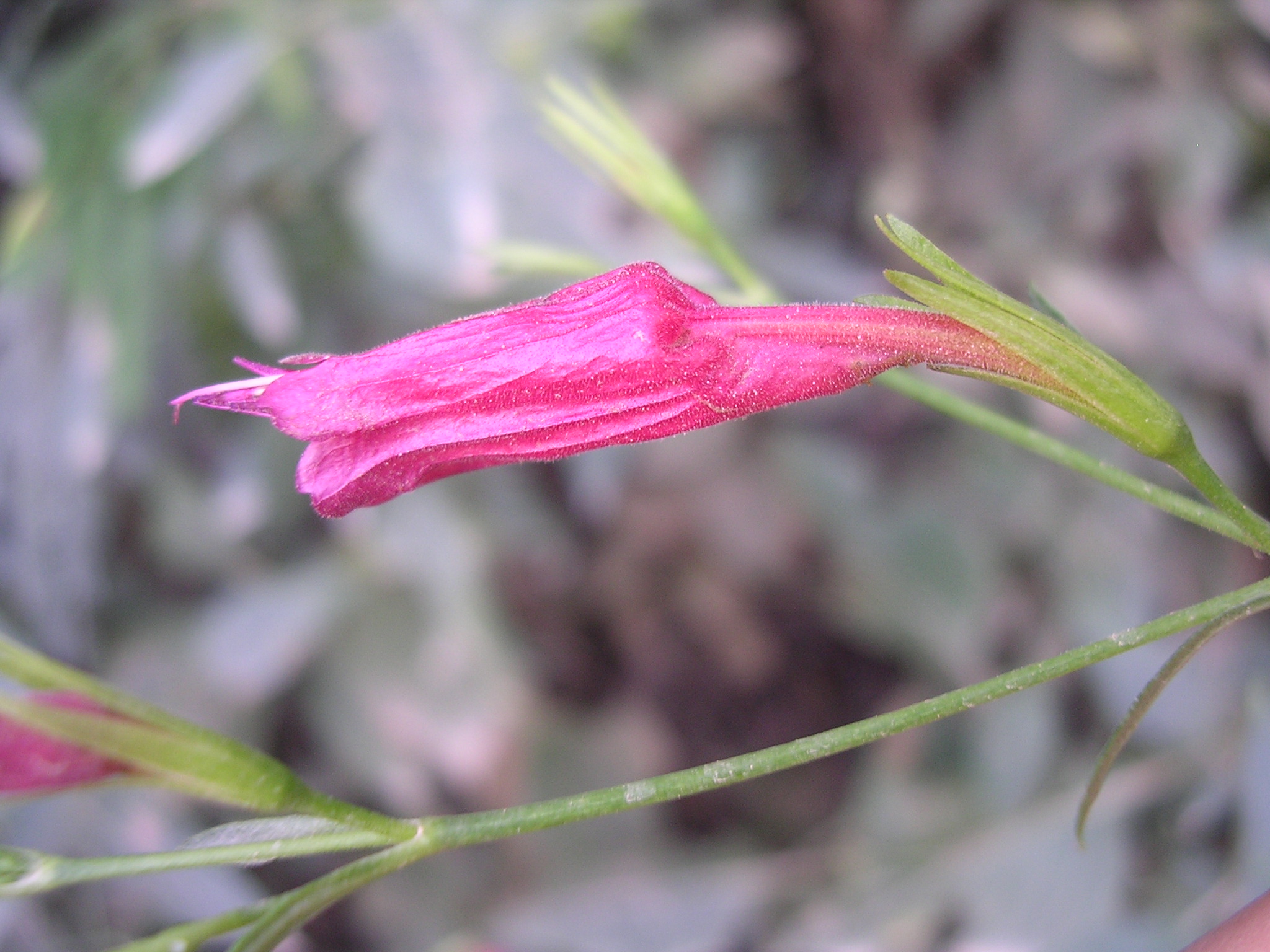
Ruellia saccata

Hey! The Saccate Ruellia! What more do you need to know? CHECK OUT THAT COROLLA NECTAR POUCH. I’d spread that goo on my toast, for sure.

Ruellia saccata was discovered by colleague Alexander Schmidt-Lebuhn during his extensive fieldwork in Bolivia while working on his dissertation. He found it in the Rurrenabaque region: SPECIAL FOR ACANTHACEAE. Alexander was kind enough to involve me in dialog on this curious new entity. But not much of it (dialogue) was required: his collection was certainly representative of a new species.

Ruellia saccata is happily at home in the Physiruellia clade. Ever a doubt? Check the hygroscopic trichomes on the seeds… they are restricted to the margins.

Wild collected, Bolivia, Schmidt-Lebuhn #60 (LPB)

Update (Sep 2016): Saw this species in Pre-Andean Amazonian wet forest in Bolivia, September 2016. Great to finally see it in the wild after assisting with its species description and publication. As beautiful up close as in the photos! Note the wonderful combination of contrasting purple and red floral parts. Only the second known collection of this species also from the Rurrenabaque area. This time collected on steep slopes of a beautiful drainage in the mountains.

Wild collected, Bolivia, Tripp et al. #5992 (COLO); Photos by Manuel Luján; Blog post by Dina Clark

Ruellia ruiziana

Ruellia_ruiziana

I am not the most knowledgeable person about this species, but it seems happily at home in the Physiruellia clade owing to several plant features (see Tripp 2007, Systematic Botany). I always thought it had lipstick red flowers like many other species in this clade (e.g., see those discussed by Cecilia Ezcurra in her insightful 1989 publication in Darwiniana), but this photo suggests they have the mauve thing going on…which makes me want to study its anthocyanin composition.

Wild collected, Bolivia, Schmidt-Lebuhn #933 (HAL, LPB)

Update (Sep 2016): Got to see this species in Bolivia and collected material so will get an answer soon about its anthocyanin composition.

Wild collected, Bolivia, Tripp et al. #6028 (COLO; Photos by Manuel Luján


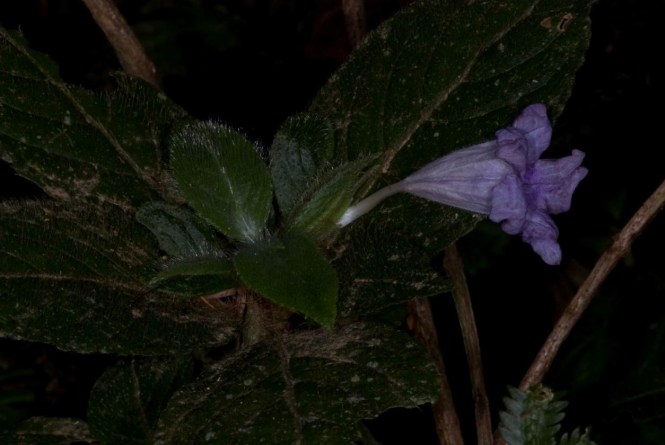
Ruellia putumayensis

ruellia_putumayensis

A tropical species I know little about… in fact, Ruellia putumayensis is a tentative determination that I put on a collection made by our colleague and Lamialean fanatic John L. Clark. Big thanks to him for continuing to send amazing tropical Acanths our way.

Check out the pubescence. Pretty far out.

Wild collected, Ecuador, Clark 12101 (UNA); Photo by John (L.) Clark

Ruellia purshiana

OLYMPUS DIGITAL CAMERA

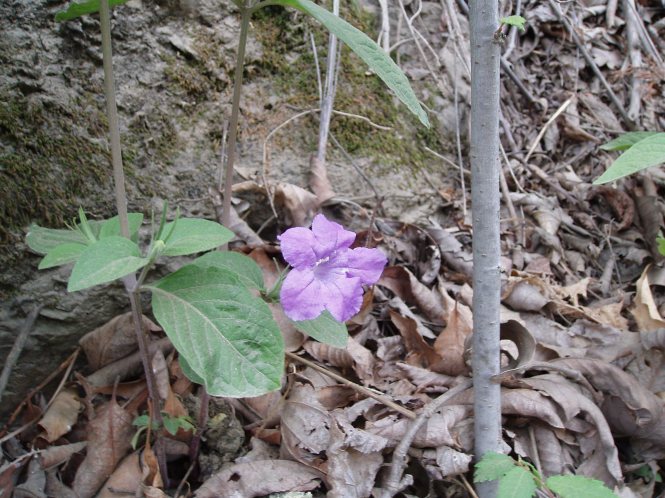
Apologies for such a ratty photo of such an amazing little species – a southeastern US endemic, which, naturally, makes me love it even more. I was SHOCKED to find this plant growing in Madison County, NC of all places (arguably one of my top five favorite counties in the US). However, as I came to learn, it was inhabiting a rare dolomite outcrop of the southern Appalachians. Given that the genus as a whole ‘prefers’ high pH substrates in North America, its colonization of this particular patch of happy soil was not particularly surprising from an edaphic perspectie, even though its nearest neighbor populations are several counties away.

At any rate, a highly distinctive ENA endemic… solitary flowers on short peduncles with pubescent ovaries. Can’t be mistaken. Seen only once in the cellulose, with my good pal Mary Elizabeth Scherger.

Wild collected, USA, Tripp & Scherger #427 (DUKE); photo by Erin Tripp

Ruellia prostrata

Ruellia_prostrata.jpg

Ruellia prostrata, like R. patula, is widespread across tropical and subtropical Africa. The former has pubescent ovaries while the latter has glabrous ovaries (there are other differences – ask me). I don’t have anything profound to say about this species at the moment. I’m terribly sorry.

Wild collected, Ethiopia, Tripp & Ensermu #894 (RSA-POM); Photo by Erin Tripp 


Ruellia pringlei

Ruellia_pringlei

Ruellia pringlei, you were one of my first Chiropterophilan loves! … even if named after another DWG. Dead White Guys…. sigh.

OK: this species belongs clearly to Ruellia section Chiropterophila, but I doubt it is bat pollination, as the sectional name implies. Almost certainly not. In fact, I’ve seen butterflies almost faint over it.

But I met you before I met most others in the clade, and in those hot, dry, spiny forests of a December in Oaxaca, you stole my heart and solidified my future. Kyle was with me when I found it. Not far from Tehuantepec. Even he, as a tropical tree guy, got a little squishy inside…

Wild collected, Mexico, Tripp & Dexter #161 (DUKE), photo by Erin Tripp

Ruellia potamophila

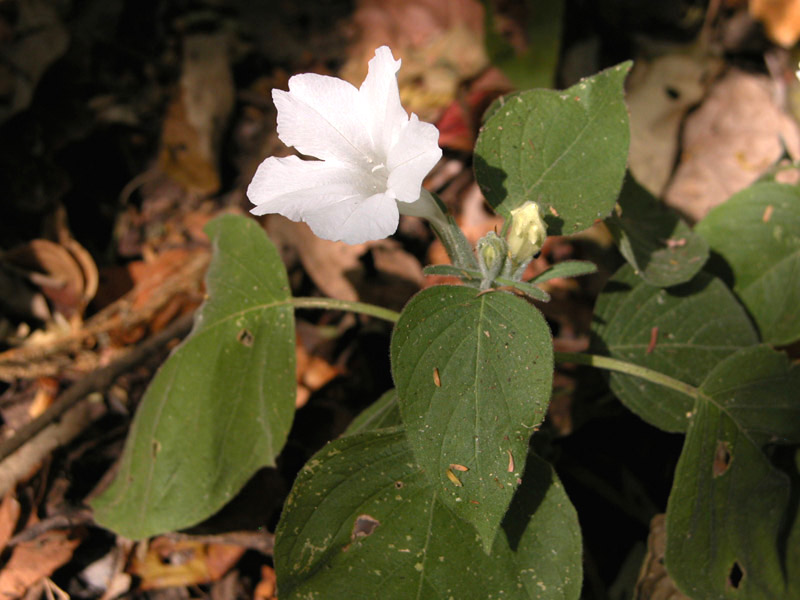
Water-loving (potam-, -phila). You and me both. I found this species on what was one of the most memorable days of my one month stay in Colombia. January 19th, 2015. We stayed the night before in the small but lovely community of El Queremal, in the Department of Valle de Cauca. Our plan was to overnight as close to the collection locality as possible because we had sensed it was going to be a long, tricky, one way drive from this quaint village to wherever our next meal was. We were right. We set out at 6 AM from our hotel (El Campanario: highly recommended) and within the hour we spotted a very weak wooded, small white flowered herb bordering the road (if I can call it a road). It was Ruellia potamophila. We had failed to find the species 3 days earlier in a different location that we drove two days for. But here it was: about 10 plants. Very rare, despite me crawling amongst the vertical slopes to find more. Take what you can get. I’ve never seen anything like this species: it is as distinctive as any Ruellia gets. I’m predicting membership in the Physiruellia clade, and I cannot WAIT to sequence it.

The stretch of road between El Queremal and Buenaventura cuts through some of the best habitat (mixed primary and secondary forest, but even the latter of exceptional quality) that I laid eyes on in this country. It was supposed to take about 4-5 hours. Somehow, close to 14 hours after our morning arepas and coffee, we reached Buenaventura with both cars intact (as an aside, this is not a route that would have been on the recommended tour for 2WD sedans). In Buenaventura, the rain had been so intense all day that city streets were flooding some 4-6 feet in places… far beyond the drivable stage, which by my standards are already rather extreme. These conditions forced our retreat from the area where one finds hotels, and at 9 PM, we pointed the cars towards Cali for a dreadful 2.5 hours additional riding time. We found food along the way, which cost us another 1+ hours. We reached by midnight then pressed plants for several additional hours, finally calling it a night around 3 AM. Longest field day ever, but one I will never forget, and one that brought me one species closer to seeing every species of Ruellia alive and in the cellulose. My tremendous thanks to Grant, Manuel, Nico, Tom, and Arecio for enduring….

Every species has a story, but only a fraction of those stories get recorded. Here’s to you, Ruellia potamophila.

Wild collected, Colombia,  Tripp et al. #5219 (COLO); Photos by E. Tripp
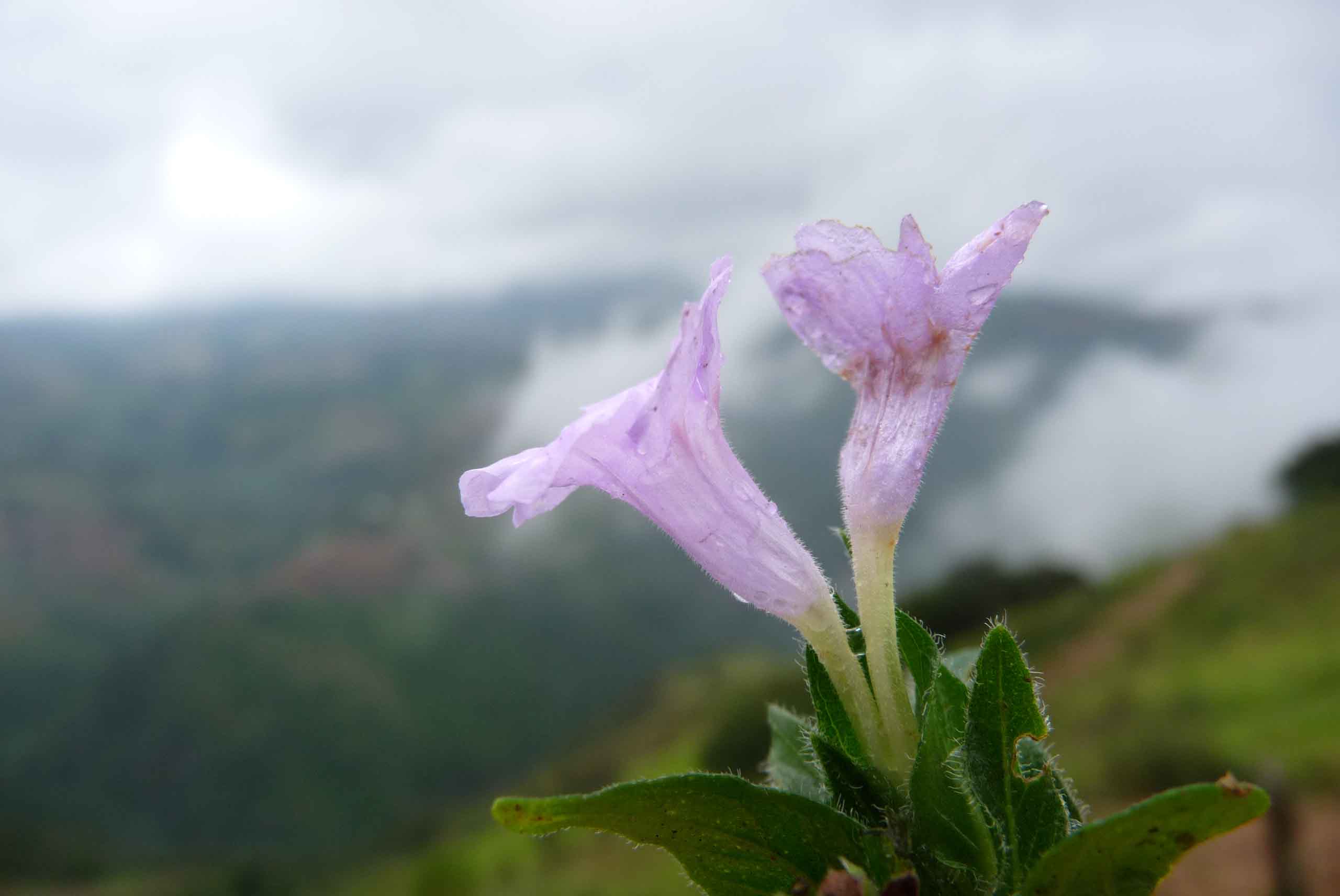
Ruellia pittieri

Ruellia_pittieri.jpg

You’re looking at a Central American member of the Physiruellia, which is most diverse / best represented in western South America. It isn’t the most distinctive species in the world… looks a bit like Ruellia stemonacanthoides, but with smaller fruits.

With some reluctance, and based on evidence available to us at the time, Lucinda and I synonymized Ruellia tonduzii with R. pittieri (McDade & Tripp 2007, Brittonia). Future workers may choose to undo that.

I’ve seen this species a couple of times in the field (Costa Rica), but both instances resulted in crappy photographs. Here’s a slightly better one from… Ricardo, I think?

Wild collected, Kriebel (voucher unknown, NY); Photo by Ricardo Kriebel

Ruellia petiolaris

Ruellia_petiolaris

This is probably one of the coolest neotropical plants. My designation probably has a lot to do with those bat-adapted flowers but remarkably, this reflects an independent evolutionary origin of bat pollination from other species in Mexico (e.g., those in the Chiropterophila clade).

Much to be learned about the natural history of Ruellia petiolaris. I am constantly in awe of the plant-pollinator diversity in Mexico.

Wild collected, Mexico, Tripp, Kiel & Hasenstab-Lehman #1208 (RSA-POM); Photo by Erin Tripp