Ruellia bignoniiflora

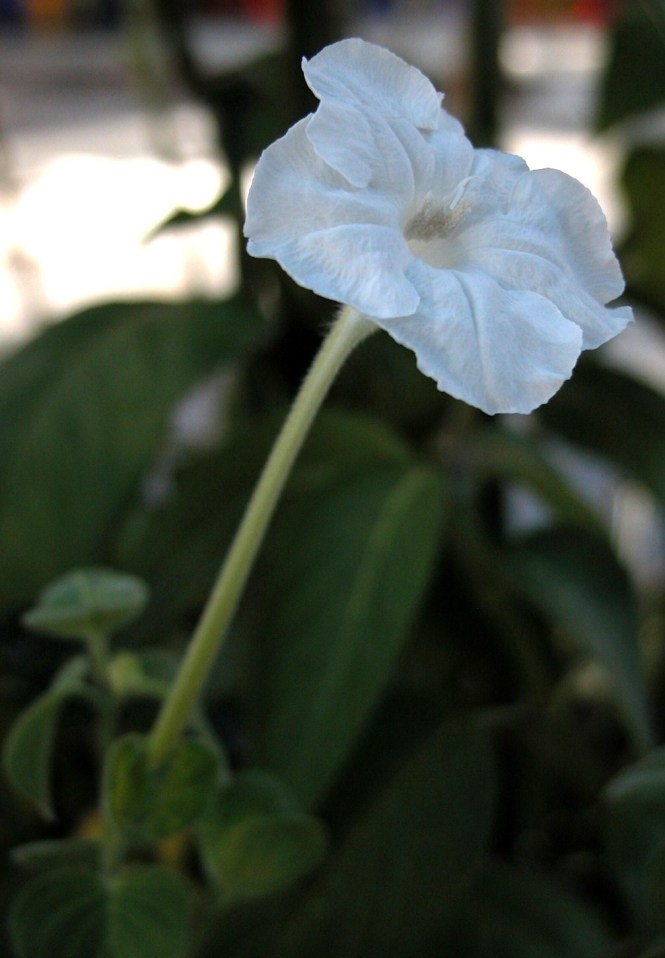
OK, scratch all those other pages in which I claim favoritism for some other species of Ruellia – THIS by far has to be the coolest!  The corollas of Ruellia bignoniiflora/megachlamys, a tropical African endemic, reach to 13 cm long. Yes, oh yes. That is approximately the length of your palm + fingers. I don’t even know how that works, biomechanically. Wouldn’t the corolla just tip over, with the weight of nectar, etc.?

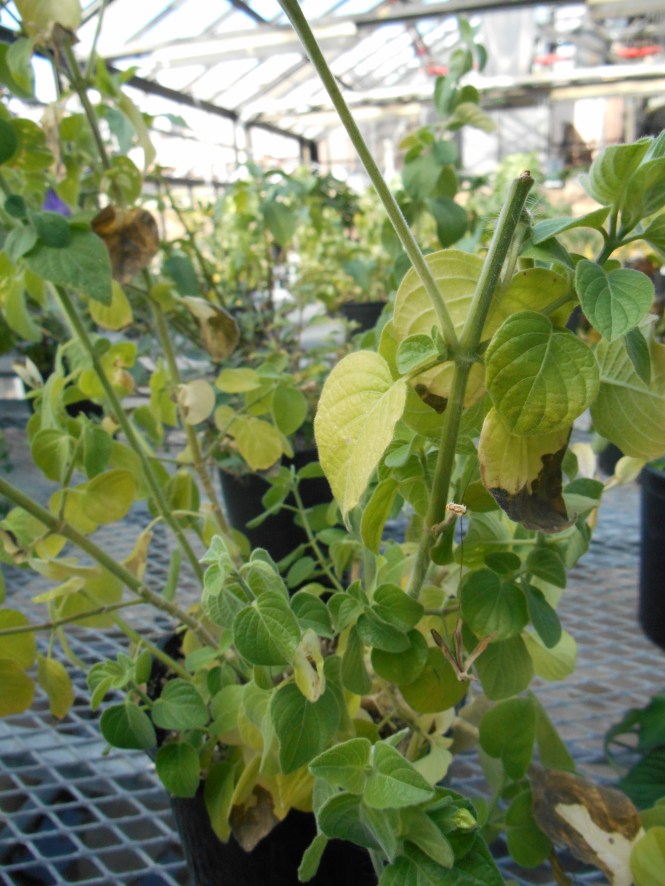
This plant flowers at night and is almost certainly (or used to be) pollinated by nocturnal lepidopterans. Like most Acanths, the flowers don’t produce any odor… at least not one discernable by the human nose. Pollinated ovaries ripen into a cute, fat little fruit, which takes a surprisingly long time to mature. This species likes to vine, placing it among the few in the genus that make their way by scrambling from place to place…

Cultivated (RSABG Greenhouses), originally from Ethiopia, Tripp & Ly #958 (RSA-POM); Photo by Erin Tripp

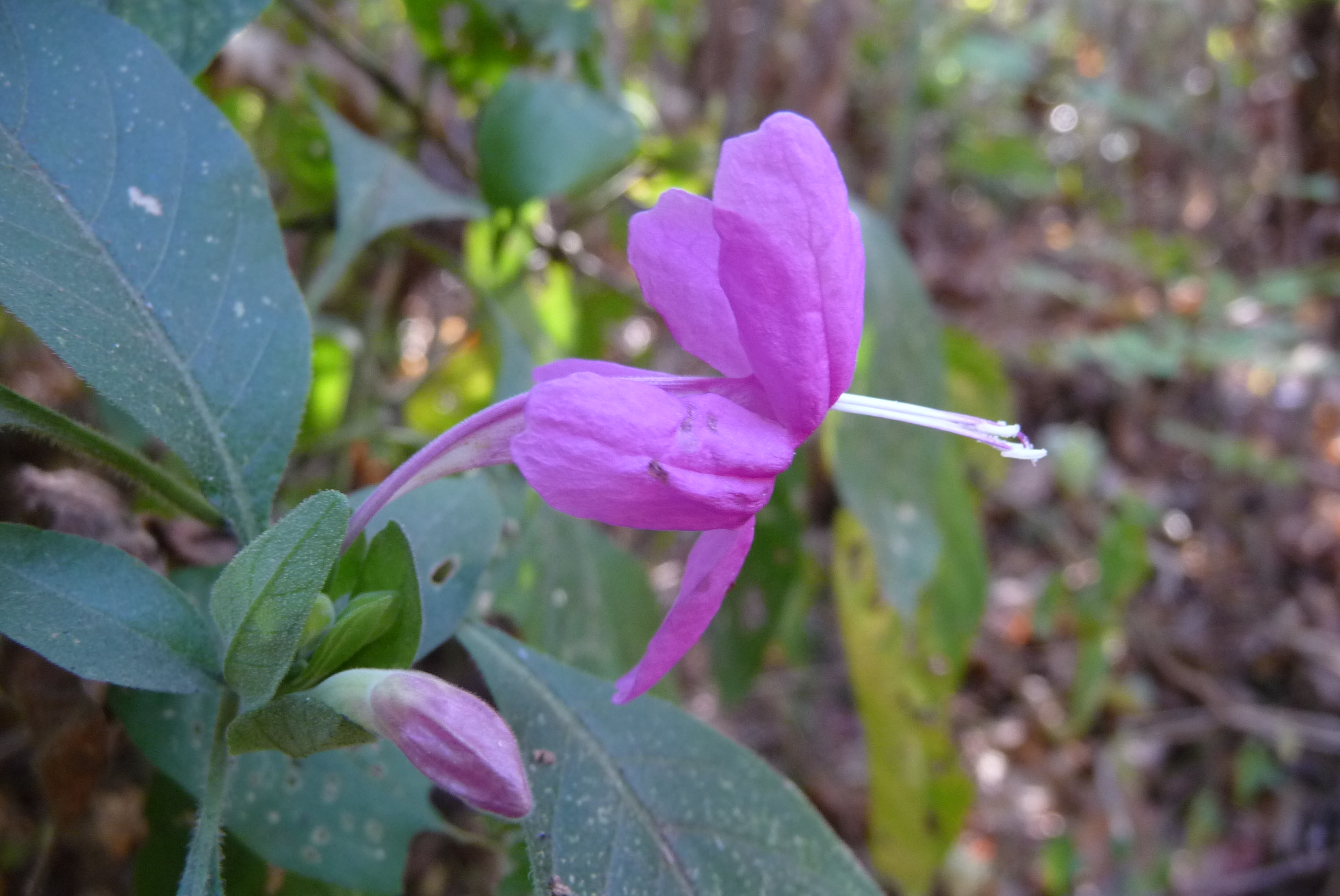
Ruellia beniana

This beautiful shrub with floral tubes up to 9 mm in length is named for the Departmento de Beni, an ecologically rich area of northeastern Bolivia, a part of the larger Bolivian amazon. Known only from the type locality, a well-traveled mountain rising above the town of Rurrenabaque, we collected this species from this site for only the second time since it was described in 2003. Most likely this species is a very narrow endemic and should be considered to be very rare.

The evening in which we found this species will be forever remembered. The sun was low in the sky casting a pink haze over the landscape while at the same time trumpets, trombones, and drums sounded from below as the Bolivian navy marching band practiced. To make the evening ever more special, a Clusia collected by Manuel Lujan from the same location, may be a new species!

Wild collected, Bolivia, Tripp #5994 w/ Luján, and Clark (COLO); Photos and blog post by Dina Clark

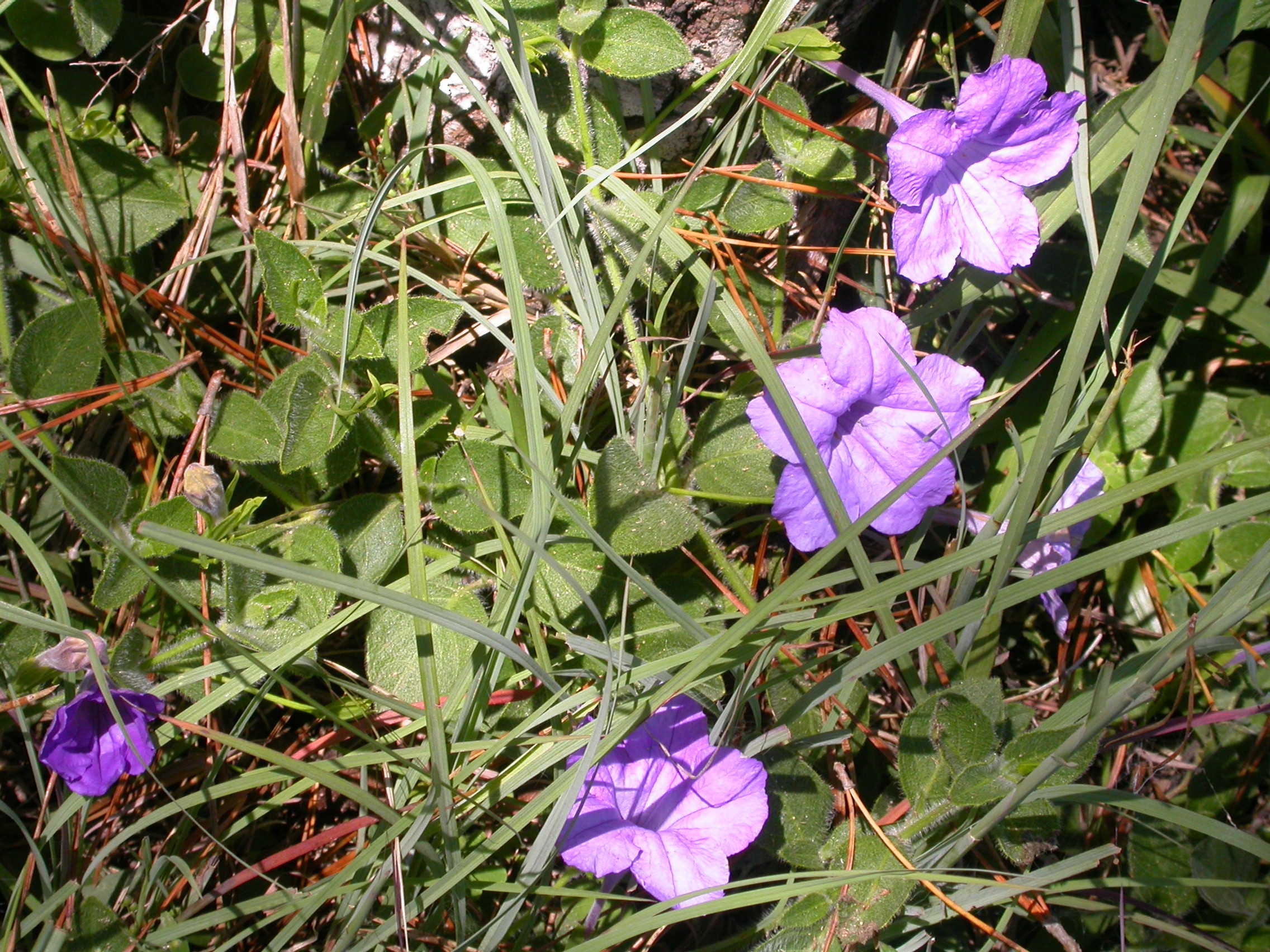
Ruellia aspera

Ruellia_aspera

As the name implies – this plant is SCA-BROUS. Yep. In this case, the leaves… particularly older leaves. Ruellia aspera is an absolutely remarkable species from southern Namibia, where it is uncommon but, if found, locally abundant.

A real beauty, and one beheld surely by many eyes other than my own.

Wild collected, Namibia, Tripp & Dexter et al. #2079 (RSA-POM); Photo by Erin Tripp

Ruellia antiquorum

Ruellia_antiquorum

Here is a petite endemic species described by our colleagues Dieter and John in 2003. I have never seen anything of this plant other than the photos that John so courteously shared, but it looks distinctive to me.

I do not yet know what clade this species belongs to, but based on the protologue, I predict membership in Physiruellia.

Wild collected, Bolivia, Darwin Initiative Project #162/11/010; Photo by John Wood

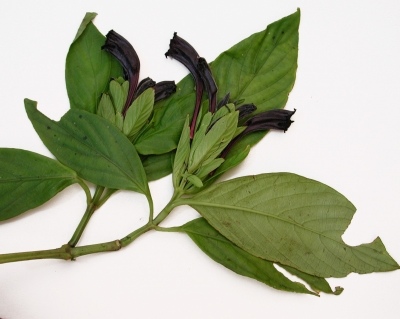
Ruellia anthracina

Ruellia_anthracina

I am so incredibly envious of any and all of you who have had the fortune of seeing this one alive / in the field. I think I’ve been having dreams about it for at least a decade now – ever since Lucinda told me there was a black-flowered Acanth. Yep – black. Even the herbarium labels say such. Some overly committed anthocyanin accumulation in the flowers of this Panamanian endemic. Desperately seeking gene upregulation study.

I have no idea where this species ‘goes’ phylogenetically. Based on inflorescence structure, I’d not be surprised if it wound up in the (*gasp*) Ruellia blechum clade of all places…

Wild collected, Panama, Gentry #5691 (MO); Photo from STRI website

Ruellia amoena

Ruellia_amoena

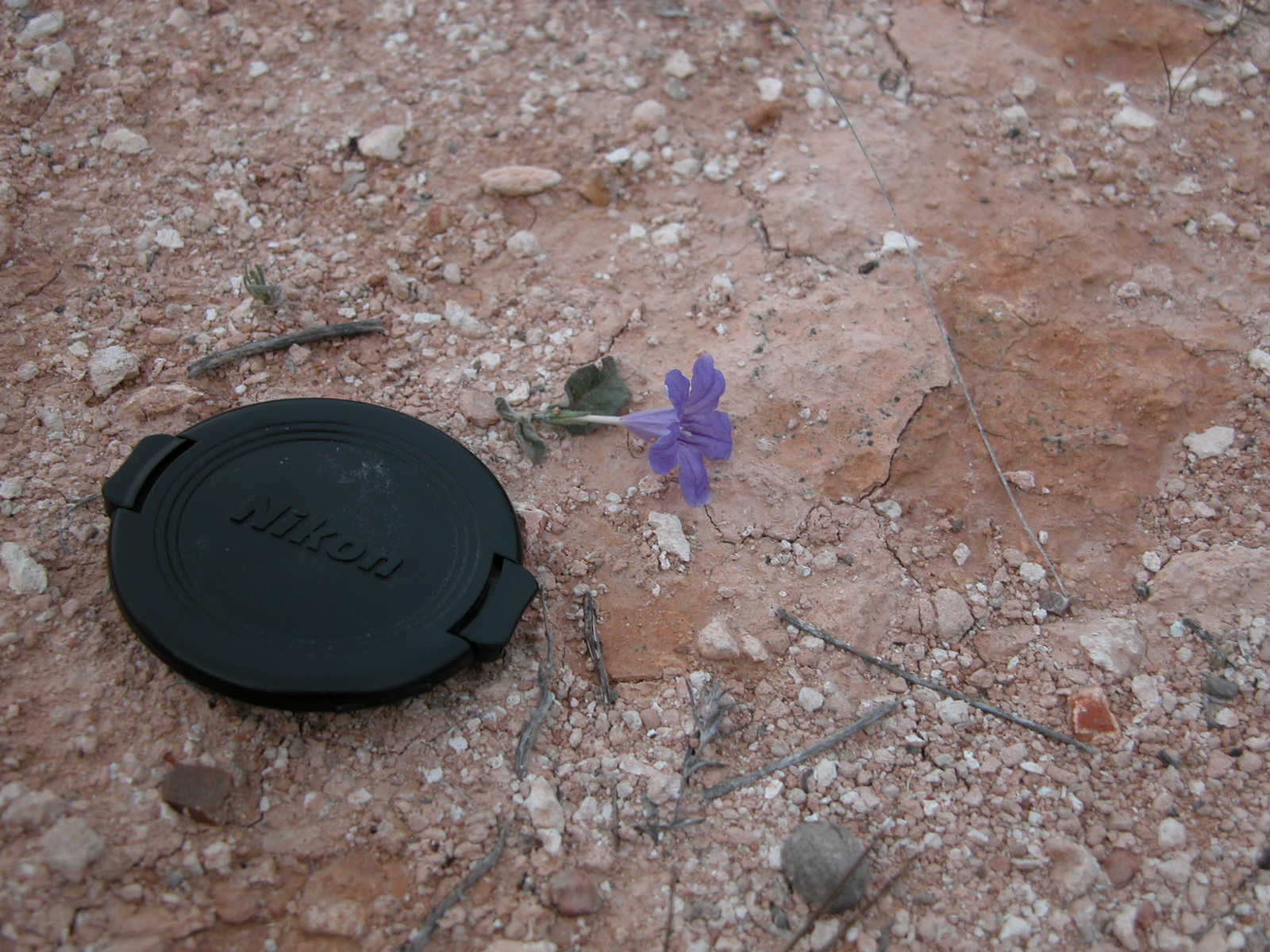
Here’s an opportunity. Ruellia amoena sure looks a lot like Ruellia foetida, but has pigmented instead of white flowers. One often finds these two species sympatrically, or nearly so. A “must study” taxon pair evolutionarily.

Wild collected, Mexico, Tripp w/ Kiel, & Hasenstab-Lehman #1225 (RSA-POM); Photo by Erin Tripp

Ruellia affinis

Gaudy Gaudy Gaudy! Carrie Kiel would love the flowers of this species, which sit atop vegetative portions of a rare growth form (vining) in the genus. One must really and truly appreciate the epithet. ‘affinis’. Hey – it’s got affinity to something, after all…!

Update (Aug 2016): As it turns out, Ruellia affinis is rather common in mesic forests of eastern Brazil. It really is a vine, and it really does looks strange in the field, but I will happily accept this species as a Ruellia. Hey – the genus does more interesting things morphologically than does my own…

I still do not know what lineage this plant belongs to – a classic rogue taxon in phylogenetic speak – perhaps RADseq data will soon resolve…

Wild collected, Brazil, Erin Tripp #5887 & #5889 w/ Nico Medina, Cíntia Kameyama (COLO); Photos by Cíntia Kameyama, Erin Tripp

Ruellia acetabula

Ruellia_acetabula

Just LOOK at that lower corolla lobe – absolutely amazing, and one of a kind. Kyle and I discovered and named this species after the acetabulum…a fine wine drinking vessel from ancient Rome. Nothing else in Ruellia comes close to this sort of odd morphology.

Ruellia acetabula is at present known only from Namibia, where it loves the very dry rocky hillsides of the northwestern province Kunene. This species is clearly related to a group of SW African taxa that have a unique “2+2+1” calyx morphology, and smell of citronella. This group includes Ruellia marlothii, R. kaokoana, R. aspera, and R. diversifolia. See Tripp & Dexter 2012, Systematic Botany.

Wild collected, Namibia, Tripp & Dexter #871 & #1991 (RSA-POM); Photo by Erin Tripp

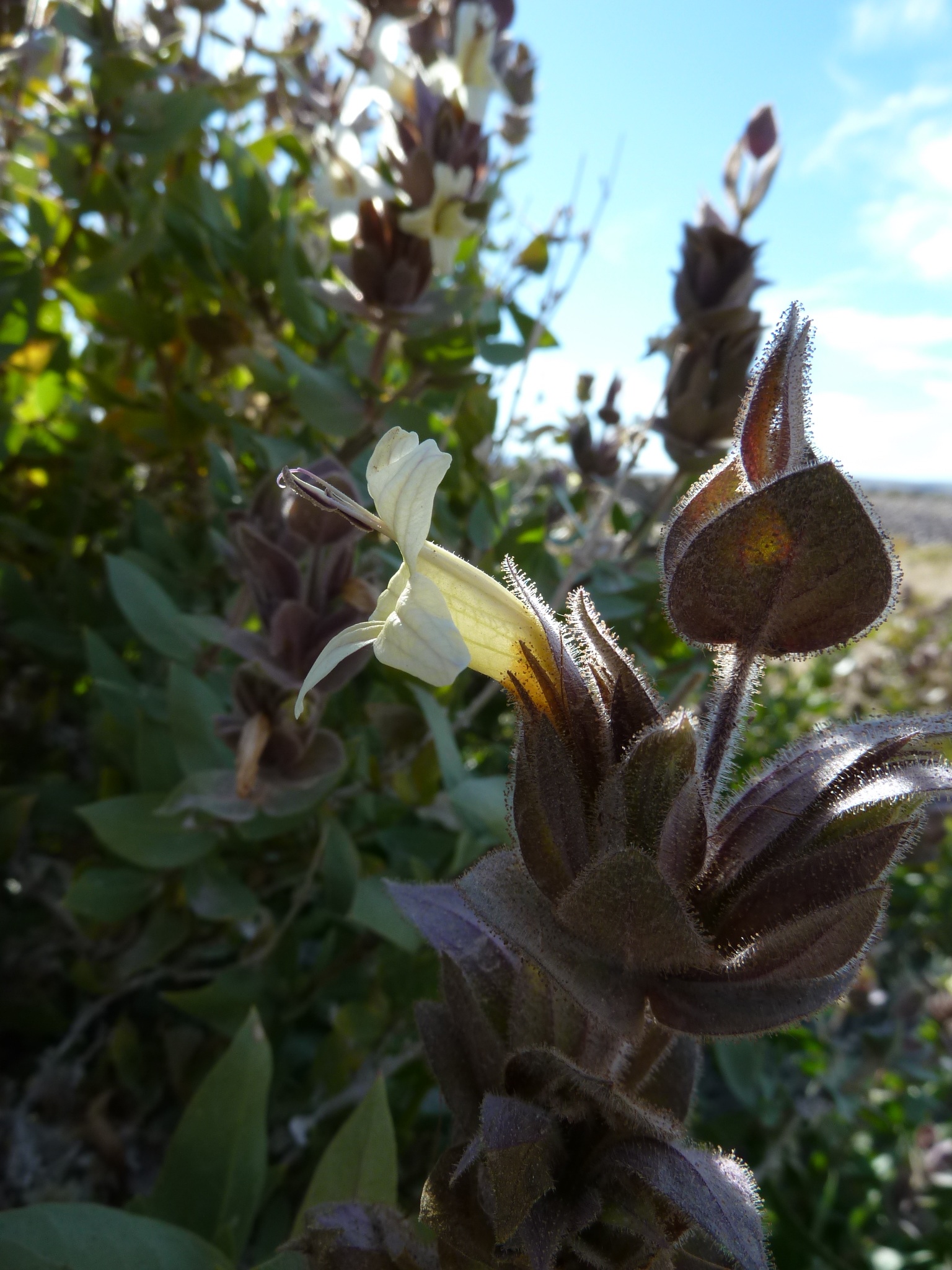
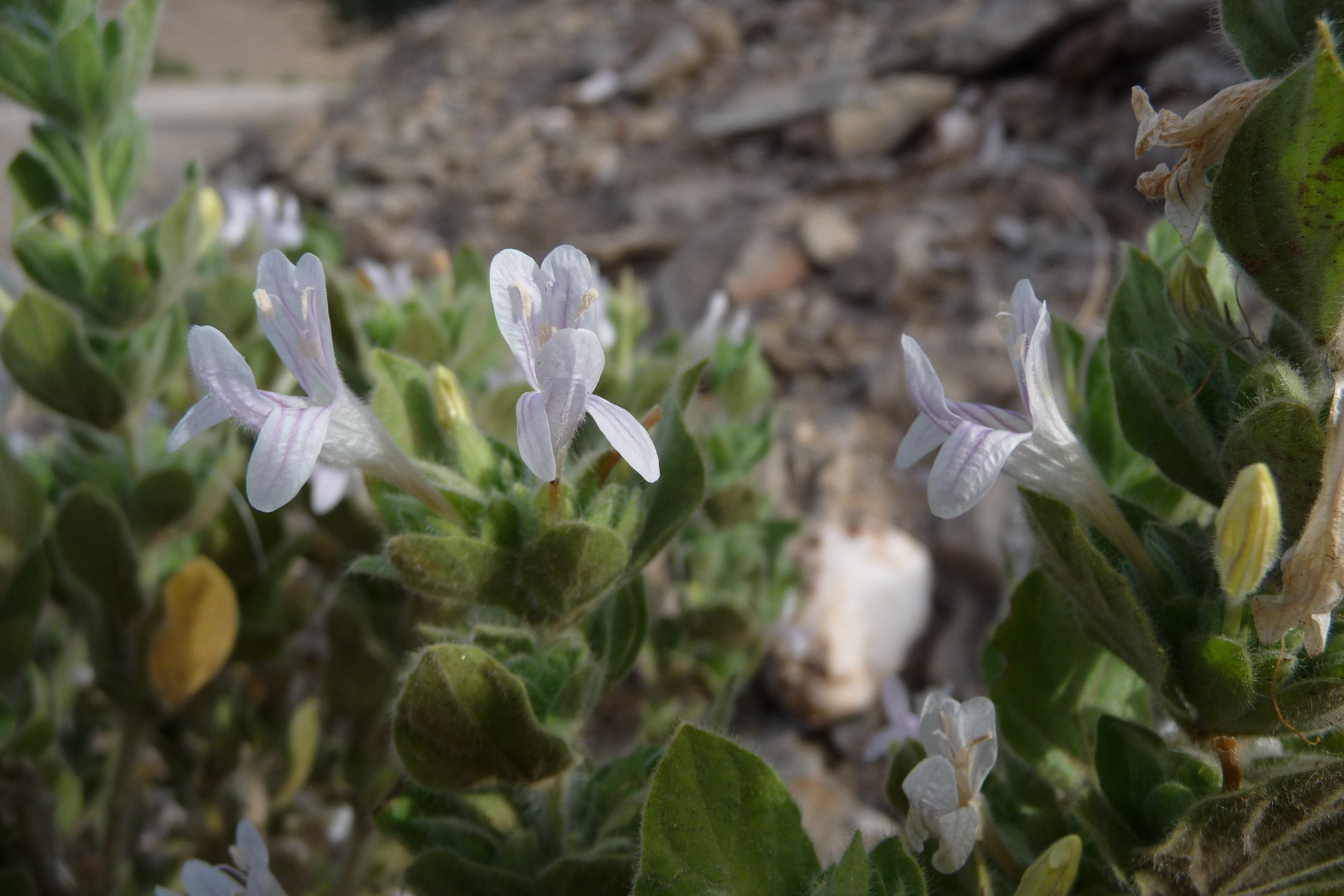
Petalidium welwitschii

A harbinger of the Kaokoveld. Find Petalidium welwitschii, find the true Kaoko. You’ll first need to make your way through the Hartmann Mtns and Marienflüss. To our knowledge, this species is endemic to this very small stretch of Earth. In the second photo, bask in the weirdness of these two faces of P. welwitschii. These two branches actually derived from the same individual. And admire the Kunene River, across from which is Angola.

Wild collected, Namibia, Tripp & Dexter #4085 (RSA-POM); Photos by Erin Tripp